
Moisture-sensitive devices (MSDs) absorb moisture from the air. During reflow soldering, the rapid heating turns that moisture into steam, causing internal cracks—a defect known as the “popcorn effect.” This leads to latent failures or immediate device rejection.
The IPC/JEDEC J-STD-033D standard defines handling, packing, and storage requirements for MSDs. Among its key provisions: Once an MSD bag is opened, the devices must be used within a specific “floor life” (from a few hours to a few days, depending on the Moisture Sensitivity Level, MSL). If not used in time, they must be stored at ≤10% RH or baked before use.
For electronics manufacturers, a dry cabinet that maintains ≤10% RH is not optional—it is a compliance necessity. It allows you to extend the floor life of MSDs, reduce baking cycles, and eliminate popcorn defects. Storing MSD in a standard cabinet (e.g., 40% RH) is essentially non-compliant and risky.
Related Posts
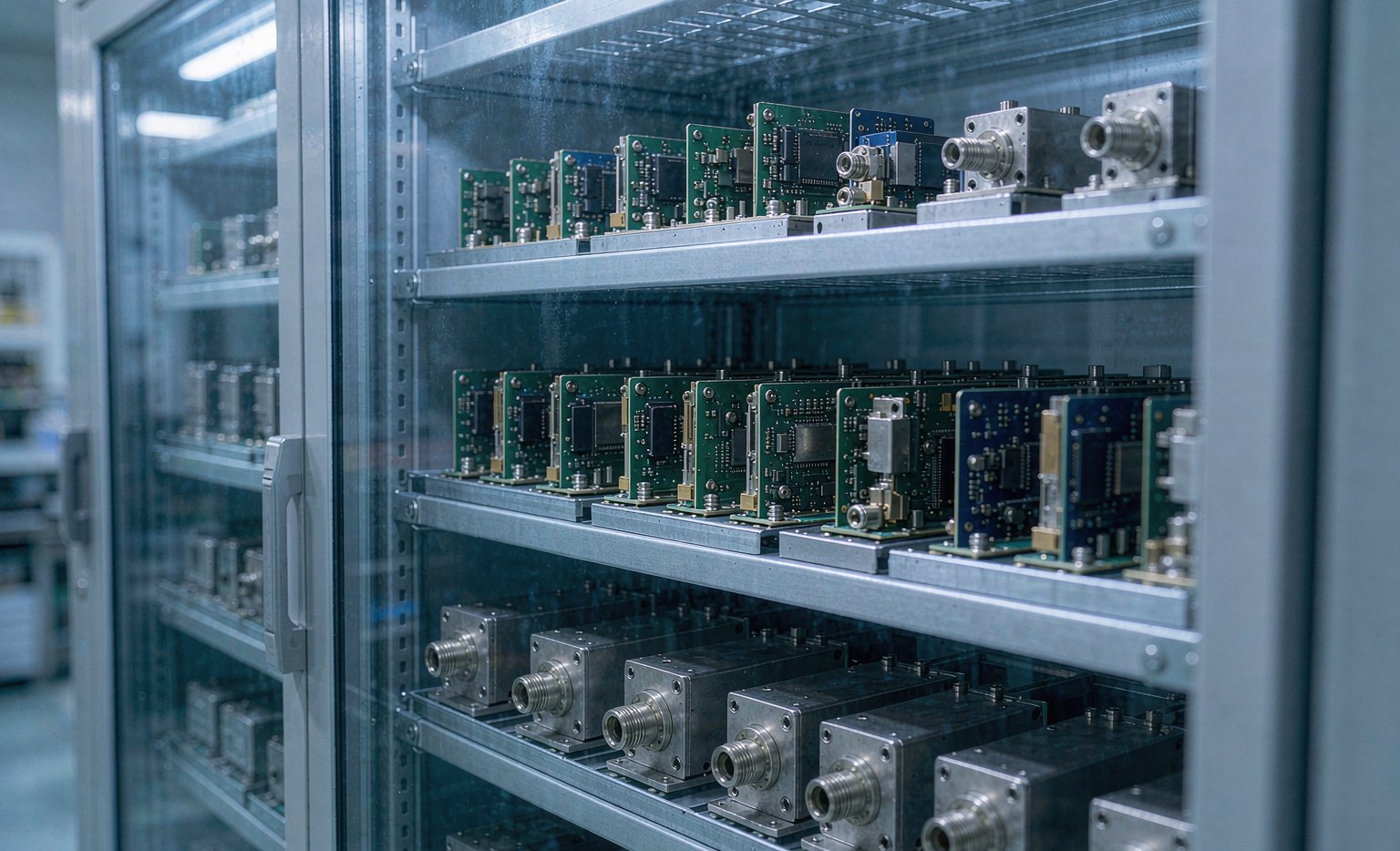
Telecom and 5G Hardware: Moisture Defense for RF and Base-Station Parts
5G base stations, small cells, and radio units are packed with parts that are far more moisture-sensitive than their industrial appearance suggests. High-frequency RF printed circuit boards, gallium arsenide and gallium nitride MMICs, silver- and…

Clean Oven vs High-Temperature Oven: How to Choose
Not every thermal process needs a clean oven. Not every clean process needs 500 °C. Buying the wrong one costs money in two ways: you pay for capability you never use, or you pay again…

YanSyn Model Codes Explained: YSN-300, YSN-401, YSM and YSHG Selection Guide
If you are searching for "YSN-300" or "YSN-401", you already know the YanSyn name. You may have a unit running on your floor, a quotation on your desk, or a spare-part list to match. This…