
Electrostatic discharge (ESD) is a sudden flow of electricity between two objects with different electrical potentials. It can be as low as a few volts—undetectable to human touch—yet it carries enough energy to permanently destroy sensitive electronic components, including semiconductors, IC chips, wafers, and photomasks.
The critical link with humidity is often overlooked. ESD risk increases exponentially when relative humidity (RH) drops below 40% RH. In ultra-low humidity environments—such as <10% RH, which is standard for moisture-sensitive semiconductor storage—static charge generation becomes a major operational hazard. Without proper ESD countermeasures, simply opening a drawer or removing a wafer box can generate a static discharge high enough to scrap an entire batch.
Why does low humidity worsen ESD?
Because dry air acts as an insulator. At higher humidity (40–60% RH), a microscopic water film on surfaces helps dissipate static charges naturally. Below 10% RH, that natural dissipation disappears, allowing static charges to accumulate and discharge violently.
An ESD-safe dry cabinet must therefore do more than just remove moisture—it must also control static. A properly designed cabinet should include:
-
Conductive PVC or anti-static laminate on all interior surfaces to prevent charge generation
-
Reliable grounding to safely channel static charges away from stored components
-
Static-dissipative shelves and drawers to ensure every contact point is protected
If you store semiconductors, IC chips, wafers, or photomasks in a low-humidity environment, choose YanSyn anti-static models—specifically our YSM series moisture-proof cabinets with model numbers ending in "F". These are the only units on the market that integrate precision low-humidity control (<10% RH) with full ESD safety compliance, giving you true all-in-one protection.
Don't trade moisture damage for static damage. With YanSyn YSM-F series, you get both.
Related Posts

FAQ: Frequently Asked Questions by clients
1. What kind of services do you provide: Orignal manufacturer in China, OEM & customization are available as well. 2.Transportation: Defaulted by sea freight, can also through other ways according to your request. 3.After-sales service Free-maintenance & spare parts for…
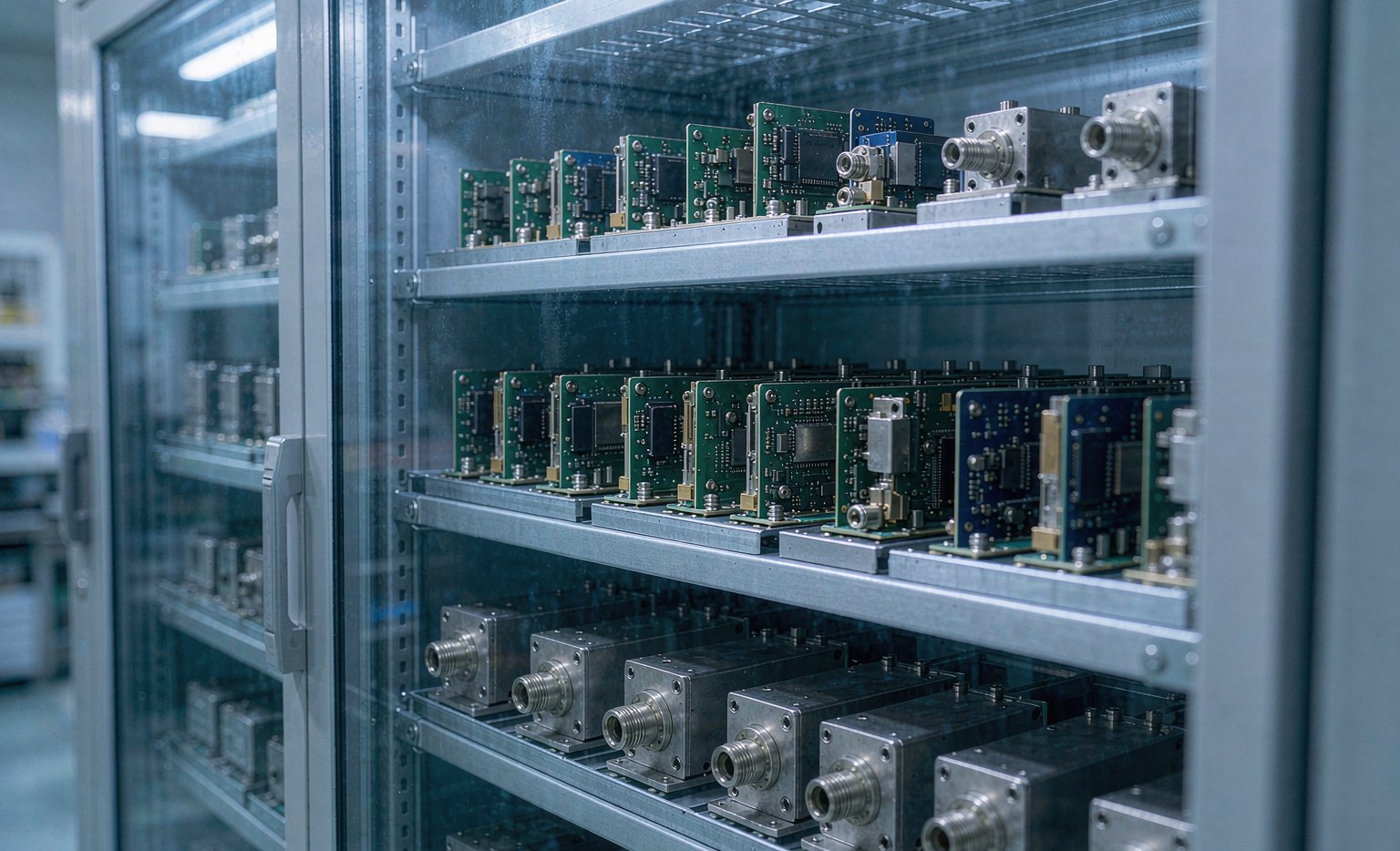
Telecom and 5G Hardware: Moisture Defense for RF and Base-Station Parts
5G base stations, small cells, and radio units are packed with parts that are far more moisture-sensitive than their industrial appearance suggests. High-frequency RF printed circuit boards, gallium arsenide and gallium nitride MMICs, silver- and…
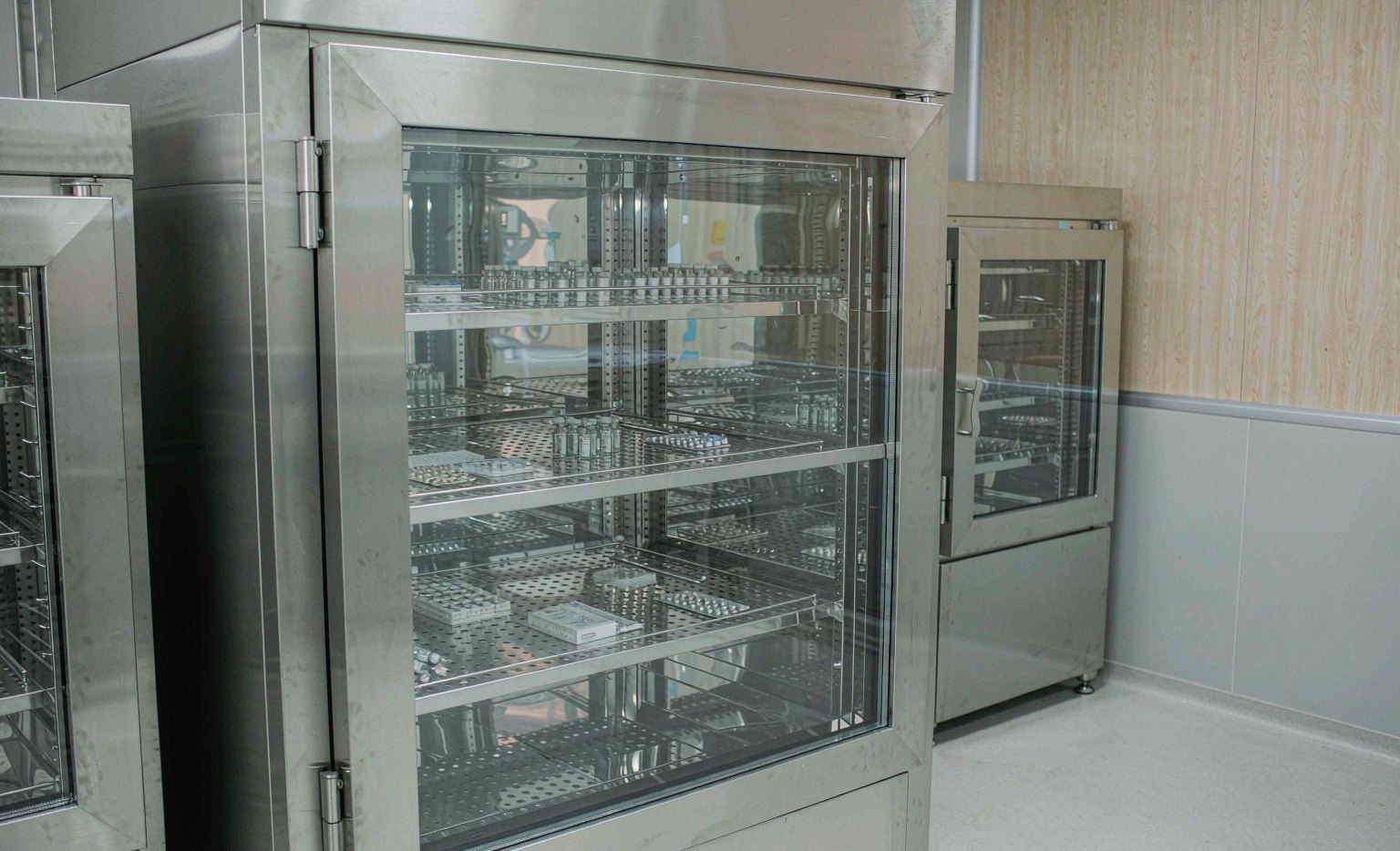
GMP-Compliant Stability Storage for Biopharmaceuticals: How to Specify a Pharma Stability Chamber
In biopharmaceutical work, a stability chamber is not storage furniture. It produces regulated evidence. Every shelf-life claim and retest period in a dossier traces back to samples that sat inside a controlled volume for months…