
Not every thermal process needs a clean oven. Not every clean process needs 500 °C. Buying the wrong one costs money in two ways: you pay for capability you never use, or you pay again later in scrap and rework. This guide separates the two specification axes and shows how to decide.
YanSyn builds temperature and humidity control equipment for semiconductor, electronics, new energy, biopharma, automotive, medical and aerospace production. The YSHG series is our electric heating oven platform, configurable for cleanliness, for high temperature, or for both.
Two Independent Axes: Particles and Temperature
The most common buying mistake is treating "clean oven" and "high-temperature oven" as two points on one scale. They are not. They are two different axes, and a given process sits somewhere on each one.
- Axis 1: Particle cleanliness. How many airborne particles may land on the part during the cycle, and how much may the oven itself contribute through outgassing or shedding.
- Axis 2: Temperature capability. Maximum setpoint, how fast the chamber reaches it, and how uniform the temperature is across the working volume.
A photoresist soft bake at 120 °C sits high on axis 1 and low on axis 2. A glass-to-metal seal anneal at 480 °C sits high on axis 2 and lower on axis 1. A semiconductor cure at 250 °C may need both. The oven you specify follows from where your process sits.
What "Clean Oven" Actually Means
A clean oven is defined by what it keeps out and what it does not add. Four elements matter.
1. Filtration of the recirculated air
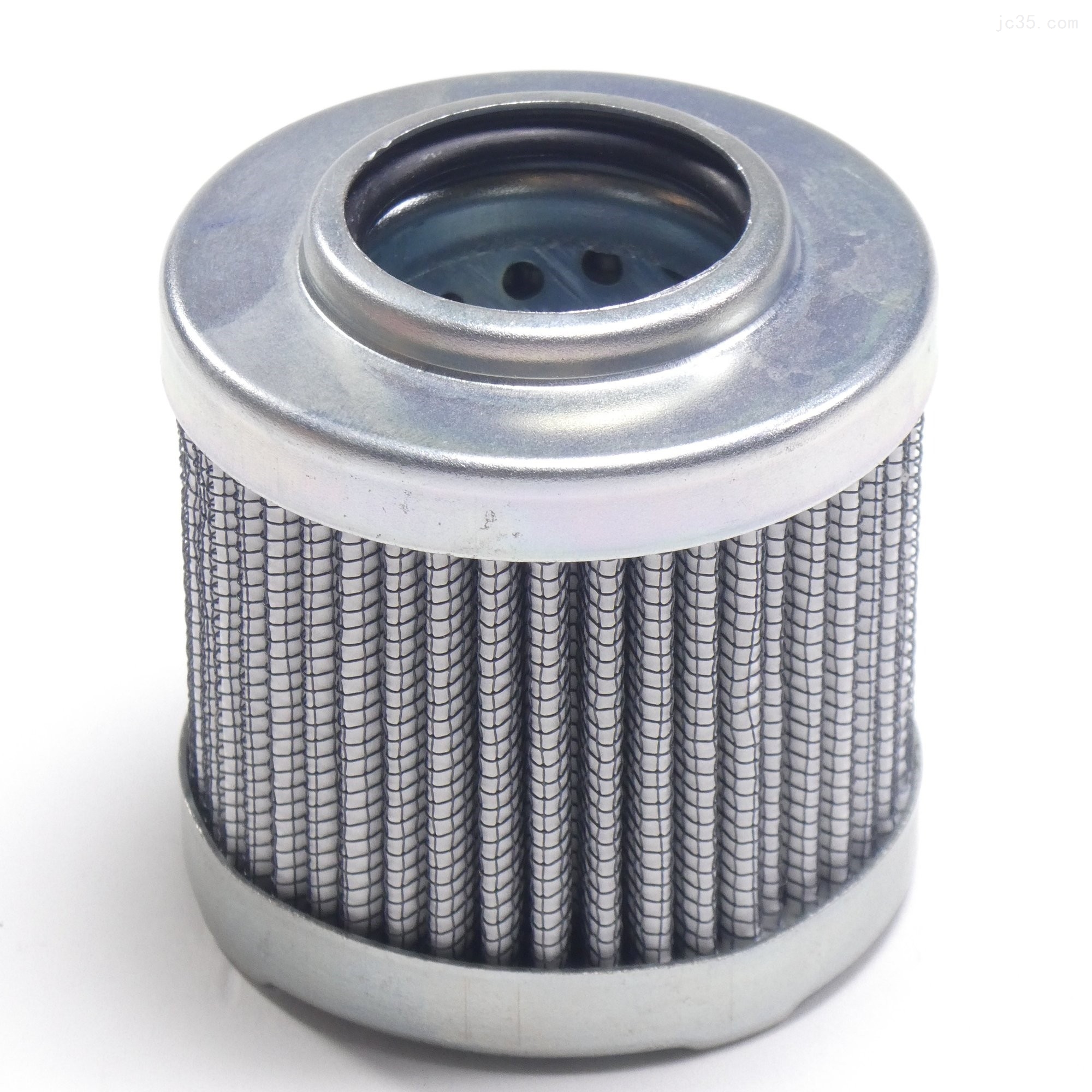
A standard oven heats and recirculates chamber air. Any particle already inside stays inside and keeps circulating. A clean oven passes that recirculated air through a high-efficiency particulate air (HEPA) filter, so particles generated by the load or by the chamber are continuously removed during the cycle rather than redistributed.
2. A stated cleanliness class
Cleanliness is normally quoted against ISO 14644-1. At the 0.5 micrometre threshold the limits are: ISO Class 5, 3,520 particles per cubic metre; ISO Class 6, 35,200; ISO Class 7, 352,000. Older literature and many datasheets still use the withdrawn US Federal Standard 209E, where "Class 100" corresponds approximately to ISO Class 5. YanSyn YSHG ovens can be supplied with a Class 100 clean configuration.
Ask two questions when a class is quoted: at what particle size, and in what chamber state. A class quoted only for an empty, cold chamber tells you little about a loaded chamber at temperature.
3. Interior materials that do not generate particles
Interior surface, shelf design, insulation and door seals all matter. Fibrous insulation sheds. Some seal materials and cable jackets outgas when hot, and the compounds condense on cooler product surfaces — a contamination path that filtration alone does not solve. A clean configuration specifies a smooth stainless interior, sealed insulation and high-temperature-rated seals selected for low outgassing.
4. Loading practice
An oven certified to a class will not hold it if parts are loaded wet or wrapped in shedding material. Cleanliness belongs to the process, not only to the box.
What "High-Temperature Oven" Actually Means
Temperature capability is also more than one number. Three specifications decide whether an oven can hold your process window.
Maximum operating temperature
YanSyn YSHG ovens cover ambient up to approximately 500 °C. Specify your true maximum setpoint plus margin, not a round number. Every 50 °C of extra capability usually costs something in seal life, insulation and heater sizing.
Uniformity across the working volume
Uniformity is the spread between the hottest and coldest measured points in the chamber at steady state. YSHG ovens use proportional-integral-derivative (PID) control with uniformity of ±2 °C or better, and ±1 °C is available as a customised specification. Uniformity is meaningless unless the measurement grid is defined: how many sensors, at what positions, at which setpoint, empty or loaded. Ask for the mapping report, not just the number.
Time to temperature and recovery
How long the chamber takes to reach setpoint, and how fast it recovers after a cold load is inserted, drives throughput more than maximum temperature does. A batch oven that recovers slowly is a bottleneck regardless of its rated capability.
For a closer look at the thermal steps used in advanced chip manufacturing and the parameter windows they require, see our article Ovens and Thermal Processing at the 3 nm Node.
Side-by-Side Comparison
| Specification | Clean oven | High-temperature oven | Combined configuration |
|---|---|---|---|
| Primary control target | Airborne particle concentration and outgassing | Temperature value, uniformity and ramp rate | Both, specified together |
| Typical temperature range | Low to mid range, set by process chemistry | Ambient to approximately 500 °C on YSHG | Mid to high range with filtration |
| Air handling | HEPA filtration of recirculated air | Forced convection for heat transfer | Filtered forced convection |
| Interior construction | Smooth stainless, sealed insulation, low-outgassing seals | Insulated chamber rated for the full temperature range | Clean materials rated for the full temperature range |
| Control | Standard PID | PID, uniformity ±2 °C or better; ±1 °C customised | PID with uniform airflow through filters |
| Typical failure mode if underspecified | Particle defects, condensation film, yield loss | Incomplete cure, uneven material properties | Either or both, depending on the step |
| Cost driver | Filter class, filter area, interior finish | Insulation, heater capacity, seal temperature rating | High-temperature-rated filtration and seals |
Which Processes Sit Where
Use the table below as a starting point for discussion with your process engineer, not as a rule.
| Process | Particle sensitivity | Temperature demand | Usual starting configuration |
|---|---|---|---|
| Photoresist soft bake and hard bake | High | Low to mid | Clean oven with tight uniformity |
| MSD baking before reflow | Moderate | Low to mid, long dwell | Standard or clean oven, follow IPC/JEDEC J-STD-033 |
| Epoxy and adhesive cure | Moderate to high | Mid | Clean oven where the bond line is contamination-critical |
| Glass-to-metal seal annealing | Moderate | High | High-temperature oven |
| Ceramic and powder processing | Low to moderate | High | High-temperature oven |
| Medical device drying and sterilising support steps | High | Low to mid | Clean oven, documented validation |
| Aerospace composite and bonding work | Moderate to high | Mid to high | Combined configuration, with mapping records |
| Battery electrode drying | Moderate | Mid, with moisture removal | Oven plus dry storage; often paired with a vacuum step |
When You Need Both, and When You Need Something Else
Three situations are frequently confused, so it is worth separating them.
High temperature plus cleanliness
Achievable, but the most demanding configuration. Filters must survive the temperature, seals must hold without outgassing, and uniform airflow must be maintained as filter loading raises pressure drop. Expect a longer lead time and a higher price than either axis alone. Specify temperature first, then the cleanliness class at that temperature.
Oxygen control instead of particle control
If the failure you are fighting is discolouration, oxide growth or a darkened surface rather than particle defects, the governing axis is atmosphere, not particles. That calls for an inert or oxygen-free configuration, not simply a clean one. We cover the threshold question in Oxygen-Free Ovens Demystified: When You Need Below 1 ppm O₂. Cleanliness and oxygen control are separate requirements and can be combined.
Moisture removal at low temperature
Where the goal is removing water from a material that cannot tolerate high heat, a vacuum oven is usually correct rather than either a clean or a high-temperature oven. See How to Choose a Vacuum Oven: 7 Specs That Actually Matter.
A Specification Checklist You Can Send to Suppliers
Send the same list to every supplier so the quotes are comparable.
- Maximum setpoint and normal operating setpoint. State both.
- Uniformity requirement, with the measurement method. Number of sensors, sensor positions, empty or loaded, at which setpoint.
- Cleanliness class, with the particle size and the chamber state. Class at 0.5 micrometre, loaded, at temperature.
- Filtration. Filter class, filter area and the replacement interval.
- Interior materials and seals. Stainless grade, insulation type, seal material and its temperature rating.
- Chamber volume and usable shelf area. Not the external footprint.
- Recovery time. Time to return to setpoint after a defined cold load.
- Atmosphere options. Clean only, inert gas, oxygen-free, or vacuum.
- Data and validation. Logging, alarms, calibration certificates, mapping report and installation qualification support.
- Utilities. Available voltage, phase and exhaust requirements.
Items 2 and 3 are where quotes most often diverge silently. Two suppliers can quote the same uniformity figure and mean different things.
Frequently Asked Questions
Is a clean oven automatically a high-temperature oven?
No. Many clean ovens operate in a low to mid temperature range because the processes that need them are limited by material chemistry rather than by heat. Cleanliness and temperature capability are separate options that must be specified separately.
Can I upgrade an existing oven to a clean configuration?
Sometimes a filtration module and interior refit are possible, but the result depends on the base chamber design, the seal temperature rating and the space available for a filter plenum. A purpose-built chamber is usually more reliable than a retrofit. Ask the manufacturer to evaluate the specific unit.
How often do HEPA filters need replacing?
The interval depends on operating temperature, runtime and how much the load contributes particles. At elevated temperature, filter media and sealant age faster than at room temperature. Request a stated interval from the supplier and plan filter stock. Treat any figure quoted here as an indicative assumption to be replaced by your own maintenance data.
What uniformity should I specify?
Start from your process window, not from what is available. If your material property is stable across a 10 °C spread, ±1 °C adds cost without benefit. If the cure window is narrow, ±1 °C may decide a passing or failing batch. YSHG ovens are supplied at ±2 °C or better, with ±1 °C available as a customised specification.
Do I need validation documentation?
If the oven supports a regulated medical, pharmaceutical or aerospace process, yes. Ask for calibration certificates, a temperature mapping report and qualification support at purchase. Retrofitting documentation after delivery is far more disruptive.
Conclusion
The clean-versus-high-temperature question is not a choice between two products. It is two questions: how clean must the part be when the cycle ends, and how hot, how uniform and how fast must the chamber run. Answer both for your process, then buy against the answers.
YanSyn YSHG electric heating ovens cover ambient to approximately 500 °C with PID control, uniformity of ±2 °C or better and a customised ±1 °C option, and can be configured with Class 100 clean filtration, inert gas atmosphere and IoT monitoring. See the YSHG electric heating oven page.
Tell us your setpoint, uniformity window and cleanliness class, and we will confirm whether a standard, clean, high-temperature or combined configuration fits. Request a configuration review.
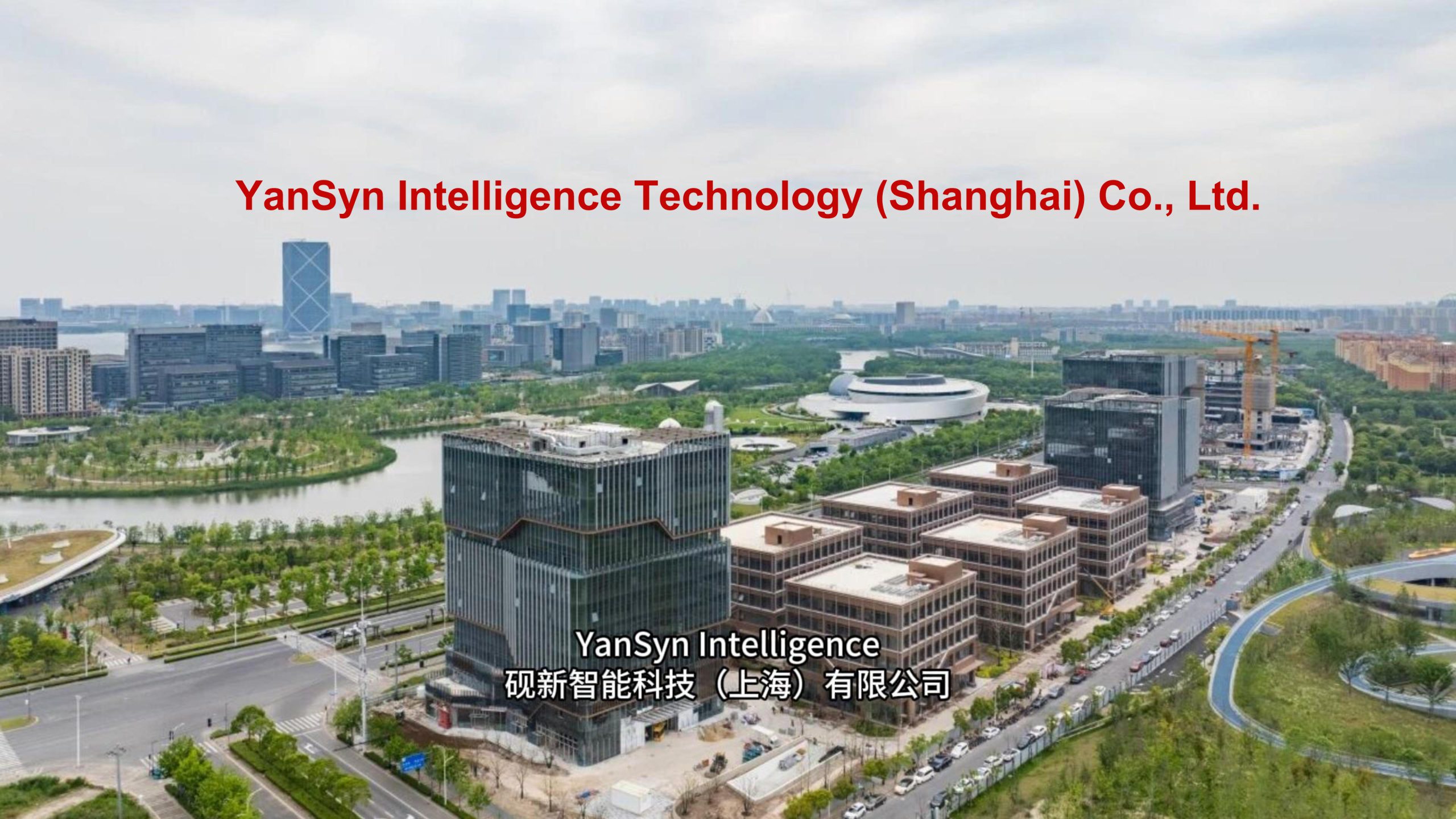
YanSyn Intelligence (Shanghai) Co., Ltd. — Building10, No.568, Xueronghua Road, Pudong New Area, Shanghai, China
Related Posts
Nitrogen Cabinets for Oxidation-Sensitive Storage: Pharmaceutical, Battery, and Precision-Alloy Use Cases
Most engineers think of a dry cabinet as a defense against moisture. For a large class of materials, however, water vapor is only half the threat, oxygen is the other. Active pharmaceutical ingredients, lithium-ion battery…
The Popcorn Effect Deep-Dive: MSD Baking Curves That Save Yield
A single cracked package can scrap an entire assembled board. In many cases the crack did not start on the line. It started days earlier, when a tray of plastic-encapsulated devices sat open in ordinary…
The Development History of Electronic Dry Cabinets
Electronic dry cabinets have become indispensable storage and production equipment in many industries, including semiconductors, electronics manufacturing, biopharmaceuticals, and new energy. So, how did dry cabinets evolve, and what are the future development trends? In…