Hydrogen Fuel Cell Component Storage: Protecting MEAs, GDLs and Bipolar Plates from Moisture and Oxygen
A PEM fuel cell stack is built from parts that are, in moisture terms, almost impossibly thin: a catalyst-coated membrane is 15–20 µm of ionomer and platinum catalyst, a gas diffusion layer is roughly 200 µm of PTFE-treated carbon paper, and the conductive coating on a metallic bipolar plate is a few hundred nanometres thick. None of these components can buffer a humid afternoon in a plant that is otherwise well run.
That is why so much fuel-cell scrap is generated before the stack is ever tested. A membrane cycled through humidity swings develops pinholes and edge tears; a plate that sat in damp air shows a contact-resistance drift that only appears at end-of-line testing; a catalyst powder opened in the wrong room picks up sulfur compounds the ionomer holds onto permanently. The storage and drying steps between process operations are where the cheapest money is either saved or lost.
Where moisture and oxygen do damage in a fuel-cell BOM
Catalyst-coated membranes and MEAs
A perfluorosulfonic-acid membrane is hygroscopic by design: it needs water to conduct protons. But water uptake is not dimensionally neutral. As relative humidity swings, the membrane swells and contracts in plane, at a different rate from the reinforcement layer and the catalyst layers bonded to it. Repeated humidity cycling — the loading-dock-to-storeroom-to-line trip nobody documents — works the edges and the GDL interface until they delaminate. Freezing makes it worse, because water held in the membrane expands on freezing.
Oxygen matters differently. The ionomer is an efficient ion exchanger and will absorb airborne contaminants — sulfur from rubber, ammonium from cleaning agents, packaging organics — that later poison the catalyst. A low-humidity, low-exchange environment slows that uptake.
Gas diffusion layers
GDLs are hydrophobic by coating, not by bulk. They tolerate ambient RH better than a membrane, but they readily adsorb organic vapour and dust, both of which reduce hydrophobicity and corrupt water management inside the cell. Filtered, low-humidity storage protects a relatively expensive consumable for pennies.
Bipolar plates and coatings
Metallic bipolar plates — gold- or TiN-coated stainless — are the components most often damaged by ordinary humidity. Condensation combined with residual chloride from a cleaning step starts pitting corrosion at coating edges. The visible result is a stain; the electrical result is rising interfacial contact resistance and lost stack efficiency. Oxygen accelerates the same reaction, which is why inert storage is more than a nicety for uncoated or thin-coated plates.
Seals, gaskets and adhesives
Elastomer seals absorb water and outgas plasticisers and sulfur compounds. Storing them dry and cool, in a cabinet not shared with solvents, protects both the seal and the membrane it will eventually touch.
Two variables, two different cabinets
Fuel-cell storage problems are usually described as one problem — "humidity" — but there are two independent variables, and they need two different tools.
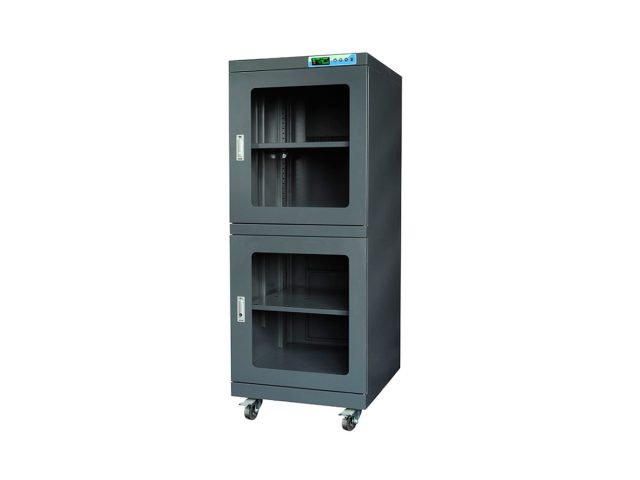
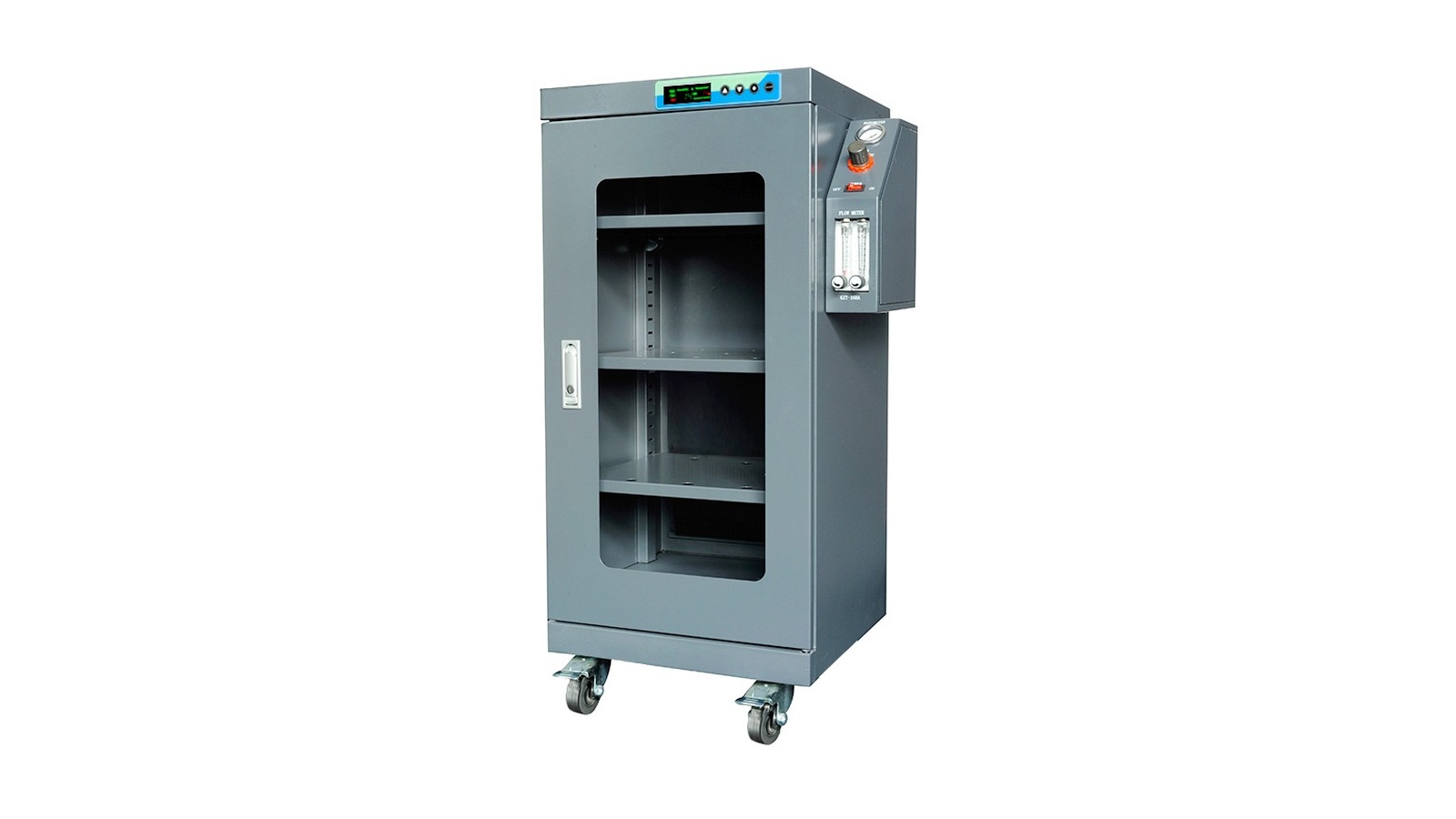
Relative humidity is controlled by desiccant. A dry cabinet circulates air across a renewable drying unit and holds a setpoint from 1% to 50% RH. It consumes power but no gas, and it is the right answer for MEAs, GDLs and seals — anything whose only enemy is water. YanSyn's YSM series moisture-proof cabinets cover this range.
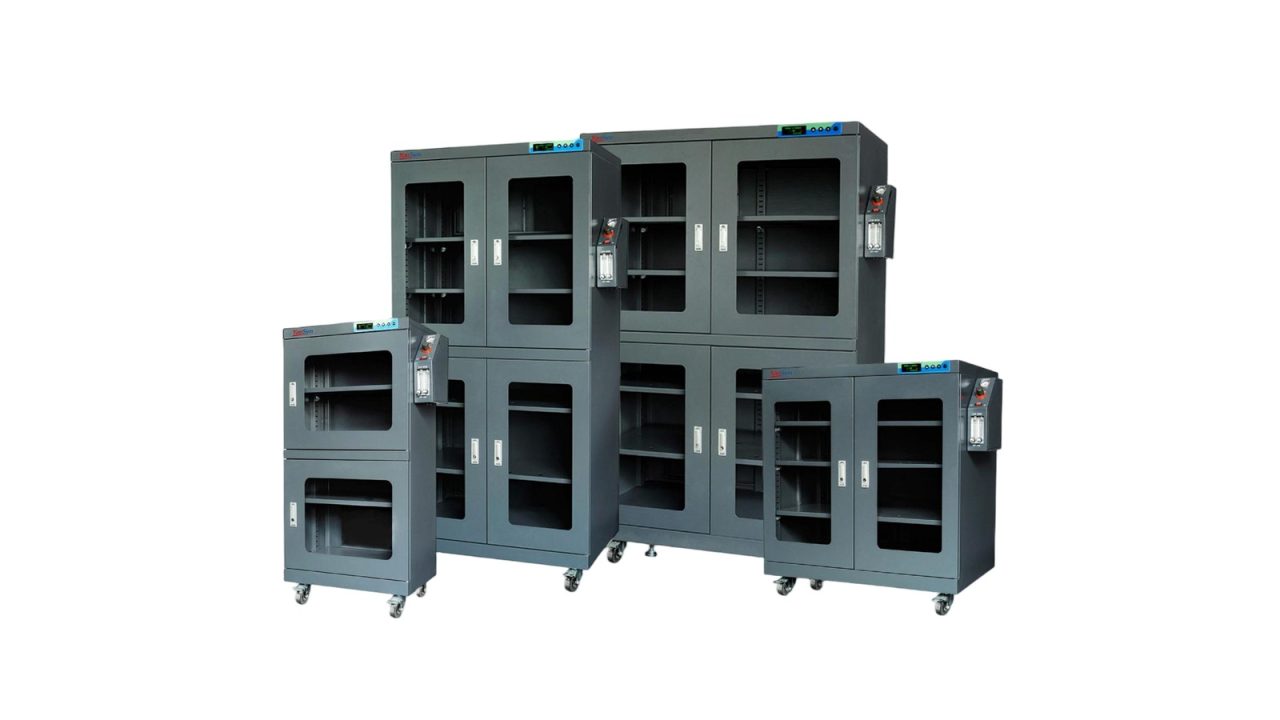
Oxygen is controlled by nitrogen purge. A nitrogen cabinet is not a better dehumidifier; it is a different device. Nitrogen flow displaces air, and because dry nitrogen carries almost no water vapour, humidity falls as a side effect. What you buy is inerting: oxygen typically below 1%, down to tens of ppm on high-flow purge models depending on volume and sealing. For catalyst powders, uncoated metal plates and any step where oxide formation changes surface energy, nothing else works. The YSN series nitrogen cabinets are built for this duty with dual-flow purge control and optional oxygen monitoring.
In practice most lines end up with desiccant cabinets at incoming inspection and manual assembly benches, and nitrogen cabinets only where the part is genuinely oxygen-sensitive and volumes keep gas cost trivial.
Drying belongs in an oven, not a cabinet
Cabinets hold a steady state; they do not remove solvent or drive a cure. Three fuel-cell steps need real heat:
- Electrode and CCM coating drying. Catalyst slurry must dry without skinning, cracking or ionomer migration — a controlled ramp and even airflow across the sheet, with uniformity tight enough that edges do not dry before the centre.
- Seal-in-place and gasket curing. Dispensed elastomer needs a defined thermal profile to reach full mechanical properties; under-cure shows up later as compression set and leakage.
- Plate bake-out and coating cure. Drying after aqueous cleaning and curing of protective or conductive coatings both need a holdable, loggable profile.
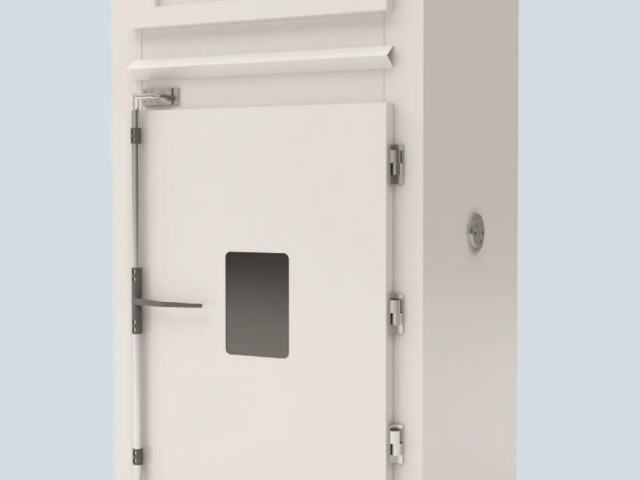
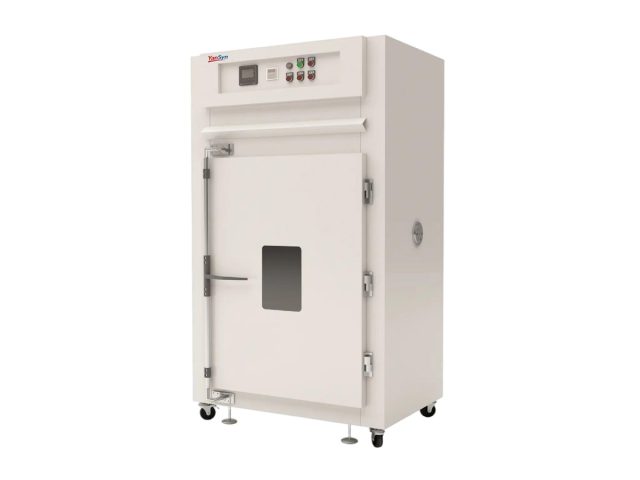
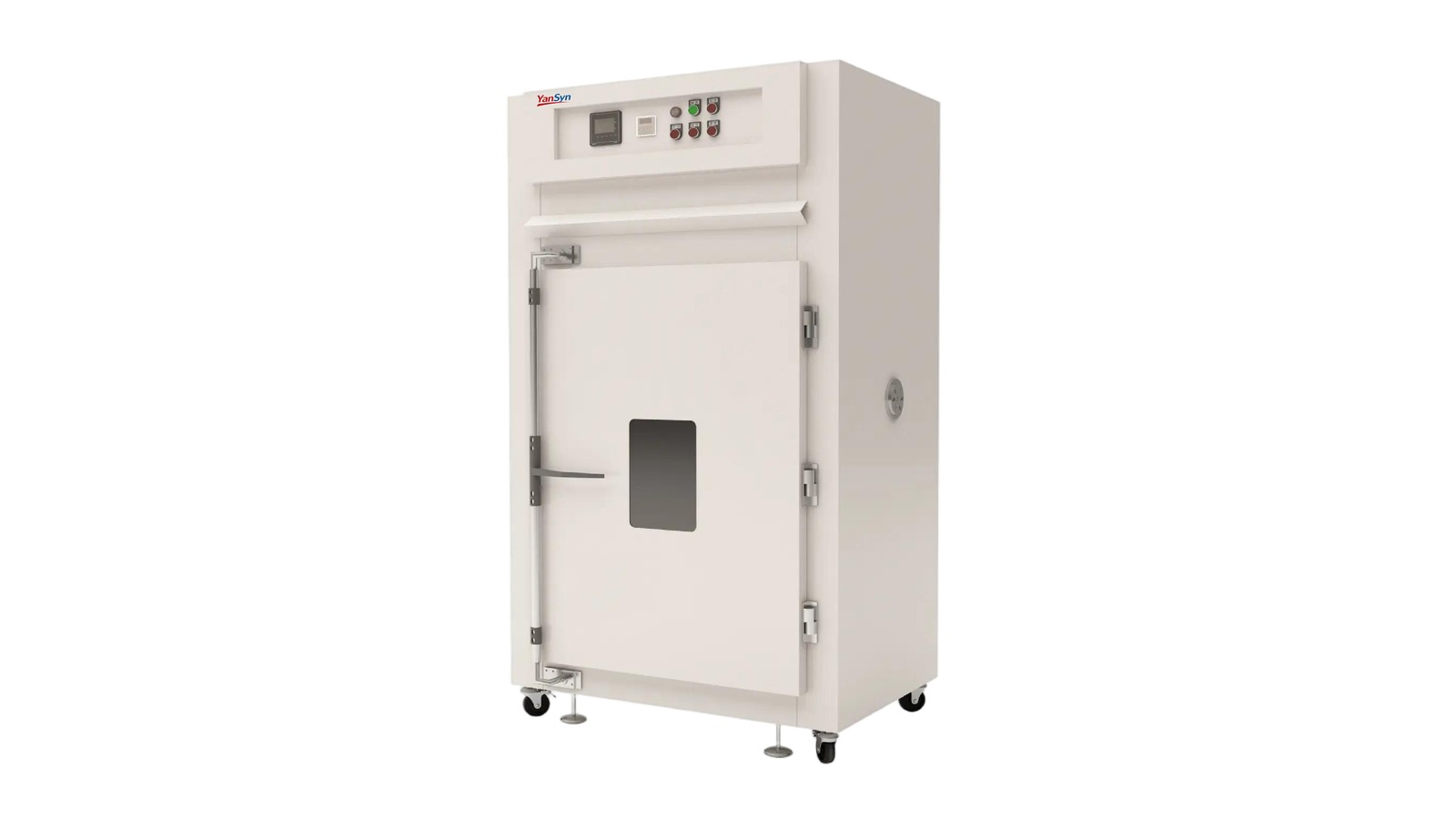
Two details decide whether the oven helps or hurts. First, uniformity: ±2 °C measured at one point is not ±2 °C across a 620 L loaded chamber — ask for a nine-point survey at operating temperature, loaded. Second, exhaust and safety: solvent-loaded parts need adequate fresh-air exchange and a compliant exhaust path, and parts headed for clean assembly are better dried in a HEPA-filtered Class 100 oven. YanSyn's YSHG series industrial ovens cover RT to 500 °C with PID control, ±2 °C uniformity (±1 °C optional) and optional Class 100, nitrogen purge and IoT logging.
Specification matrix: matching the device to the step
| Requirement | YSM dry cabinet | YSN nitrogen cabinet | YSHG industrial oven |
|---|---|---|---|
| Controlled variable | Relative humidity, 1–50% RH | RH plus oxygen, typically below 1% O₂, ppm-level on high-flow purge | Temperature, RT to 500 °C; humidity not controlled |
| Consumable | Electricity only | Nitrogen supply, 99.9% or better | Electricity plus exhaust capacity |
| Best fit in a fuel-cell line | Incoming CCM/MEA, GDL, seals, WIP at manual benches | Catalyst powder, ionomer dispersion, uncoated metal plates, oxygen-sensitive WIP | Electrode drying, seal cure, plate bake-out, incoming bake of packaging |
| Monitoring | RH sensor with alarm, optional IoT logging | RH plus optional O₂ analyser, flow meter, IoT logging | PID controller, over-temperature cut-out, optional data logger |
| Typical caveat | Does nothing for oxygen or solvent vapour | Purge discipline and door seals decide the real O₂ level | Uniformity must be surveyed loaded, not empty |
Oxygen and humidity figures are typical operating ranges, not guarantees for a specific model; final performance depends on cabinet volume, sealing, purge flow and load. Confirm against the datasheet for the size you select.
A workflow that actually holds a setpoint
The equipment is the easy part. What separates a line that holds its numbers from one that does not is handoff discipline:
- Goods-in. Log the humidity indicator card before opening the sealed bag. Parts arriving with a saturated card get a documented oven bake, not a spot at the bench.
- Incoming storage. CCM/MEA and GDL in a desiccant cabinet at a deliberate setpoint — commonly the 20–40% RH band, high enough to avoid embrittlement, low enough to limit swelling. Record the choice; do not let it drift with the seasons.
- Pre-process bake. Where the process calls for it, run a logged profile in the oven, with ramp rate and soak time on the traveller.
- WIP between coating and assembly. This is where nitrogen cabinets earn their space. A plate that waits 48 hours in ambient air is not the part that left the coater.
- Assembly. Short open-air exposure, sealed transfer boxes, and a rule that cabinets open for the shortest workable time. Every door opening is an exchange event: a small cabinet typically recovers its setpoint in minutes, a walk-in in tens of minutes (indicative, and strongly dependent on sealing and purge flow).
- Verification. Weekly seal check, monthly sensor cross-check against a calibrated hygrometer, and a logged O₂ reading at each nitrogen cabinet's exhaust. A cabinet without a verifiable number is a cupboard.
What the gas bill looks like, and why it is rarely the deciding factor
Buyers often worry that a nitrogen cabinet is expensive to run. It can be, but the arithmetic usually favours inerting once scrap is priced in. As an indicative assumption only — your numbers will differ with gas cost, volume, load frequency and leak rate — a small cabinet might consume on the order of 0.5–2 L/min of nitrogen in steady maintenance flow, with a much higher flow during initial purge. On liquid nitrogen or on-site generation that is a small monthly figure per cabinet; on small bottled cylinders it can be several times higher.
Three habits cut consumption without touching the setpoint: cascade purge from the cleanest cabinet to the least critical, stop the flow when a cabinet is empty, and fix door seals on schedule instead of when the alarm trips. We broke the five-year comparison down in Nitrogen Purge Cabinet vs Desiccant Dry Cabinet: The 5-Year TCO Breakdown — the gas is visible on a purchase order, the scrap it prevents is not.
FAQ
What RH should we store MEAs and CCMs at?
Most programs land in the 20–40% RH band inside a sealed bag or cabinet: low enough to limit swelling and condensation risk, high enough that the membrane does not embrittle. Below 10% RH long-term is generally avoided; above 60% invites swelling and biological growth. Validate against your supplier's storage specification.
Is 1% oxygen good enough, or do we need ppm levels?
It depends on the surface. Gold-coated stainless is tolerant; bare stainless, copper and aluminium are not, and thin or porous coatings sit in between. For catalyst powder or uncoated plates, specify ppm-level purge and verify it with an analyser rather than trusting the datasheet.
Can a desiccant cabinet replace a nitrogen cabinet?
For MEAs, GDLs and seals, usually yes — you are fighting water, not oxygen. For catalyst powders and uncoated metal plates, no: a desiccant cabinet removes water but leaves 20.9% oxygen in the box.
How fast does humidity recover after a door opening?
Small cabinets with good seals recover in minutes; walk-ins take considerably longer. Treat any recovery figure as indicative unless measured on your cabinet, with your load, at your setpoint.
Do we need a Class 100 oven?
If the dried part goes directly into stack assembly or a clean area, filtered airflow is worth the cost. If it goes into a secondary cleaning step, a standard forced-convection oven with good uniformity is usually sufficient.
What is the most common specification mistake?
Buying a large cabinet for a small daily load: big volume means long recovery and more gas per setpoint. Two mid-size cabinets usually beat one oversized unit on uptime and running cost.
Get the storage step right before the stack is built
Fuel-cell yield problems are expensive to diagnose after lamination and almost free to prevent before it. The fix is unglamorous: a cabinet with a verified setpoint at incoming inspection, an oven with a surveyed uniformity profile at coating and curing, and a written rule for how long a part may sit in room air.
If you are laying out a pilot line or scaling an existing one, send us your component list, your plant's ambient conditions and the daily throughput per step. We will map each part to a cabinet or oven configuration — and tell you honestly where a desiccant cabinet is enough and where nitrogen is genuinely required. Talk to our engineers — most layouts come back within two working days.