Conformal Coating Failures Start Early: PCB Pre-Bake and WIP Storage That Protect Adhesion
When conformal coating fails in the field, the investigation usually begins at the coating itself: the material, the viscosity, the spray parameters, the cure profile. Yet a large share of the real root causes sits further upstream, before a single drop of coating is applied. Printed circuit boards are hygroscopic. Laminate, prepreg and the bare board surface absorb moisture from the moment they leave the final packaging, and whatever water is trapped inside the board at coating time will fight the coating from underneath.
The good news is that this failure mode is almost entirely preventable with two controls that cost far less than field returns: a disciplined pre-bake before coating, and moisture-controlled work-in-progress (WIP) storage between process steps. This article walks through why absorbed moisture damages coating results, how to set a defensible pre-bake starting point, and how to organize WIP storage so the board that reaches your coater is as dry as the day it was baked.
Why Absorbed Moisture Undermines Conformal Coating
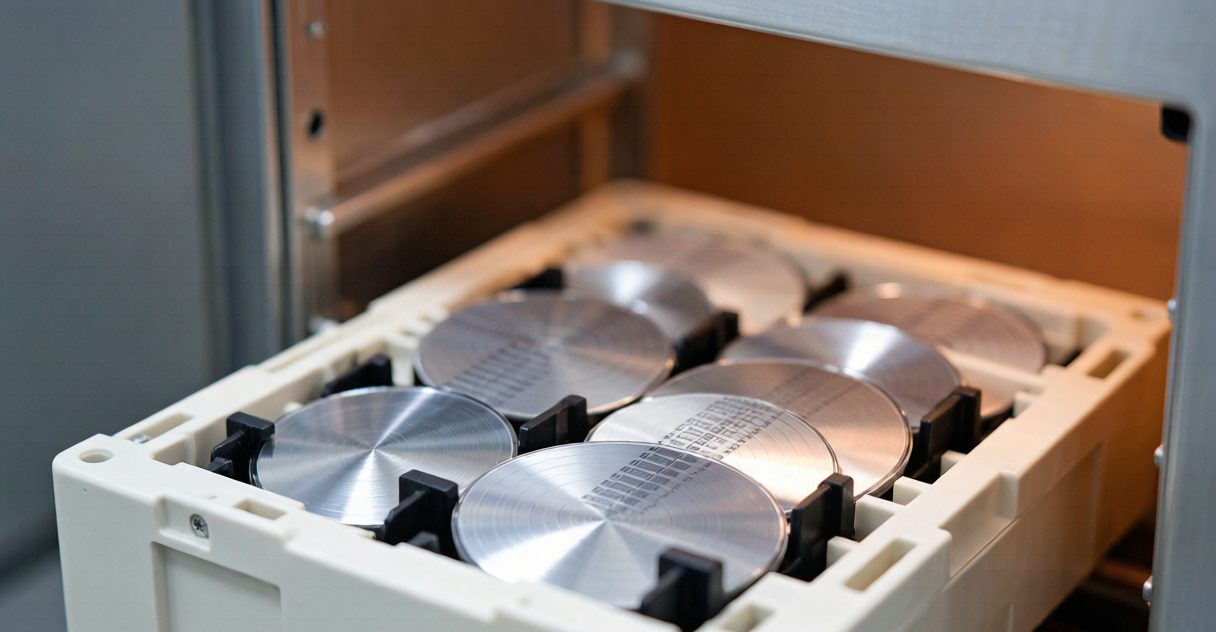
Moisture inside a PCB causes trouble in three distinct ways during the coating and curing process.
Outgassing during cure. When a coated board enters a thermal cure or is heated during UV or IR processing, absorbed water turns to vapor. If the coating has already begun to skin over, the vapor has nowhere to go. The result is pinholes, bubbles and voids in the coating film, exactly the defects that create leakage paths and corrosion sites in humid service environments.
Poor adhesion. Coatings bond to surfaces, not to water. A damp laminate or a moisture-blistered solder mask weakens the interface between board and coating. Adhesion may look acceptable at final inspection and then delaminate weeks later under thermal cycling, which is one of the most expensive failure modes to diagnose because it appears long after the board has shipped.
Measling and delamination. For thick or multilayer boards, rapid heating of moisture-saturated laminate can drive internal delamination and measling before the coating even matters. This is the same popcorn mechanism that damages packaged semiconductors during reflow, and we cover that failure mode in detail in our deep-dive on MSD baking profiles and the popcorn effect. Boards waiting for coating suffer the identical physics, just at the assembly level.
Pre-Bake Before Coating: Setting a Defensible Starting Point
A pre-bake drives absorbed moisture out of the laminate before the board is sealed under coating. Industry practice for boards that will be conformally coated is typically a low-temperature bake in the range of roughly 80 to 120 °C for two to six hours, with the longer end reserved for thick multilayer boards or boards that have been exposed to ambient conditions for several days. Treat these as indicative assumptions and starting points for internal qualification, not as universal manufacturer promises: the right profile depends on laminate type, board thickness, surface finishes and the coating supplier’s own requirements, and IPC-CC-830 and coating vendor datasheets should always take precedence.
Two practical rules make any pre-bake program more defensible:
- Record the bake-to-coat interval. A bake only helps if the board reaches the coater while it is still effectively dry. Define a maximum interval, and once it is exceeded, the board returns to the bake queue.
- Bake by exposure history, not by calendar. A board that sat in humid summer receiving storage for a week needs a heavier bake than a board straight from its moisture-barrier bag. Segregate incoming boards by exposure time rather than treating all boards identically.
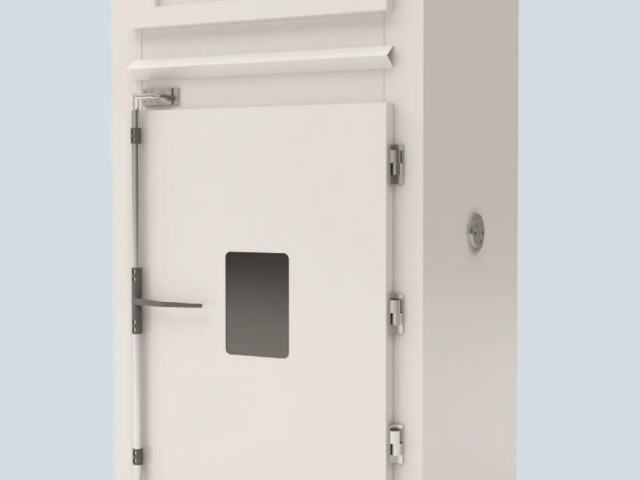
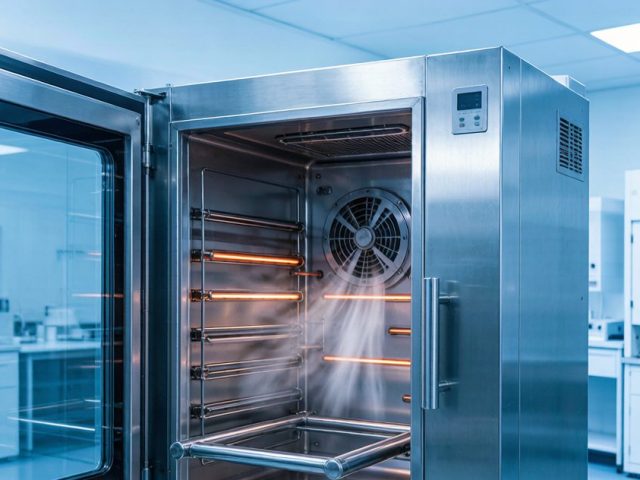
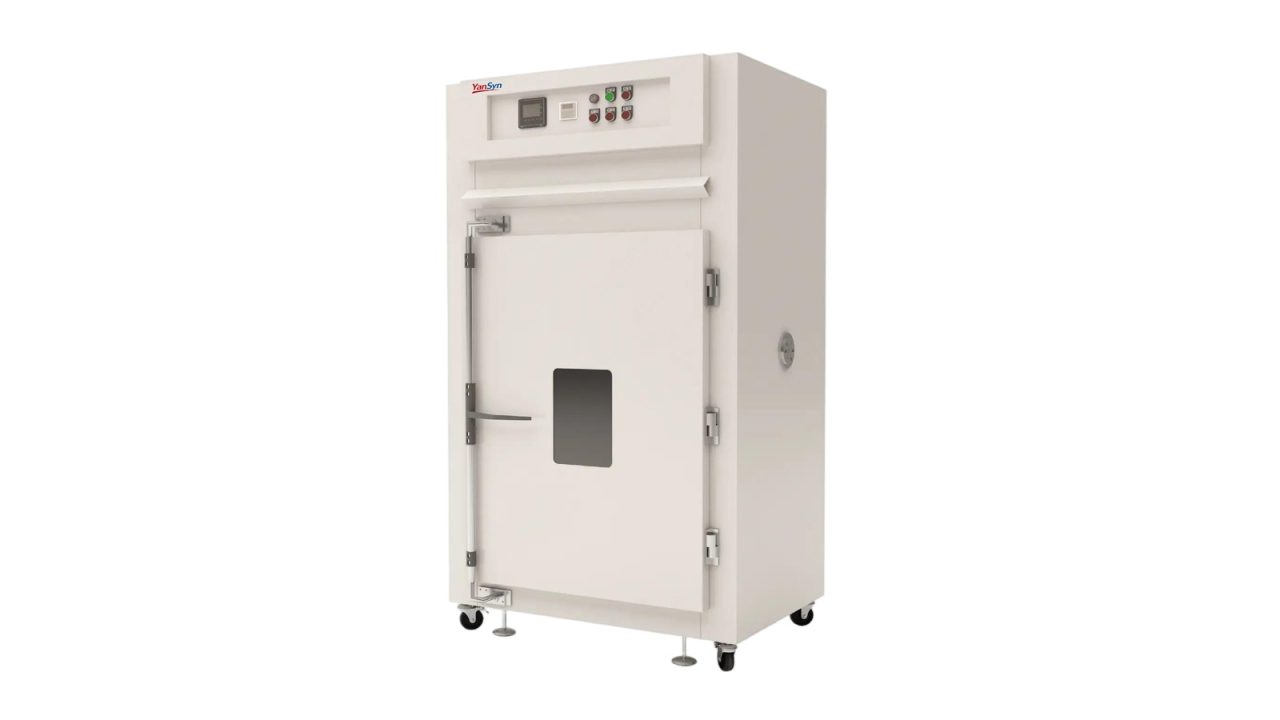
A benchtop or mid-size forced-convection industrial oven with tight temperature uniformity is the right tool here. A YSHG industrial drying oven with PID control and chamber uniformity of ±2 °C (selectable to ±1 °C) keeps every shelf position inside the qualified bake window, which matters when your pre-bake is part of a documented process; for line-level throughput the YSHG 240 industrial drying oven (240 L) is a common fit, with smaller 30–80 L bench units available for low-volume or NPI lines.
WIP Storage: The Clock Restarts the Moment Boards Leave the Oven
Here is the step most lines get wrong. The pre-bake resets the moisture clock, but it does not stop it. Boards removed from the oven and parked on an open rack in the coating area immediately begin re-absorbing ambient moisture. In a coastal plant at 60–80% RH, a freshly baked board can accumulate meaningful moisture within hours. If your qualified bake-to-coat interval is, say, eight hours, an open-air WIP rack quietly voids it.
The fix is to move baked boards into a low-humidity storage cabinet at the oven exit and pull them to the coater on demand:
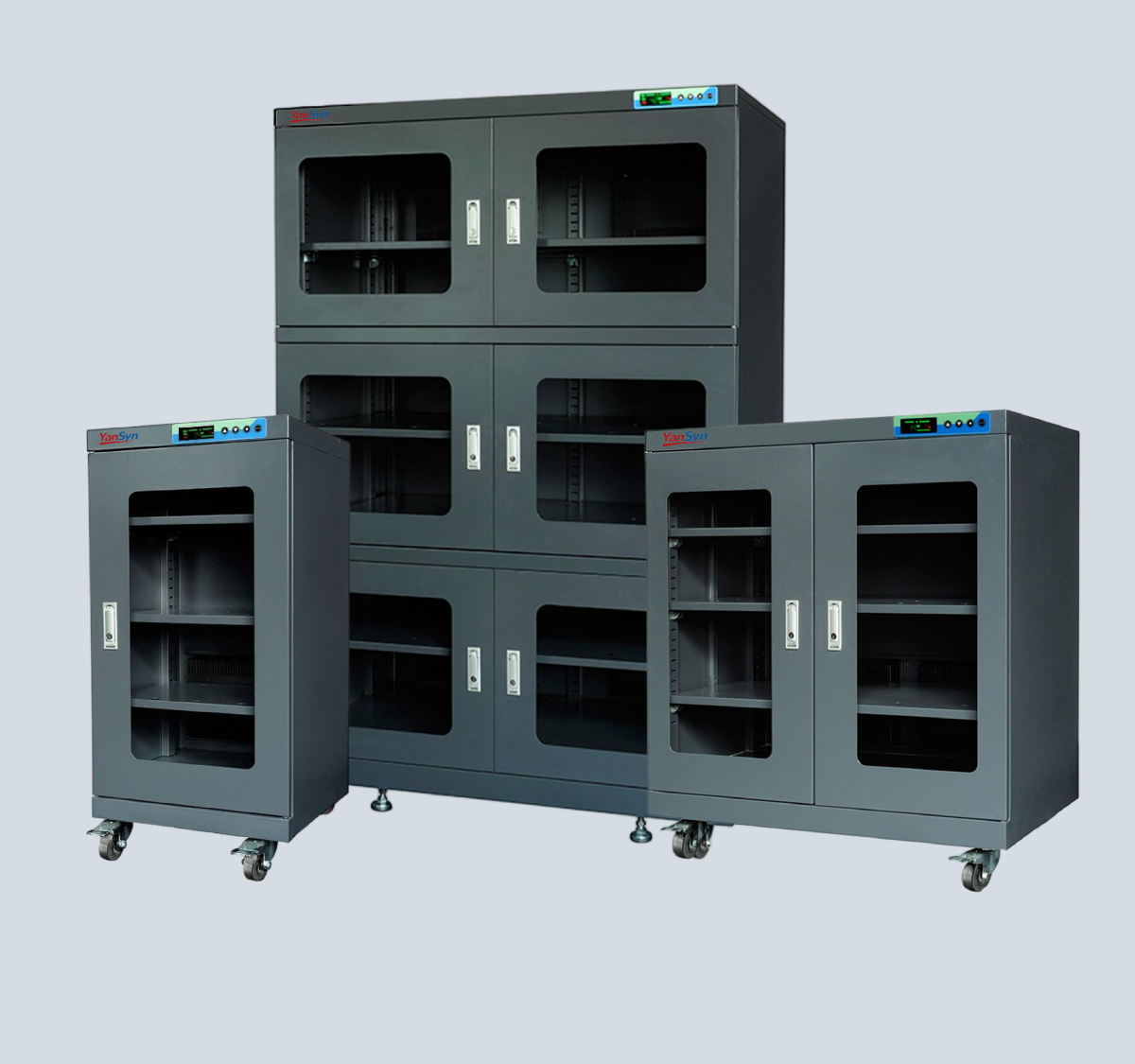
- ≤10% RH dry storage is a common target for keeping baked boards effectively “on the clock frozen” between process steps. An YSM 240 moisture-proof cabinet (240 L) beside the coating line holds a full changeover batch of boards and panels in this range using desiccant-based dehumidification, with no gas supply and minimal power draw.
- <5% RH or nitrogen storage suits high-reliability programs, long queue times, and boards with oxidation-sensitive finishes. For finishes such as ENIG or bare copper that dull or oxidize during long waits, a YSN nitrogen cabinet purges the chamber to low oxygen as well as low humidity, protecting both solderability and coating adhesion in one step.
- One important exception: boards with OSP (organic solderability preservative) finishes should not be parked in ultra-dry or nitrogen storage for extended periods, because OSP degrades in very low-humidity environments. Route OSP boards on a shorter path from bake to coating, and keep them in a moderate-RH cabinet if storage is unavoidable.
Storage Options Compared
The table below summarizes the realistic options for holding pre-baked boards before coating, so process engineers can match storage investment to reliability targets.
| Storage method | Typical environment | Moisture control effect | Best suited for |
|---|---|---|---|
| Open WIP rack | Ambient shop air, 40–80% RH | None; bake-to-coat clock runs continuously | Boards coated within minutes of baking |
| Dry cabinet ≤10% RH | Desiccant dehumidification, no gas needed | Effectively pauses moisture re-uptake; interval control becomes simple | Most SMT and PCBA WIP between pre-bake and coating |
| Nitrogen cabinet | Low RH plus low oxygen (N₂ purge) | Moisture control plus oxidation protection for finishes and exposed copper | High-reliability builds, long queues, ENIG and bare-Cu boards |
| Moisture-barrier bag + desiccant | Sealed bag with HIC indicator | Good for hours-to-days; handling overhead per batch | Shipping, off-line storage, small overflow volumes |
For teams that already track nitrogen consumption on a budget, cabinet-based storage is also the cheaper long-run choice: gas flow in a purged YSN cabinet can be controlled and logged, and our earlier analysis of nitrogen flow-control payback shows how quickly metered purge strategies return their cost in typical duty cycles (figures there are likewise indicative assumptions, not guarantees).
A Workflow That Holds Up on the Line
Pulling the pieces together, a conformal coating pre-bake and storage workflow that survives audits looks like this:
- Classify on arrival. Log every incoming board or panel with its exposure history: sealed bag, opened days ago, or unknown. Boards with unknown or long exposure go straight to the bake queue.
- Pre-bake to the qualified profile. Run the board through the YSHG oven at the qualified temperature and duration for its thickness class. Record actual start and end times, not just the setpoint.
- Transfer directly to low-humidity storage. Boards leave the oven and enter the YSM dry cabinet at ≤10% RH (or the YSN nitrogen cabinet for oxidation-sensitive finishes) without an open-air detour. The cabinet, not the rack, is the default parking place.
- Issue to the coater against the interval rule. Boards are released to coating within the qualified bake-to-coat window. Anything that misses the window is flagged and re-baked; the rule is enforced by the log, not by memory.
- Cure to the coating datasheet. Thermal-cure materials run in the same YSHG oven family, whose RT to 500 °C range and ±2 °C (optional ±1 °C) uniformity cover typical cure windows with margin; optional Class 100 filtration and IoT monitoring are available where cleanroom or traceability requirements apply.
- Inspect and feed back. Track pinholes, bubbles and adhesion-test results by bake batch. If defects cluster, the first suspects are the interval rule and the storage cabinet’s actual RH, not the coating.
For a broader view of how the cabinet itself maintains these humidity levels, our article on how a dry cabinet works explains the dehumidification module, door-opening recovery and maintenance rhythm behind the ≤10% RH promise.
FAQ
Can we skip the pre-bake if boards come straight from sealed moisture-barrier bags?
Often a shorter bake or none at all is justified if the bag seal is intact and the humidity indicator reads dry, but the decision should come from your coating supplier and internal qualification, not habit. Many high-reliability specs require a bake regardless of packaging history.
How long can a pre-baked board sit in a ≤10% RH dry cabinet?
From a moisture standpoint, indefinitely: re-uptake at ≤10% RH is negligible compared with ambient air. Your internal interval rule can therefore be defined as “time on the open rack” rather than “time since bake”, which is exactly what makes cabinet-based WIP storage operationally forgiving. Confirm the policy with your coating specification owner.
Is nitrogen storage always better than a dry cabinet?
No. Nitrogen adds oxidation protection, which matters for bare copper and long queues, but it adds gas cost and plumbing. For boards whose finishes are not oxidation-sensitive and which will be coated within days, a desiccant dry cabinet at ≤10% RH delivers the moisture control that coating adhesion actually needs at lower running cost. (Consumption figures in any comparison are indicative assumptions and vary with cabinet size and door frequency.)
What humidity should the coating area itself be kept at?
Most coating materials specify application at moderate ambient RH, and the coating area does not need ultra-low humidity; what matters is that the board interior is dry, which is the job of the pre-bake and the storage cabinet, not the room HVAC.
Conclusion
Conformal coating quality is decided before the coater fires. A qualified pre-bake in a uniform industrial oven removes the moisture that causes pinholes, bubbles and delamination; low-humidity WIP storage in a dry or nitrogen cabinet keeps the board dry until the moment of coating; and a recorded bake-to-coat interval turns the whole thing into an auditable process. All three controls are inexpensive next to the cost of field returns, and they reuse equipment many plants already own.
If you are specifying ovens and storage cabinets for a coating line, contact the YanSyn team with your board sizes, daily throughput and reliability targets, and we will help you size the pre-bake oven and WIP cabinets around your process rather than the other way round.