PCB Shortage Alert 2026: What the GEA Warning Means for Moisture-Sensitive Board Storage
On 18 November 2026 the Global Electronics Association (formerly IPC) issued an Industry Alert on escalating PCB supply-chain shortages. Automotive, industrial, medical, defense and telecommunications buyers are reporting longer lead times as AI demand absorbs scarce capacity, and the Association expects the tightness to last through at least the first half of 2027. It is a procurement story — but for anyone holding bare boards, laminates or moisture-sensitive components, it is also a humidity and storage story. This is YanSyn's reading of what the alert means on the shop floor, and what to check before you build buffer stock.
What the alert actually says
The Association's Industry Alert and its explanatory report are about availability, not pricing. Four figures frame the problem; all of them are industry-level observations, not a supplier promise to any particular buyer.
| Indicator | What the Association reports | How to read it |
|---|---|---|
| Bookings vs shipments | Bookings +56.1%, shipments +13.3% in the year to September | A widening order-to-delivery gap; Association data, described by trade press as a North American series |
| Lead time | 16–20 weeks or more for high-layer boards | Applies to high-layer products, not every board type |
| Board complexity | ~12 layers typical vs 40–60+ layers for AI-server boards | More glass fabric, resin, copper foil and laminate per board |
| Outlook | Shortage through at least H1 2027; meaningful relief unlikely before mid-2028 | An outlook, not a delivery schedule |
| Who waits | Automotive, industrial, medical, defense and telecom customers move to the back of the queue | Allocation priority, not cancelled orders |
Chinese reporting on 26 November added a downstream detail: some leading PCB makers have high-end capacity booked out to 2028. That is a market observation from press interviews, not a figure from the Association, and we treat it as such. The Association's own recommendations are practical: share realistic demand forecasts, avoid double-booking, and qualify alternate sources for laminate, prepreg and foil.
Why a supply shortage turns into a moisture problem
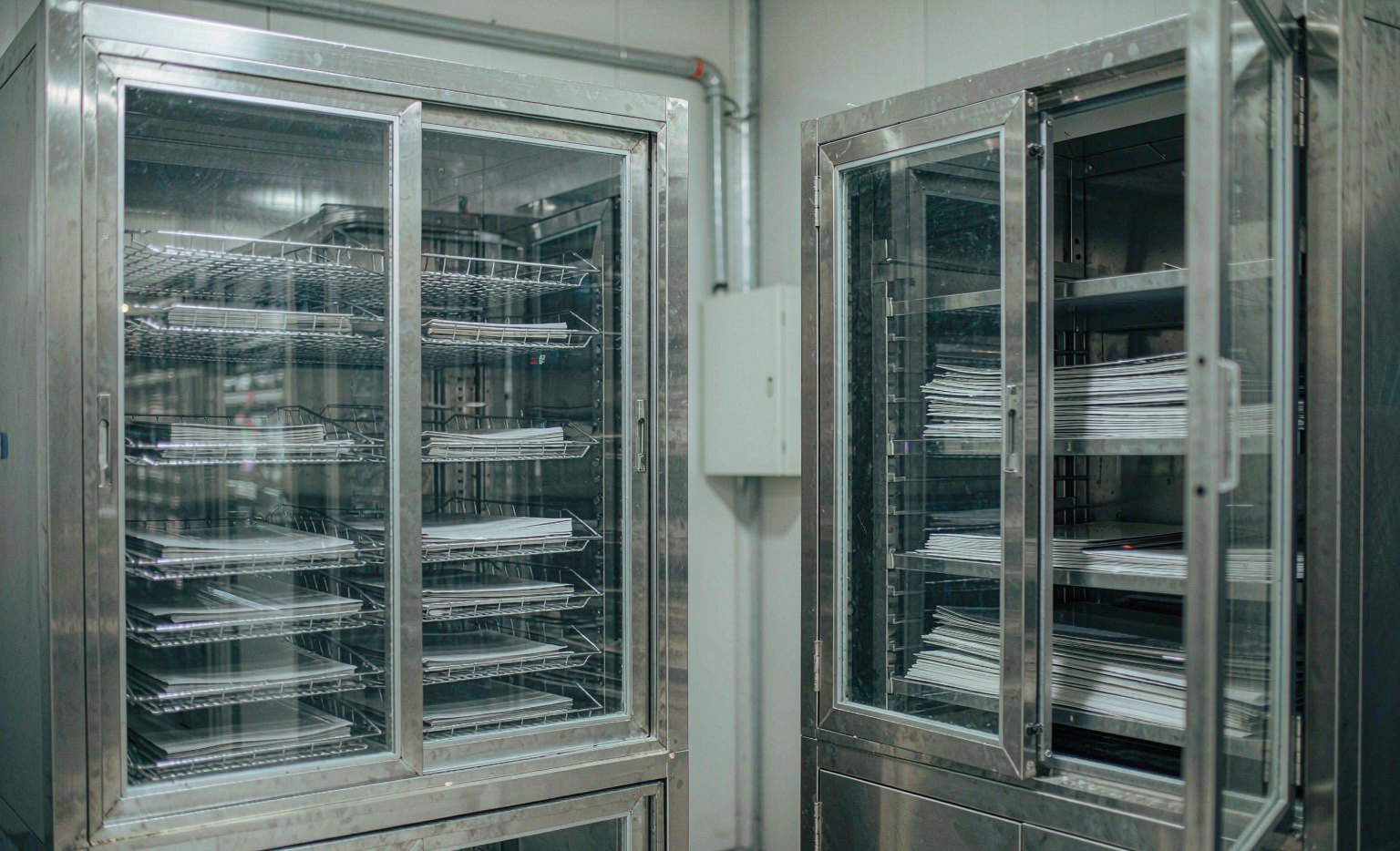
When lead times stretch from weeks to months, the usual response is to order earlier and hold more buffer stock. That solves one problem and quietly creates another: boards, laminates, prepreg, components and packaging materials now sit in your store for a full allocation cycle instead of a few days. Moisture does not care whether the delay was caused by AI demand or by a purchasing decision. It keeps diffusing into laminates and into moisture-sensitive devices (MSDs) for as long as the store allows it.
The consequences are familiar to any SMT engineer. Absorbed moisture in a board or package can turn into delamination, popcorning or measling during reflow. On bare copper, silver or OSP finishes, time in ambient air means oxidation and a decline in solderability. Neither failure shows up on the goods-in paperwork, and both appear only after the board is already in the oven. In other words, a longer queue converts a procurement delay into a storage-discipline problem, and the cheapest place to deal with it is the store, not the assembly line.
Our earlier notes on solderability shelf life in component warehouses and on RH uniformity inside a dry cabinet cover the physics. The alert simply gives those controls a new urgency and a longer time horizon.
Four checks before you build buffer stock
1. Size the store for the queue, not for the order
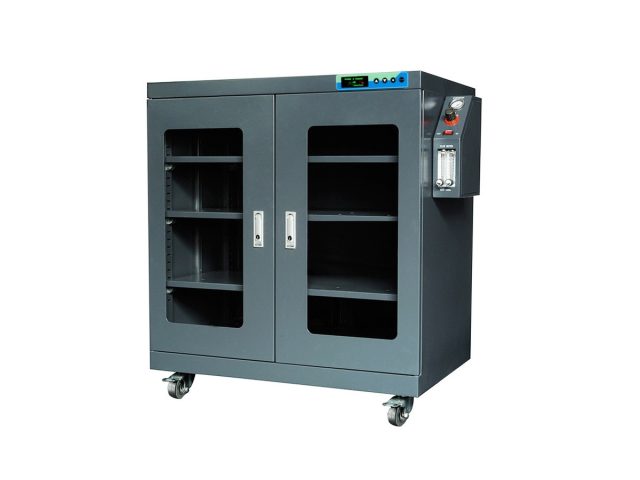
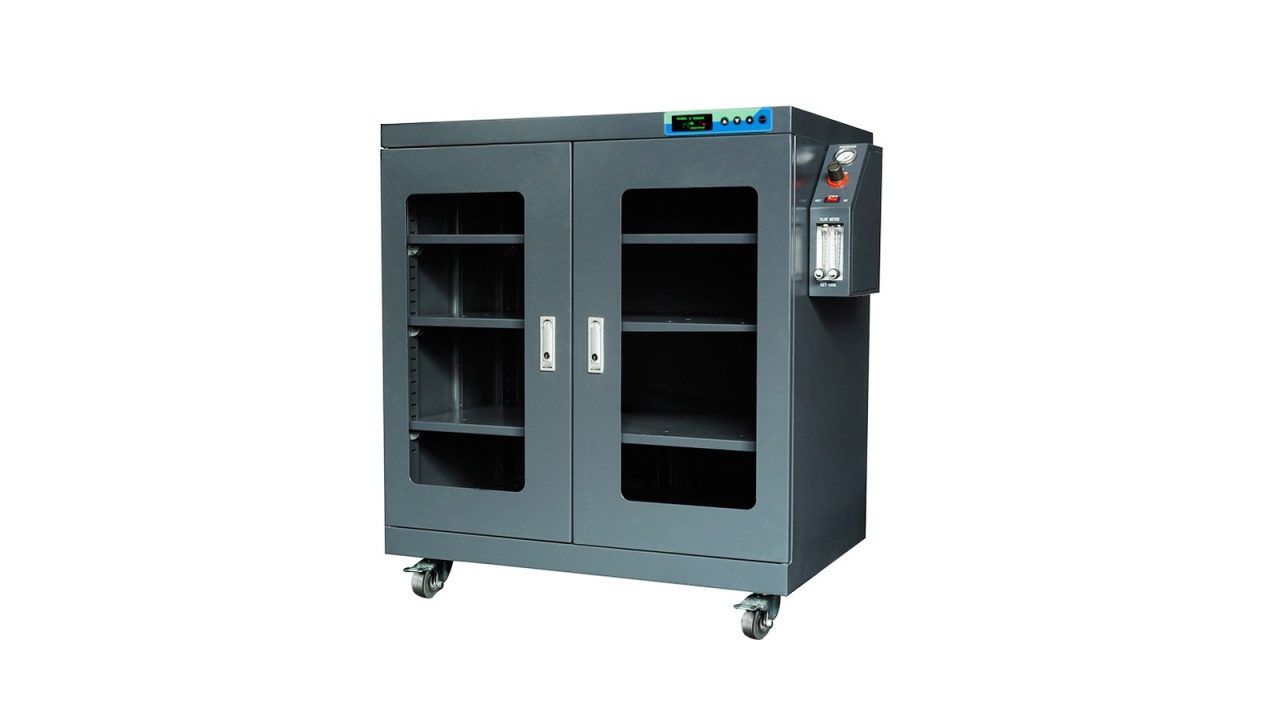
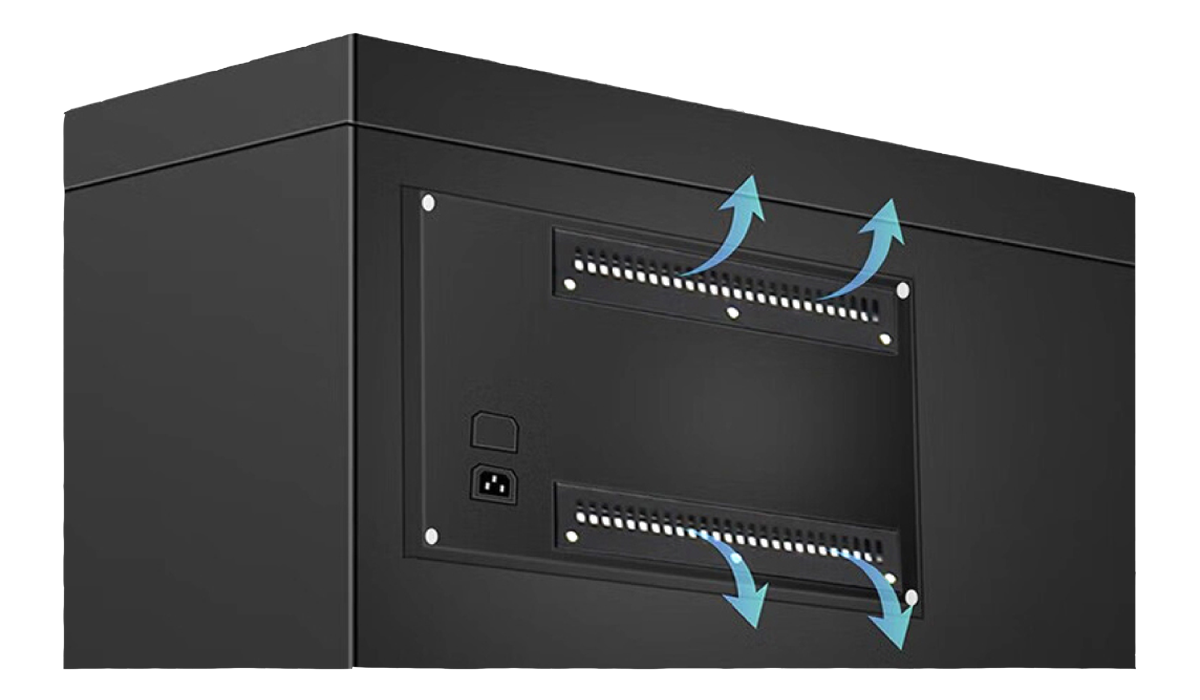
A 16–20 week lead time can mean pallets of boards and trays of MSDs waiting at once. Estimate the volume of the buffer, then check whether the dry-storage capacity actually covers it. Large-format units such as the YSM1430-6 moisture-proof cabinet or the YSM450 are typically considered where floor space is limited but volume is not. A cabinet that is full is a cabinet with poor air circulation, and a cabinet opened constantly is a cabinet that never recovers its setpoint.
2. Verify recovery and uniformity, not just the display
The RH number on the panel describes one sensor at one point in the chamber. With a busy store, door openings, dense loading and blocked shelves dominate the real conditions around the boards. Log recovery time after openings and map a few positions in the loaded chamber; our article on sensor placement and airflow patterns gives a workable method.
3. Match the atmosphere to the surface finish
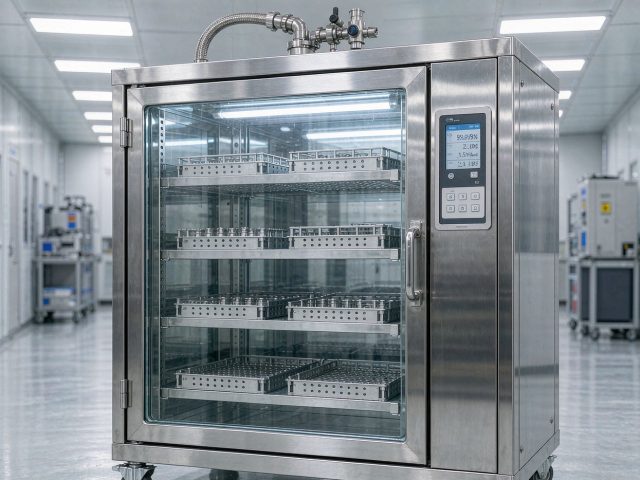
Low RH is enough for many packed MSDs, but bare copper, silver-plated parts and OSP-finished boards benefit from low oxygen as well as low humidity. A nitrogen cabinet such as the YSN450 keeps oxygen away from the surface during long waits. We looked at the silver-plating case in RF filters and connectors for 5G, and at target-setting in oxygen monitoring and verification. Choose the atmosphere from the finish and the qualified process, not from habit.
4. Keep bake as a controlled process
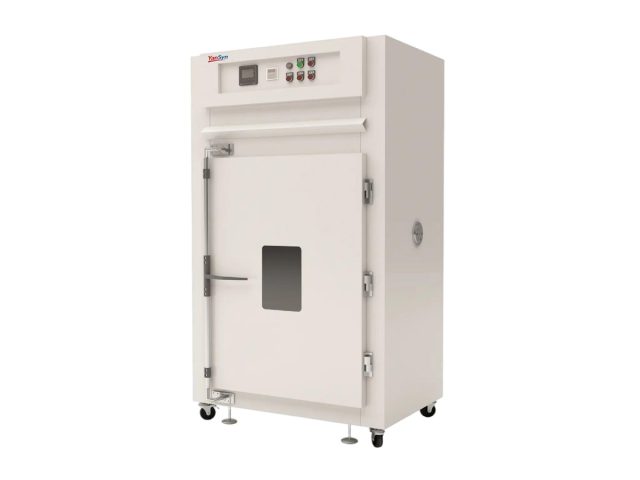
Baking before assembly can remove absorbed moisture, but it is not a free reset. Excessive or repeated baking can degrade finishes and consume floor life, and some laminates and packaged devices have supplier-specific limits. If your buffer stock has been in ambient air for months, follow the component or board supplier's MSD procedure and your own J-STD-033-based rules; use a controlled YSHG industrial drying oven with recorded setpoint, soak time and part temperature rather than an uncontrolled warm room. Setpoint is not part temperature — the thermal-mass and soak-time distinction matters more on thick, high-layer boards.
A workable workflow for the next allocation cycle
- Segment the buffer. Split incoming boards and MSDs by finish, moisture sensitivity and expected time in store; the oldest stock gets used first.
- Define the storage atmosphere per segment. Low RH for general MSDs; low RH plus nitrogen for oxidation-sensitive finishes; document the setpoint and the acceptable range.
- Log exposure. Record bag-open date, cumulative ambient time and door openings so floor-life decisions are based on records rather than memory.
- Check capacity at peak, not average. Calculate the maximum pallet load during the longest queue and confirm airflow paths stay open.
- Qualify the bake route early. Agree the oven recipe and the re-bake limits with the board and component suppliers before a batch is at risk.
- Audit before release. Sample RH/oxygen logs and, where required, run a solderability or moisture check before the buffer lot reaches the line.
This is deliberately unglamorous. None of it shortens a 20-week lead time. All of it prevents a supply-chain delay from turning into a yield loss — which is the part a buyer can actually control.
What this alert does not mean
It does not mean PCB production has stopped, nor does it predict that any specific order will be cancelled. The +56.1% / +13.3% figures are Association statistics with their own regional and product scope; the 16–20 week figure refers to high-layer boards; the 2027 and 2028 dates are an outlook. Chinese press reports about capacity booked into 2028 are separate market observations. Nothing here is a YanSyn specification, a delivery commitment or investment advice. All process numbers in your own plant should come from your qualified MSD procedure and supplier data sheets.
FAQ
Does the Global Electronics Association alert say PCB production has stopped?
No. It describes a widening gap between bookings and shipments, longer lead times for high-layer boards, and an allocation queue that pushes some sectors behind AI demand.
Should we bake every board that has been in storage?
No. Bake only where your MSD procedure, supplier data and exposure records call for it. Unnecessary baking can damage surface finishes and does not restore an already expired floor life.
Is a dry cabinet enough, or do we need nitrogen?
It depends on the finish and the qualified process. Packed MSDs often need low RH only; bare copper, silver and OSP surfaces generally benefit from low oxygen as well. Our oxygen monitoring guide covers how to set and verify a target.
Will better storage fix a supply shortage?
No — but it stops a long wait from becoming scrap. Storage discipline protects the value of material you have already paid for and waited months to receive.
Bottom line
The November 2026 PCB alert is a capacity story with a humidity consequence. Longer allocation queues mean longer storage, and longer storage means the store has to behave like a controlled process: enough capacity, verified RH or oxygen, exposure records, and a bake route that is qualified rather than improvised. If you are planning buffer stock for 2027, it is worth reviewing the storage side before the pallets arrive.
Talk to YanSyn about dry, nitrogen or bake capacity for your buffer stock: contact our engineers, or browse the YSM, YSN and YSHG ranges.
Sources
- Global Electronics Association Industry Alert, 18 November 2026 — "Growing Shortages Across the PCB Supply Chain Threaten the Next Wave of AI and Electronics".
- Global Electronics Association explanatory note — "The PCB Squeeze: A Wake-Up Call for Global Electronics".
- Xinhua Finance / China Securities Journal digest, 26 November 2026 — high-end PCB order books extending towards 2028.
Published 29 November 2026. This article is YanSyn's independent commentary on publicly reported industry news; it is not affiliated with or endorsed by the Global Electronics Association, and it is not a product specification, a supply commitment or investment advice.