Silver Plating, Humidity and 5G Yield: Nitrogen Storage for RF Filters and Connectors
A single 64T64R massive MIMO radio packs hundreds of silver-plated parts: cavity filter bodies, tuning screws, connector contacts, cable assemblies and ground pads. Silver is chosen for its conductivity, solderability and contact reliability — but between the plating line and final assembly, those surfaces sit in plant air for hours, days or weeks. Trace sulfur compounds and humidity quietly dull bright plating into haze and dark spots, and the rejects show up late, at electrical test or final visual inspection.
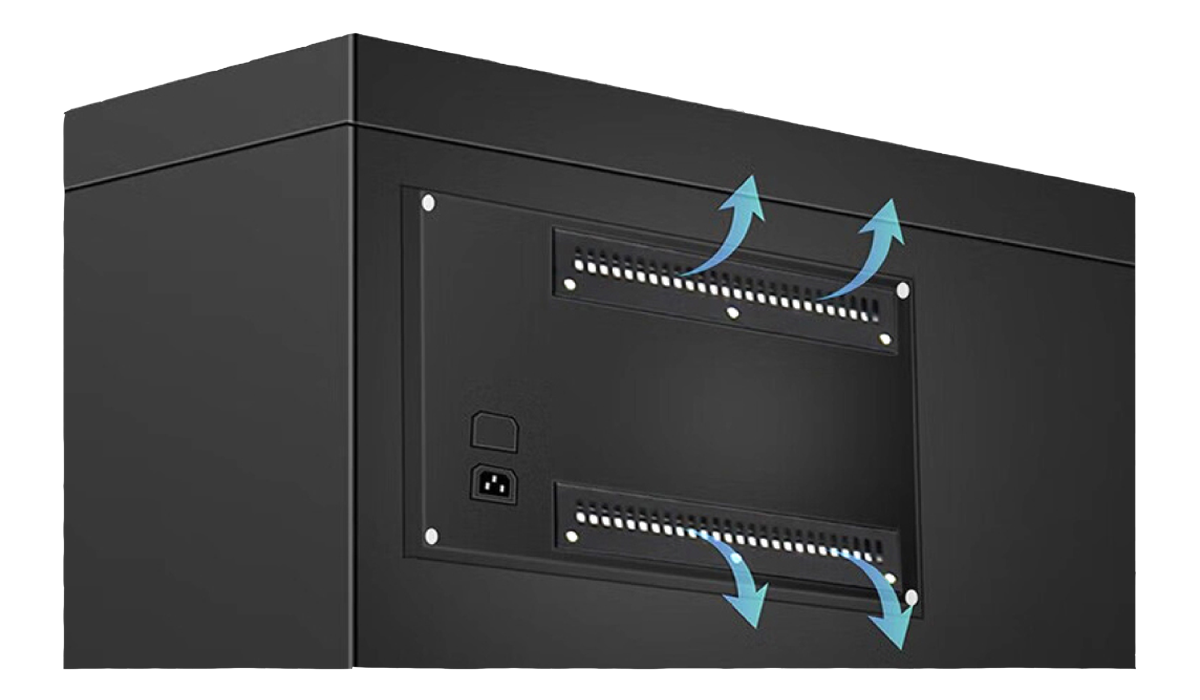
This article looks at why silver-plated RF components tarnish in storage, where 5G production lines lose yield to it, and how a nitrogen storage cabinet — such as a YSN nitrogen cabinet — changes the storage chemistry. It ends with a practical workflow and the operating points most plating and RF shops settle on.
Silver Tarnish in One Paragraph of Chemistry
The tarnish film on silver is mostly silver sulfide (Ag₂S), formed when silver reacts with trace hydrogen sulfide (H₂S) and carbonyl sulfide (OCS) — gases present in outdoor and indoor air at parts-per-billion levels, higher near traffic, sewers, vulcanized rubber, cardboard and some paper grades. Silver also corrodes to silver sulfate under NOₓ and ozone exposure, and chloride contamination plus moisture can drive silver migration on biased PCB surfaces.
Humidity is the accelerator. Above roughly 60% RH, a continuous water film forms on the surface and lets dissolved corrosive gases behave electrochemically; tarnish rates jump. Below about 30–40% RH the film becomes discontinuous and rates fall sharply. Below 5% RH, corrosion chemistry is effectively arrested — not because the gases are gone, but because the reaction medium is. That is the core rationale for low-humidity storage of precious-metal surfaces.
Where 5G Lines Actually Lose Yield to Tarnish
The exposure is rarely the plating tank itself; it is everything around it. Typical trouble spots:
- Queue time between operations. Plated filters waiting for tuning, testing or assembly accumulate storage hours that nobody budgets. A weekend in humid summer air can visibly haze a bright silver finish.
- Outsourced plating and transport. Parts sent out for plating return in cardboard boxes — a sulfur- and chloride-containing material — and often sit in receiving before inspection.
- Organic RF substrates. Antenna-in-module and laminate-based components bring a second problem: moisture uptake that causes delamination and popcorning during reflow. This is standard MSD territory and is usually managed under J-STD-033B-style floor-life rules, in parallel with plating protection.
- Service and aftermarket spares. Replacement filters and connectors stored for years in a warehouse emerge dull enough that field engineers reject them on sight, even when electrical function is marginal but acceptable.
Notably, the same mechanisms that dull silver-plated RF parts also attack gold, silver and copper bonding wire in semiconductor packaging — a parallel we covered in detail in our bonding wire storage article. The storage strategy is fundamentally the same: cut humidity, cut reactive gas concentration.
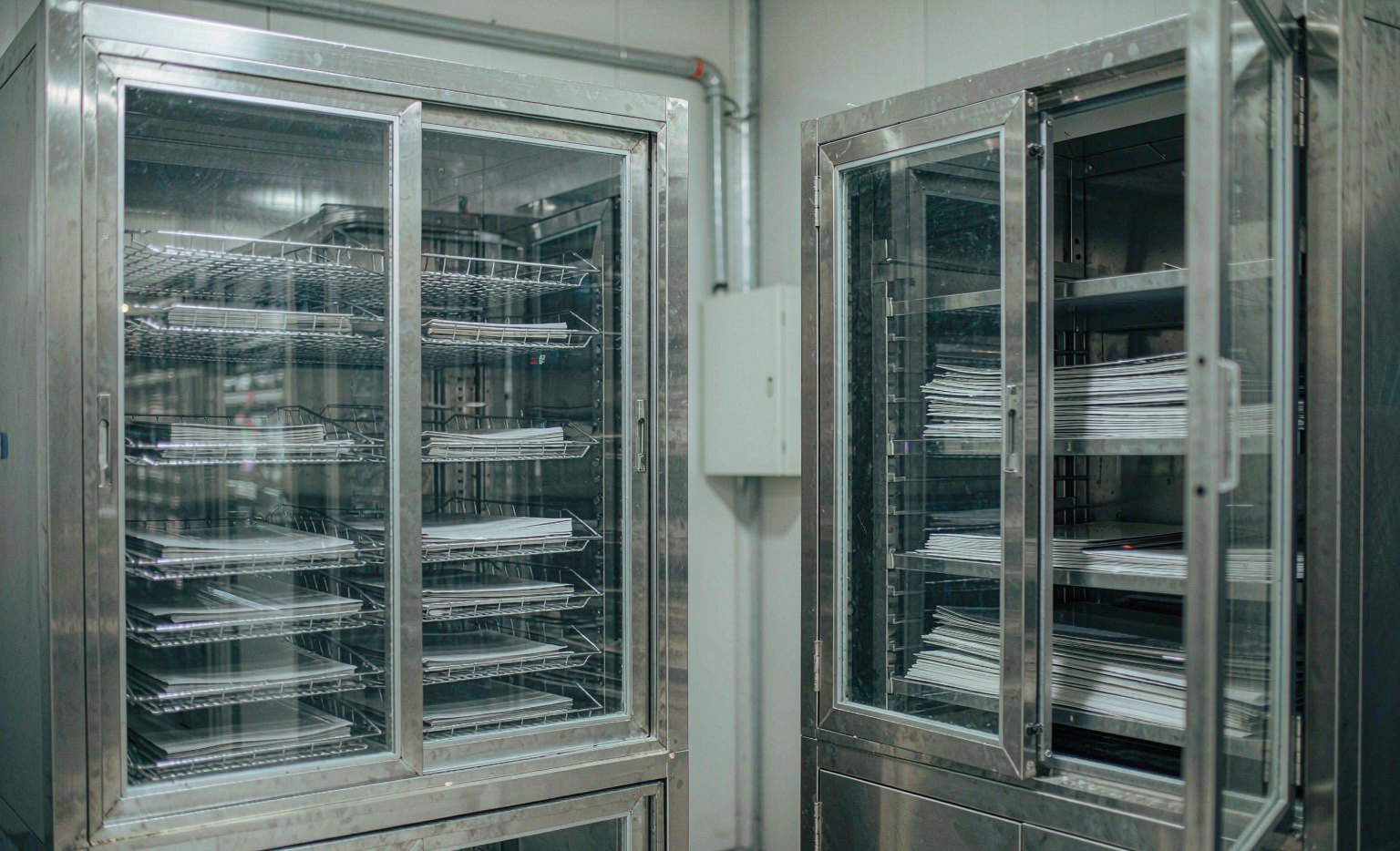
What a Nitrogen Cabinet Changes
A nitrogen cabinet attacks both terms of the corrosion equation:
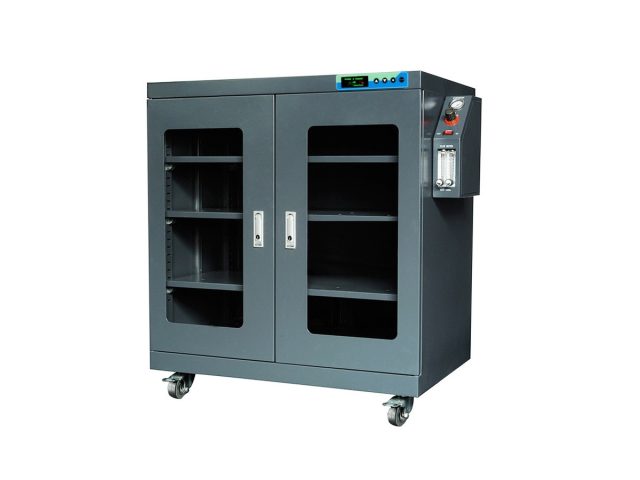
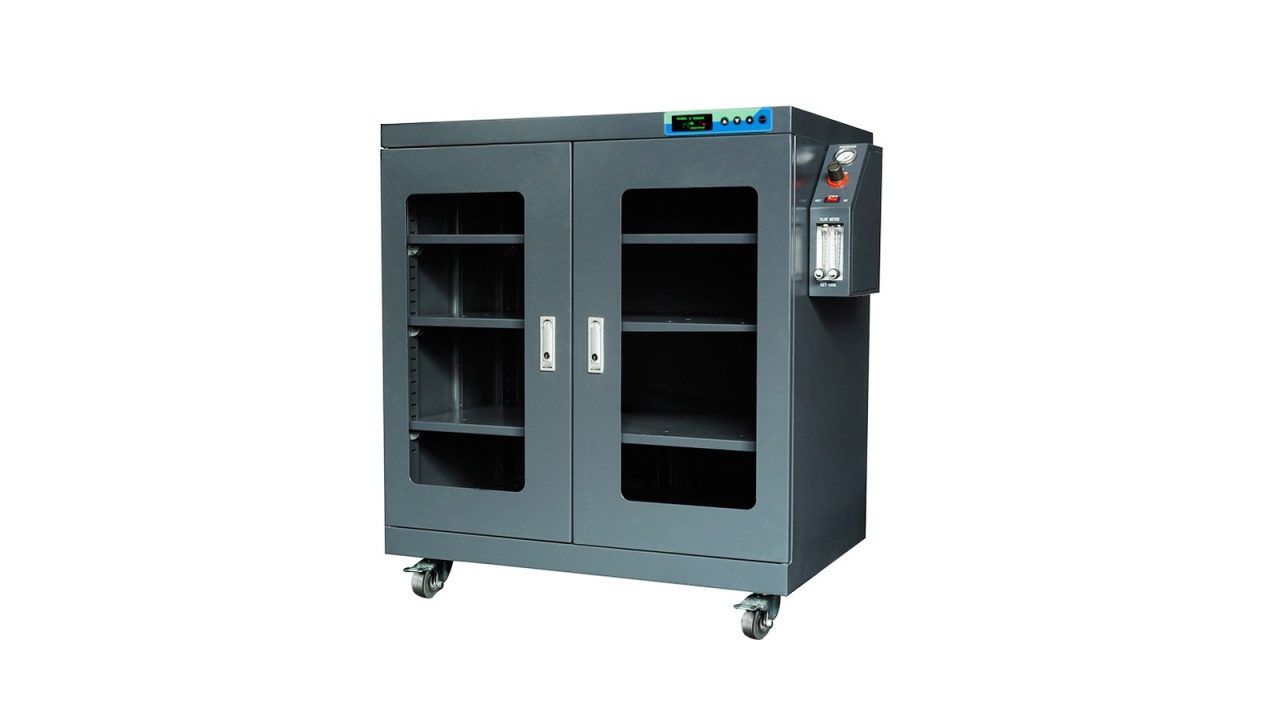
- Relative humidity. A continuous low-flow N₂ purge displaces humid air and holds the interior below 5% RH, far beneath the threshold where water films sustain tarnish chemistry.
- Reactive gas concentration. Every percent of nitrogen that replaces air also dilutes H₂S, OCS, NOₓ and oxygen proportionally. Storage becomes a mild inert atmosphere, not just a dry one.
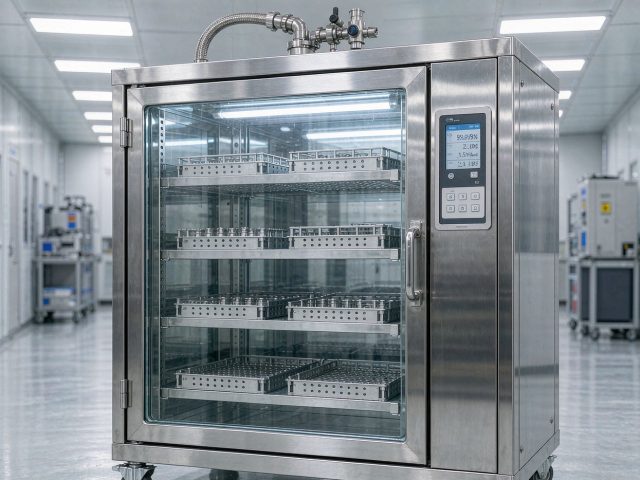
Modern cabinets such as the YSN series manage this with dual-flow purge control: a low idle flow to hold the setpoint and a boosted flow after door openings, so RH recovery is fast without wasting gas. If your quality system wants objective evidence, oxygen monitoring converts the dilution effect into a measurable number — sensor type, placement and ppm targets are covered in our oxygen monitoring article.
Gas consumption depends on cabinet volume, door frequency and setpoint discipline; the compressor-free cabinet itself draws little power. Treat any consumption figure you see — here or in datasheets — as an indicative assumption until it is validated against your own door-traffic pattern.
Choosing a Storage Level: Three Options Compared
Not every part needs nitrogen. The decision is a trade between value, exposure time and how visible a tarnish reject is to your customer:
| Storage option | Typical environment | What it protects against | Where it fits an RF line |
|---|---|---|---|
| Open warehouse shelf | Ambient air, 40–80% RH (seasonal) | Nothing aggressive: tarnish proceeds at ambient rates; condensation risk during rapid temperature swings | Only for robust, packaged, short-transit parts |
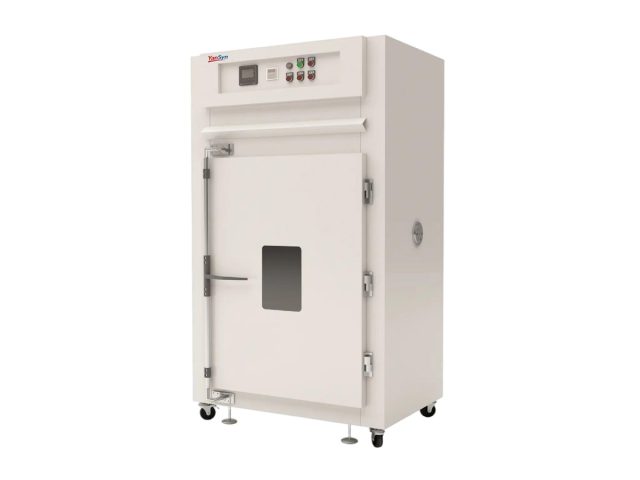
| Desiccant dry cabinet (1–5% RH) | Very dry air, normal gas composition | Moisture-driven tarnish acceleration and MSD moisture uptake; does not dilute sulfur-bearing gases | WIP between plating, tuning and test; MSD floors alongside RF lines |
| Nitrogen cabinet (<1% RH, N₂-diluted air) | Low RH plus reduced O₂ and trace-gas levels | Both humidity acceleration and oxidative/sulfiding species; best for high-value plated surfaces | Long-term storage of silver-plated filters, connectors and spare assemblies |
A common compromise: desiccant dry cabinets (1–5% RH) on the WIP floor for parts that move within days, and nitrogen cabinets for high-value silver-plated stock, service spares and anything that may wait weeks or months. Both environments also satisfy MSD floor-life control, so one storage policy can serve the whole RF line.
Handling Details That Plating Shops Often Miss
- Keep sulfur sources out of the cabinet. Cardboard, plain paper labels, rubber bands and some foams release sulfides and chlorides over time. Use polyethylene or antistatic PP trays; print labels on polyester stock.
- Bare-hand contact leaves chemistry. Fingerprints add chlorides and salts that spot plating later. Nitrile gloves for anything with exposed precious-metal surfaces.
- Do not bin hot parts. Freshly soldered or baked assemblies should cool in a transition area; a hot part sealed into a cool cabinet can locally raise RH as it equilibrates.
- Separate chemically noisy neighbors. Cured adhesives, solvent bins and rubber gaskets stored in the same cabinet slowly dose the interior with volatiles. Storage cabinets are for parts, not process chemicals.
- Verify the display, not just the setpoint. RH sensor drift is slow and invisible; quarterly calibration checks and mapping are covered in our sensor accuracy article.
A Storage Workflow for Silver-Plated RF Components
- Define the acceptance standard. Agree with plating and QA what "bright" means (visual coupon or haze rating), so storage-driven haze has an objective reference.
- Segregate the storage zone. Ban cardboard, paper and rubber from the storage room; unpack plated parts at entry and re-tray them.
- Set the cabinet: RH setpoint at or below 5% for long-term plated stock; a 10% RH cabinet is a reasonable WIP compromise (indicative guideline, not a universal rule). Add an O₂ meter only if your spec needs a number.
- Log movement. FIFO with entry/exit timestamps; a cabinet with data export (RS485 or USB) makes audits painless.
- Purge-and-bag for shipping. For outsourced plating returns, use N₂-flushed PE bags with desiccant so the transport leg does not undo the cabinet’s work.
- Close the loop quarterly. Correlate visual rejects and test failures against storage records; recalibrate sensors and re-map RH distribution.
Frequently Asked Questions
Does nitrogen storage stop tarnish completely?
No storage stops the chemistry absolutely, but below 5% RH with nitrogen dilution the rate drops to near-negligible for practical planning horizons. Source control (no sulfur-bearing materials nearby) still matters.
What RH setpoint should I use for silver-plated parts?
At or below 5% RH for long-term storage and spares; up to 10% RH is often acceptable for WIP that clears within days. These are indicative guidelines — align the setpoint with your customer spec.
Do I need an oxygen sensor in the cabinet?
Not always. It is worth adding when a quality system requires objective evidence of inert storage or when the same cabinet hosts oxygen-sensitive materials such as reactive powders.
Can one cabinet hold both RF parts and moisture-sensitive devices?
Yes. Both need dry, clean storage; keep MSD dry-pack discipline and plating-handling rules active simultaneously and avoid chemical contamination from packaging materials.
How much nitrogen will a cabinet use?
It depends on volume, door openings and setpoint — a small cabinet idling at low flow uses a fraction of what a high-traffic line cabinet uses. Treat published figures as indicative assumptions and measure your own baseline over two weeks.
Conclusion: Storage Is Part of the Plating Process
Silver plating quality is decided as much in storage as at the tank. Humidity below 5% RH plus nitrogen dilution removes both accelerators of tarnish, and the cabinet pays for itself in avoided rework, visual rejects and field spares that stay bright. For 5G RF lines, the practical recipe is simple: desiccant dry cabinets for fast-moving WIP, nitrogen cabinets for plated stock and spares — and disciplined handling everywhere in between.
YanSyn YSN nitrogen cabinets are built around dual-flow purge control, RH display accuracy and ESD-safe construction for production storage. Browse the YSN450 and YSN1430-6 models, or contact us for a storage plan matched to your RF component line.