Tarnish Starts Before the Bond: Nitrogen Storage for Gold, Silver and Copper Bonding Wire
Bonding wire is one of the smallest components in an electronics supply chain and one of the least forgiving. A 15–50 micrometre gold, silver or copper wire carries a surface that becomes the weld itself during thermosonic bonding — the very first atomic layers of that surface are what the ball melts, deforms and fuses with. Everything that happens to the surface before the wire reaches the bonder, from weeks in a warehouse to days on a line-side rack, is written into the bond.
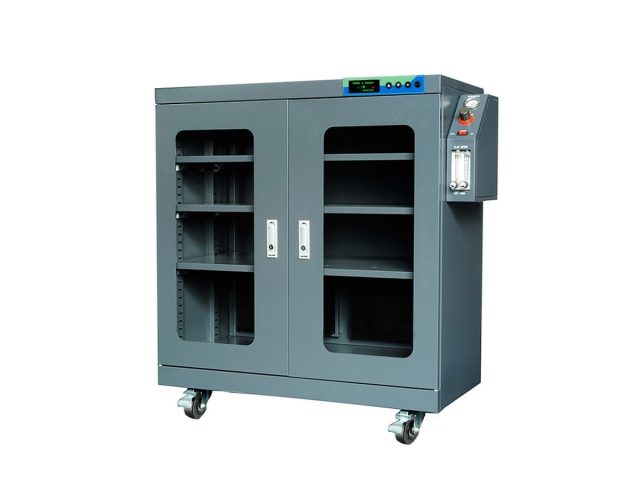
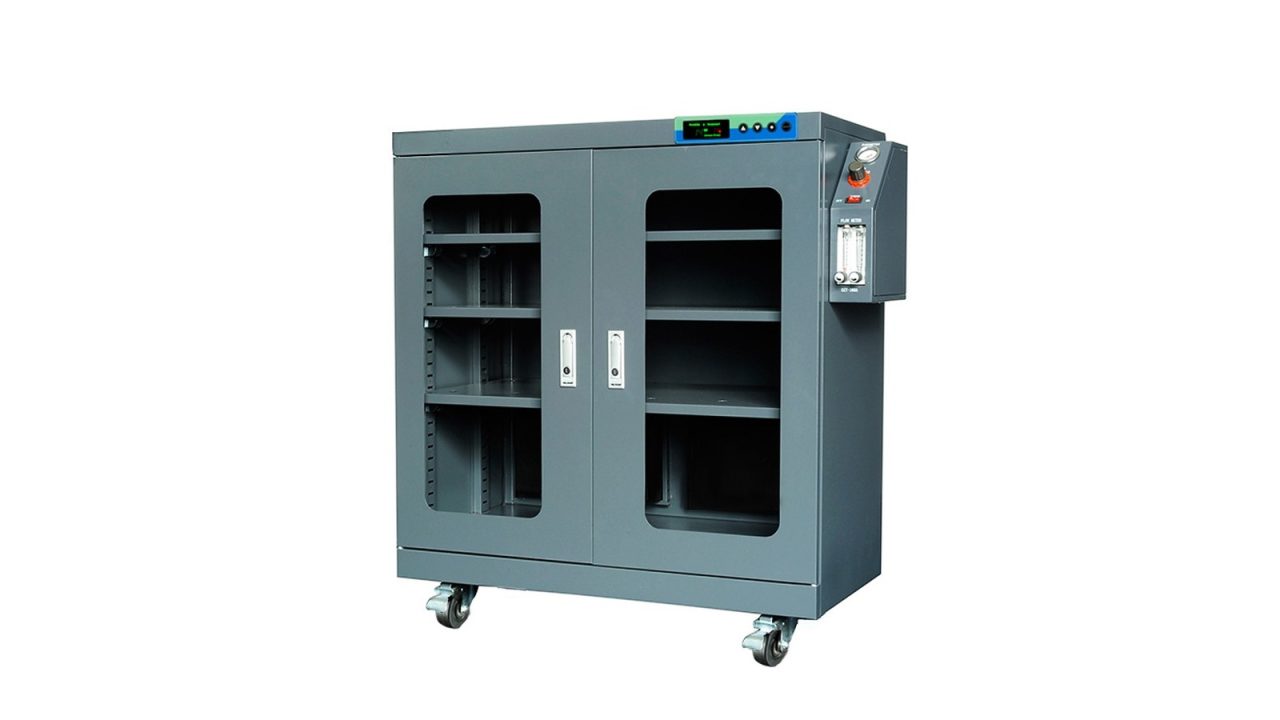
Yet spools of wire are routinely stored in open air next to moulding compounds, flux bottles and cardboard boxes — an environment full of exactly the sulfur species and moisture that destroy bonding surfaces. This article explains why gold, silver and copper bonding wire tarnish and oxidize, what that costs in yield, and how nitrogen storage in an anti-oxidation cabinet such as the YSN series nitrogen cabinet removes the problem before it reaches your process.
Why Bonding Wire Punishes Poor Storage
A bonding wire has an extreme surface-to-volume ratio. At a 20 micrometre diameter, a single metre of wire weighs on the order of a milligram, and effectively all of its behaviour at the bonder is decided by a surface film a few nanometres thick. Wire metallurgy is tuned to the assumption that the surface reaching the capillary is clean metal — free of oxide, sulfide and adsorbed organics.
Three wire families dominate modern packaging, and each fails differently:
- Gold wire is noble and will not rust, but its surface still adsorbs organic contamination and airborne sulfur compounds. A contaminated surface degrades free-air-ball (FAB) shape consistency and first-bond repeatability.
- Silver and silver-alloy wire are highly sensitive to sulfidation. Hydrogen sulfide and sulfur dioxide in ambient air — concentrated further by rubber gaskets, cardboard spool cores and some packaging foams — convert silver into silver sulfide, the brown-black tarnish film familiar from silverware. On wire, that film raises bond resistance and kills wettability.
- Bare and palladium-coated copper wire oxidize readily. Copper oxidation accelerates sharply once relative humidity climbs past roughly 40%, and an oxidized copper surface produces the classic non-stick failures: incomplete ball formation, NSOP (non-stick on pad) and lifted balls.
None of this is visible at incoming inspection. A spool can look perfectly clean and still bond measurably worse, which is exactly why the failure shows up later as scatter in wire-bond yield rather than as a reject at goods-in.
The Chemistry, in Plain Terms
Tarnish and oxidation are electrochemical processes, and they need three things: a reactive species (sulfur compounds or oxygen), a medium that lets the reaction proceed (a thin moisture film on the metal surface), and time. Ambient warehouse air supplies all three generously.
Relative humidity is the amplifier. Below roughly 40% RH, most atmospheric corrosion proceeds slowly because the moisture film on the surface is discontinuous. Above that threshold, a continuous film forms and sulfur and oxygen transport to the metal surface climbs steeply. A warehouse at 60% RH and 25°C is therefore not a neutral environment for silver or copper — it is an active, if slow, attack.
Humidity control alone removes the amplifier, which is what a desiccant dry cabinet does. Nitrogen storage goes one step further and removes the reactant itself: by purging the cabinet with nitrogen, the residual oxygen level falls to a few percent, so oxidation of copper slows dramatically and sulfidation slows with it, since the gas exchange that carries H₂S to the surface is also reduced. For an explanation of how the cabinet-side machinery works, see How a Dry Cabinet Works: Dehumidification Modules, RH Recovery and Maintenance.
What Nitrogen Storage Actually Changes
Inside a nitrogen cabinet, two environment variables are actively controlled:
- Residual oxygen. Continuous purge with nitrogen dilutes the cabinet atmosphere; with a sensible flow rate, residual oxygen settles at a low single-digit percentage (indicative assumption — actual value depends on cabinet size, seal condition and flow setting, and should be verified with an oxygen meter).
- Relative humidity. Dry nitrogen also acts as the desiccant. Cabinet interiors routinely hold single-digit RH, far below the ~40% corrosion threshold described above.
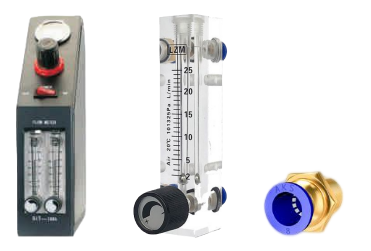
The flow meter is the interface between your gas supply and the cabinet atmosphere. Setting it is a balance: more flow means faster recovery after door openings and a lower residual oxygen level, but higher gas consumption. In practice, teams size flow to the cabinet volume and opening frequency rather than simply turning it to maximum — the payback arithmetic for that decision is covered in PSA or Membrane? Sizing a Nitrogen Generator for a Nitrogen Cabinet.
One thing nitrogen storage is not is a heat process. Wire spools should not be baked: heat cycling can relax winding tension, age spool elastomers and shift package markings. Baking belongs to moisture-sensitive component management, not to wire. The storage goal for wire is a cool, dry, low-oxygen atmosphere — nothing more.
Practical Storage Windows by Wire Metal
The table below summarizes how each common wire family behaves in ambient storage and what a nitrogen cabinet delivers instead. Thresholds are indicative assumptions drawn from standard atmospheric-corrosion behaviour — always defer to your wire supplier’s storage datasheet, which for some high-reliability programs specifies tighter limits.
| Wire type | Main ambient-storage risk | Key accelerators | Recommended storage environment |
|---|---|---|---|
| Gold wire | Organic film contamination; slight loss of FAB consistency | Airborne organics, plasticizers, sulfur-bearing compounds | ≤10% RH; nitrogen purge beneficial, desiccant-only acceptable |
| Silver / silver-alloy wire | Silver sulfide tarnish; higher bond resistance, poor wettability | H₂S and SO₂, humidity above ~40% RH, rubber and cardboard contact | ≤10% RH plus low residual O₂; store away from sulfur sources |
| Bare copper wire | Rapid oxidation; NSOP, poor ball formation | Oxygen plus RH above ~40% | ≤5% RH with low residual O₂; strict first-in-first-out |
| Palladium-coated copper | Coating delays but does not eliminate oxidation | Oxygen plus RH; coating defects expose copper | ≤5–10% RH with low residual O₂ |
| Aluminum wedge wire | Native oxide growth; bond window narrows | Humidity; extended ambient dwell | ≤10% RH; nitrogen purge recommended for long dwell |
The pattern is simple: gold tolerates a plain low-humidity environment, while silver and copper — the two metals the industry moved to for cost reasons — genuinely need the oxygen removal that only nitrogen provides. If your line has already shifted from gold to copper or silver wire for cost reasons, the storage environment should have shifted with it.
A Storage Workflow That Survives Customer Audits
Hardware alone does not create traceability. Wire storage earns its keep when it is embedded in a routine the whole line follows:
- Keep spools sealed until point of use. Vacuum-sealed or antistatic shielding bags from the supplier are the primary barrier; storage protects opened spools, not sealed ones.
- Opened spools go straight into the cabinet. Line-side open-air racks are where most dwell damage happens. Make the nitrogen cabinet the default parking place, even mid-shift.
- Set and verify the environment. RH setpoint at or below 10%, nitrogen flow sized to the cabinet; verify residual oxygen occasionally with a handheld meter rather than trusting the flow meter alone.
- Label the opening date and enforce FIFO. A piece of tape with the date works, but a log sheet on the cabinet door is what auditors want to see.
- Discipline at door openings. Full-flow purge during and after heavy-pick shifts; recovery behaviour matters as much as the steady state, especially for copper.
- Log the environment. Continuous RH logging (and periodic O₂ spot checks) turn the cabinet from a box into evidence — exactly what an ISO or customer audit asks for.
Sizing the Cabinet to Your Spool Inventory
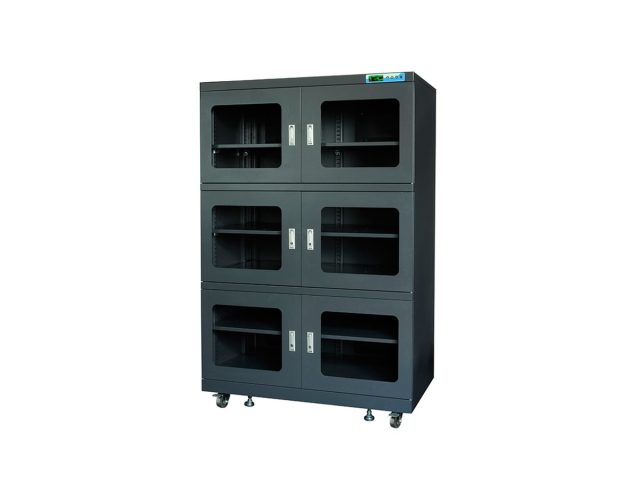
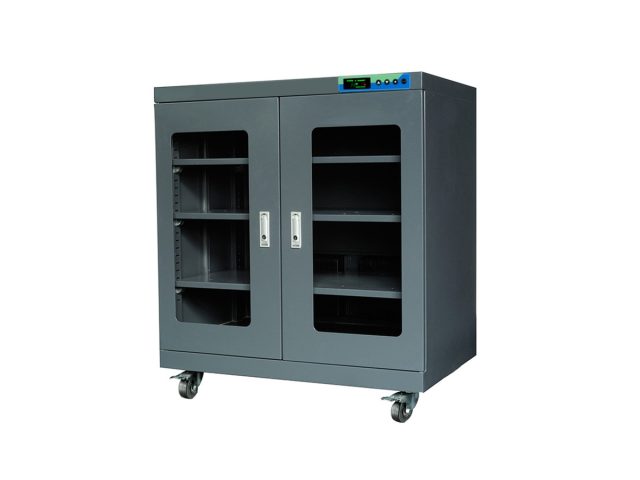
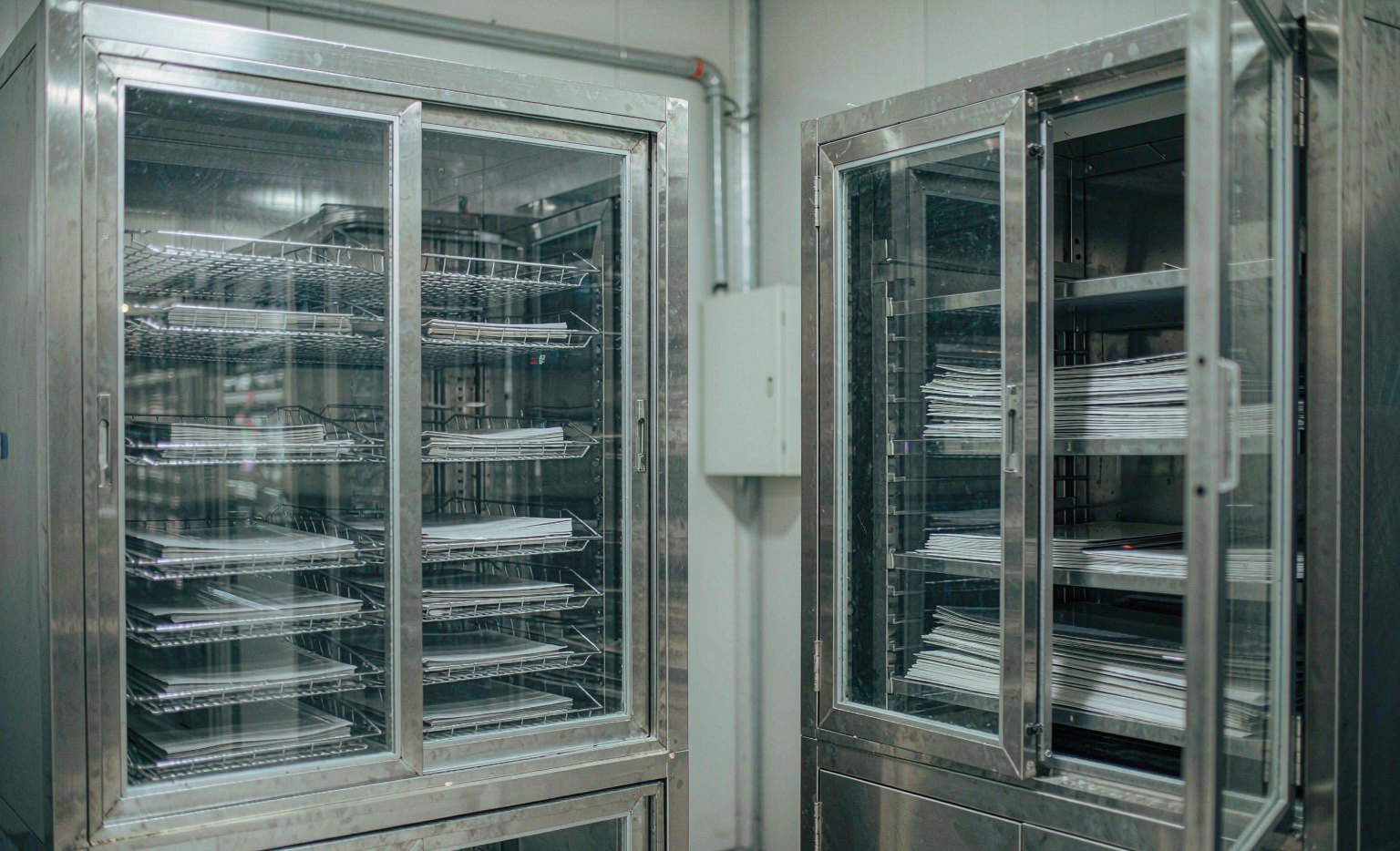
Bonding wire is spatially undemanding: a shelf of spool racks in a 320-litre cabinet typically holds hundreds of spools (indicative assumption — count your own spool geometry before deciding). Benchtop and 100–320 L models such as the YSN320 nitrogen cabinet suit a single wire-bond line or a wire store serving one SMT floor; larger 450–1430 L units, including the YSN1430-6, make sense when several lines draw from one bonded-wire warehouse or when the same cabinet also stores other oxidation-sensitive inventory — silver-loaded adhesives, bare copper leadframes, even sintered components. The same logic extends to other oxygen-sensitive materials: rare-earth magnets behave similarly, as described in Rare-Earth Magnets Don’t Forgive Humidity.
Gas consumption is the other sizing input. A continuously purged cabinet draws nitrogen at a rate set by flow meter setting, cabinet tightness and door-open frequency; as an indicative assumption, a mid-size cabinet in normal production runs at a few litres per minute, which is precisely the scenario where an on-site generator beats cylinder logistics. Treat any consumption figure you read — including this one — as an assumption to verify against your own metering, not as a manufacturer guarantee.
Frequently Asked Questions
Can I just use a desiccant dry cabinet for bonding wire?
For gold wire, yes — low humidity controls the dominant risk. For silver and copper wire, a desiccant cabinet removes the moisture amplifier but leaves 21% oxygen in place, so oxidation and sulfidation continue, just more slowly. Nitrogen storage attacks both levers at once and is the safer default for those metals.
What residual oxygen level is “enough”?
For copper and silver wire storage, a low single-digit percentage is a common working target (indicative assumption). The honest answer: set a flow that achieves it, then verify with an oxygen meter rather than assuming the flow setting implies a concentration.
Will very low humidity damage the wire or spools?
No. Bonding wire is not hygroscopic in any harmful way, and single-digit RH does not degrade spool plastics, labels or antistatic bags. The humidity floors that matter for ESD concerns are handled by the cabinet’s antistatic design.
How long can an opened spool stay out of the cabinet?
As short as your process allows. In ambient air, hours of exposure add measurable surface change for copper in humid conditions; inside a nitrogen cabinet at ≤10% RH, dwell time stops being the limiting factor. There is no universal number — align with your wire supplier’s specification and treat cabinet time as the default.
Should wire spools be baked like MSD components?
No. Baking is a moisture-removal process for plastic-encapsulated components; wire spools gain nothing from it and risk winding-tension drift and elastomer ageing. If your line also handles MSDs, that workflow lives in component storage, not in the wire cabinet — see The Popcorn Effect Deep-Dive: MSD Baking Curves That Save Yield.
Conclusion
Bonding wire fails quietly. No visual inspection at goods-in will catch a silver spool that sulfided in a 60% RH storeroom, and the evidence only appears as ball-bond yield scatter weeks later. The fix is boring and effective: keep opened spools in a controlled, low-oxygen, low-humidity atmosphere, enforce FIFO, and log the environment so the control is demonstrable. A nitrogen anti-oxidation cabinet does all three in one box — and it costs far less than the yield scatter it prevents.
If you are moving from gold to copper or silver wire, or seeing unexplained wire-bond yield variation, tell us your spool inventory and line configuration and we will help you size the right cabinet. Contact YanSyn for a storage recommendation and quotation.