PSA or Membrane? Sizing a Nitrogen Generator for a Nitrogen Cabinet
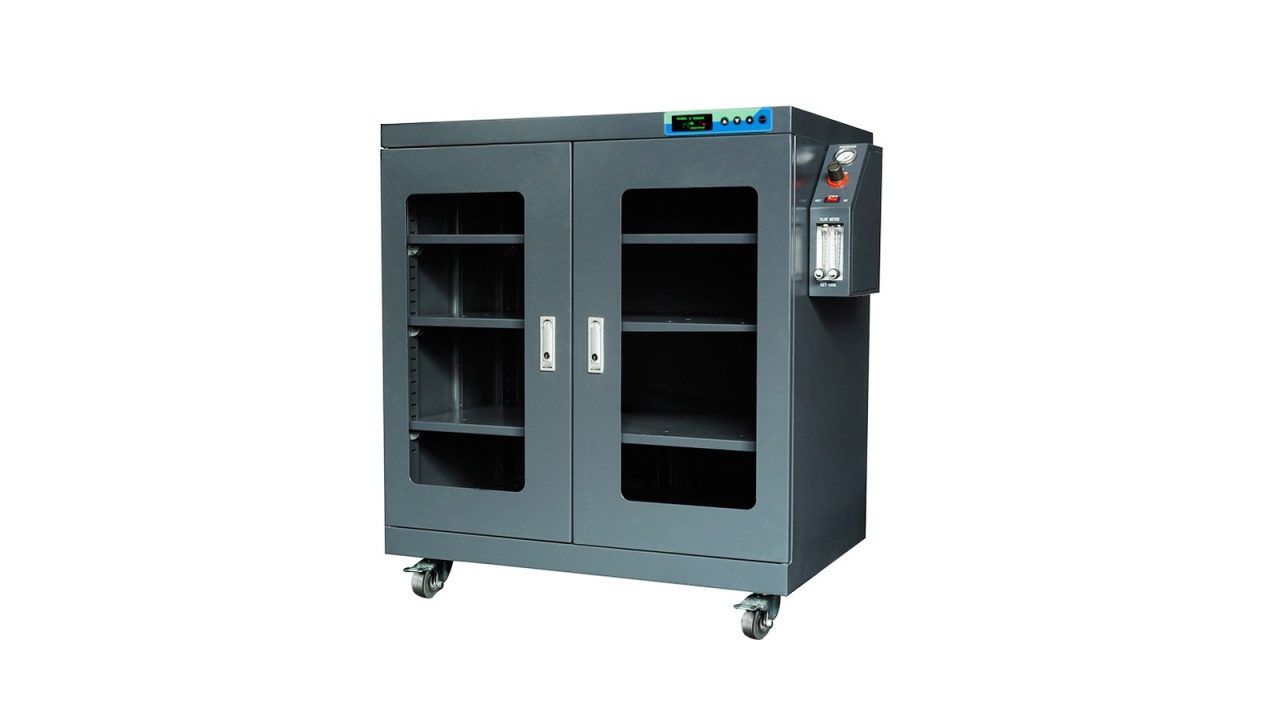
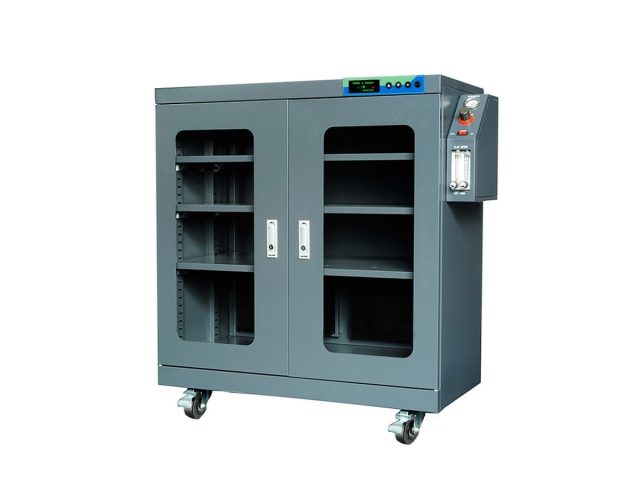
A nitrogen cabinet is a sealed box with a gas inlet, a regulator and an oxygen readout. Everything that decides whether it holds 200 ppm or drifts to 3 000 ppm happens upstream of that inlet: feed purity, sustainable flow during a door-opening event, and how dry the gas is. Buyers spend weeks comparing gaskets and ten minutes on the supply — then wonder why the same cabinet performs beautifully in one plant and disappointingly in another.
This article is about the supply side. It compares the two technologies most plants choose between once cylinder deliveries become a nuisance: pressure swing adsorption (PSA) and membrane generators. Ground rule: every figure below is an indicative assumption for engineering discussion, not a guaranteed specification.
What a nitrogen cabinet actually consumes
A well-sealed cabinet is not a continuous high-flow device. It loses nitrogen four ways: seal and weld leakage (small but never zero, and it sets the floor of steady-state consumption), door openings (each admits a room's worth of air — recovery is a flow problem, not a purity problem), purge after loading, and instrument bleed.
For a 450 L cabinet in normal use, a steady-state demand of 0.2 – 0.5 Nm³/h is a reasonable planning assumption, with peaks of several cubic metres per hour for a few minutes after a door cycle. That split — small average, sharp peak — is the most useful thing to know when choosing a generator: size on the peak, but expect the economics to be set by the average.
The purity rule that decides the technology
Purity is usually quoted as a percentage of nitrogen, which hides the number you care about. Convert it first: 99 % N₂ contains 10 000 ppm O₂, 99.9 % contains 1 000 ppm, 99.99 % contains 100 ppm, 99.999 % contains 10 ppm.
Then apply the rule that saves more projects than anything else here: the supply must be at least one order of magnitude better than the storage target. A cabinet specified at 1 000 ppm cannot be fed with 99.9 % nitrogen, because 99.9 % nitrogen is 1 000 ppm oxygen — the cabinet simply equilibrates at its feed. Feed 99.99 % (100 ppm) and the same cabinet settles in the low hundreds of ppm, with leakage setting the final value. If your spec is written in RH rather than oxygen, the same logic runs through dew point: gas at −40 ℃ pressure dew point carries so little water vapour that cabinet RH falls below 1 % almost at once, as we explain in why 5 % RH is not a moisture specification.
How a PSA generator makes nitrogen
PSA passes compressed air at 6 – 8 bar through a vessel of carbon molecular sieve. Oxygen, being smaller and more polarisable, adsorbs into the micropores while nitrogen passes to a buffer tank; after a few seconds the bed saturates, the inlet closes, and the vessel vents to release the oxygen — hence the rhythmic hiss. Two beds alternate so flow never stops. Three consequences matter for cabinet work: purity is a design point, not a dial range (a unit rated 99.9 % at 3 Nm³/h will not give 99.99 % at the same flow); purity degrades fast past rated flow, so 20 – 30 % oversizing is normal practice; and dew point is excellent because the sieve also adsorbs water, provided the feed is sensibly dry.
How a membrane generator makes nitrogen
A membrane module is a bundle of hollow polymer fibres. Clean air flows along the fibres; oxygen, water vapour and CO₂ permeate the wall several times faster than nitrogen, so the outlet gas is nitrogen-enriched while fast gases vent. No beds, no switching valves, no cycle noise. The trade-off is purity: single-stage membranes typically land between 95 % and 99.5 %, and going beyond needs a second stage or a flow penalty. What membranes do better is turn-down, following demand from a battery of cabinets that open unpredictably. They are sensitive to feed temperature — a hot compressor room silently costs a percentage point — and to oil carry-over, which blinds fibres permanently.
Side-by-side comparison
| Parameter | PSA (carbon molecular sieve) | Membrane (hollow fibre) | What it means on the floor |
|---|---|---|---|
| Typical purity | 99.5 – 99.999 % (99.9 % is the common industrial point) | 95 – 99.5 % (99 % is the common industrial point) | Sets the lowest O₂ level the cabinet can ever reach |
| O₂ at rated flow | ~5 000 ppm at 99.5 %, ~1 000 ppm at 99.9 %, ~100 ppm at 99.99 % | ~50 000 ppm at 95 %, ~10 000 ppm at 99 % | Compare with your storage spec, not with marketing numbers |
| Outlet dew point | −40 to −70 ℃ (indicative) | −20 to −40 ℃ (indicative) | Both far drier than ambient; PSA drier at equal feed |
| Purity vs flow | Falls quickly above design flow | Falls gradually; wide turn-down | Membrane tolerates variable demand better |
| Door-opening peaks | Needs storage volume to ride them out | Follows demand faster; still needs a small receiver | 50 – 150 L receiver is cheap insurance for both |
| Moving parts | Switching valves, CMS beds, exhaust silencer | No switching valves; fibre bundle and regulator only | Membrane is simpler in a small lab |
| Feed air (indicative) | 4 : 1 to 6 : 1 air-to-nitrogen at 99.9 % | 2.5 : 1 to 4 : 1 at 96 – 99 % | Compressor sizing is often the hidden cost |
| Footprint / noise | Larger skid, cyclic exhaust noise | Compact, near-silent, wall-mountable | Matters inside an ISO 7 or ISO 8 room |
| Best fit | Battery, semiconductor, magnet and MIL-spec stock below 1 000 ppm | General anti-oxidation storage at 1 – 3 % O₂ | Pick by spec, then by cost of ownership |
Read that table with one question in mind: what is the lowest oxygen level my process tolerates, and how much flow do I need to get there? If the answer is “a few thousand ppm will do, and I have six cabinets”, membrane is usually the cheaper and calmer installation. If it is “below 1 000 ppm, and the number is audited”, PSA is the only one of the two that gets you there without stacking stages.
Sizing walk-through: from cabinet volume to generator rating
Generator datasheets quote flow at a purity at a reference temperature. Cabinets care about none of that; they care how many cubic metres you can push through them in the twenty minutes after loading. Work these six steps and you will have a defensible number to put in front of a supplier.
| Sizing step | Input | Worked example (YSN-450 class cabinet) | Note |
|---|---|---|---|
| 1. Free volume | Internal volume minus load | 450 L cabinet, 40 % loaded → 0.27 m³ free gas | Loaded cabinets exchange gas more slowly |
| 2. Target O₂ | From the storage spec | 1 000 ppm (0.1 %) | Write it down before calling any supplier |
| 3. Initial purge | 4 – 6 volume exchanges | 6 × 0.27 ≈ 1.6 m³ in 20 – 30 min → ~4 Nm³/h peak | Peak flow sizes the generator |
| 4. Steady-state loss | Leakage + door openings | 0.2 – 0.5 Nm³/h average (indicative) | Measure it; do not assume it |
| 5. Generator rating | Peak flow at the required purity | 2 Nm³/h at 99.9 % plus a 100 L receiver | Always quote flow at the purity |
| 6. Feed air | Air-to-N₂ ratio of the technology | 8 – 12 Nm³/h clean dry air for PSA at 99.9 % | Dry feed protects both technologies |
This example is deliberately conservative. Most plants size the generator for the largest cabinet group they may install over three years, then add a receiver for one door-opening event — typically 50 – 150 L. The receiver does more for your recovery curve than another 20 % of generator capacity at a fraction of the cost. It is also why flow-control retrofits pay back so fast, as our analysis of cutting nitrogen use with smart flow control shows.
Matching the technology to the application
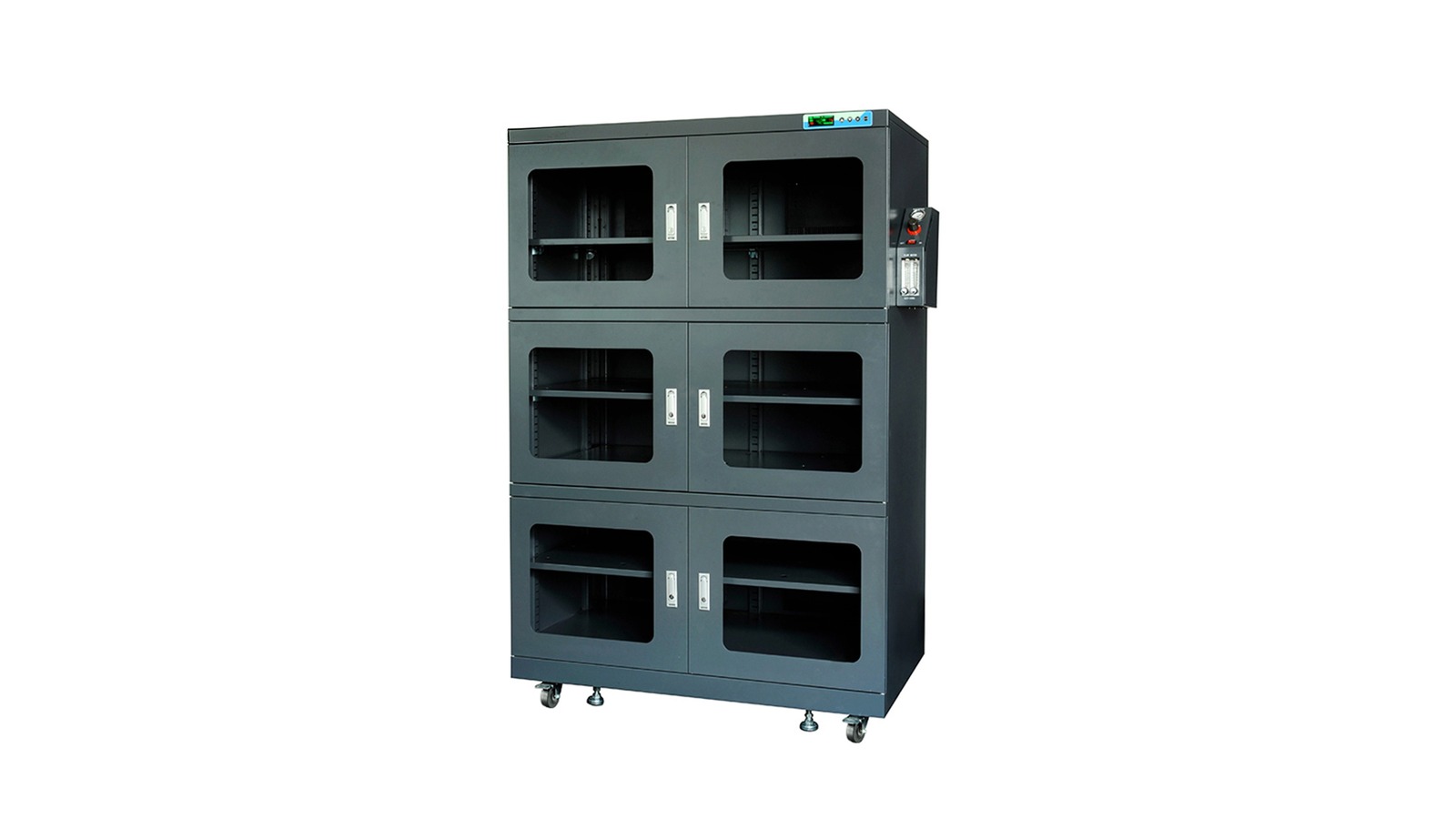
Membrane fits general anti-oxidation storage of machined parts, tooling and populated boards at a 1 – 3 % O₂ target; solder-paste and adhesive storage where dryness matters more than the last decade of ppm; sites with several cabinets and no gas room. PSA fits lithium-ion cell and electrode storage, rare-earth magnet storage, semiconductor and OSAT floor stock, MIL-spec aerospace programmes — anywhere the spec is written in hundreds or tens of ppm and someone will audit it. A YSN series nitrogen cabinet holding 450 L of sensitive stock at 200 ppm is a PSA job; the same cabinet at 2 % O₂ for incoming inspection is not. Cylinders still fit very low duty cycles; once you are swapping a 50 L cylinder every fortnight the arithmetic usually flips, which is the comparison in our nitrogen cabinet versus desiccant cabinet TCO breakdown.
Commissioning and operating workflow
- Write the oxygen specification down — target, alarm, and the measurement point (inside the cabinet, not at the generator outlet).
- Measure the cabinet, not the datasheet. Close the inlet and log the O₂ rise for 60 minutes; a cabinet that climbs slowly beats any generator upgrade.
- Verify feed air first. Dry, oil-free, filtered air to the generator's stated class — nearly every premature membrane failure traces back here.
- Fit a receiver and a two-stage regulator. Cabinets want 0.2 – 0.4 bar; generators deliver at 6 bar and dislike low back-pressure.
- Commission with an external analyser, comparing generator outlet with cabinet interior after 24 hours closed. The difference is your leakage, quantified.
- Trend, don't spot-check. Weekly O₂ and flow logs catch a failing seal or a saturating sieve months before a batch is affected.
Frequently asked questions
Can a single PSA unit deliver 99.999 %? Not reliably at useful flow. That level normally needs high-grade sieve, careful cycle design and often a downstream purifier. For cabinet storage, 99.99 % (100 ppm feed) is the practical ceiling for a single skid.
Does higher purity mean faster recovery? No. Recovery after a door opening is dominated by flow and cabinet volume: purity sets the endpoint, flow sets how fast you approach it. That is why a receiver and flow controller beat a purity upgrade for most users.
How long does a membrane module last? Indicatively five to ten years with clean dry feed air, considerably less with oil carry-over. There is no serviceable element inside; replacement is a module swap.
Can two cabinets share one generator? Yes, and they usually should. Size for the sum of peaks, add isolation valves so either cabinet can be serviced, and give each its own regulator. Sharing is also the easiest way to justify a PSA unit on cost — though any payback figure depends on local gas and power prices, so treat all of them as indicative.
Conclusion
The generator is not an accessory to a nitrogen cabinet; it is half the system. Decide the oxygen target in ppm, convert every purity claim into the same units, size on peak flow, and choose PSA when the target sits below roughly 1 000 ppm and membrane when it sits above. Footprint, noise and service interval are merely tiebreakers between two technologies that both work when specified honestly.
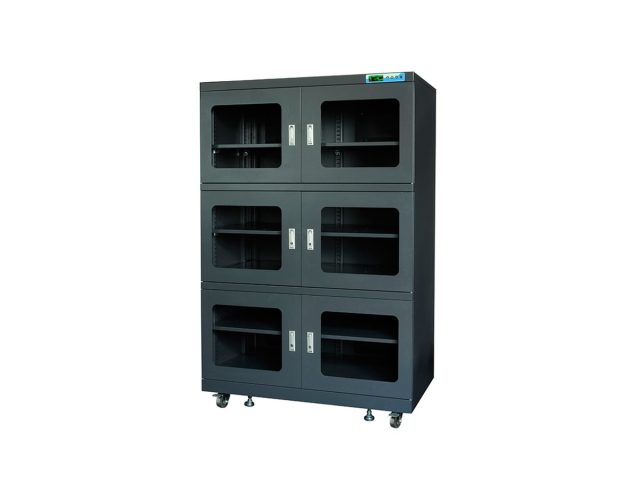
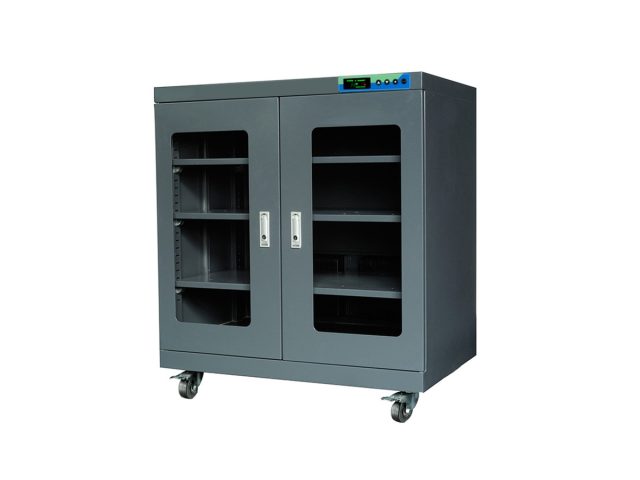
YanSyn builds the storage side: YSN nitrogen cabinets from 100 L to 1 430 L with oxygen monitoring, flow control and IoT logging options, engineered to be fed by whatever supply your plant can support. Send us your oxygen target, cabinet list and feed-air conditions, and we will help size the loop end to end.