Rust Starts at 40% RH: Low-Humidity Storage for Stamping Dies, Molds and Cutting Tools
Every toolroom manager knows the Monday-morning surprise. A stamping die that ran clean on Friday comes out of the weekend with orange bloom on the punches, guide pillars that feel rough under a fingertip, and the first hundred sheets rejected for burrs. Injection molds fair no better: a polished cavity left in a humid storage bay will haze and pit, and re-polishing an A-surface is measured in lost shifts, not minutes.
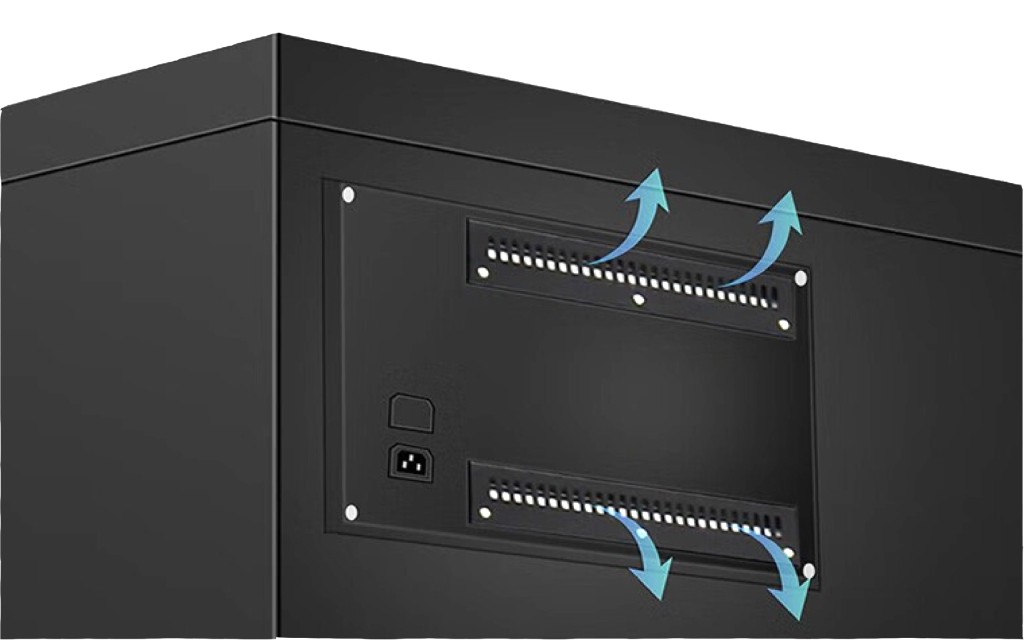
Rust on tooling is rarely a mystery. It is water vapor reacting with iron, and it happens inside a humidity band that is surprisingly easy to avoid. That makes corrosion control, first and last, an air-management problem — and it is why many automotive, aerospace and precision-machining plants are moving dies, molds, cutting tools and spare parts out of open shelving and into active low-humidity dry cabinets.
Why Corrosion Is a Humidity Problem, Not Just an Oil Problem
Iron does not rust from dry air. Corrosion needs a microscopic water film on the surface, and that film only persists reliably once relative humidity (RH) climbs past a threshold — the critical humidity. For clean, uncontaminated steel this threshold sits in a band that various studies put somewhere between roughly 40% and 60% RH (indicative literature values; it varies with alloy, surface finish and contaminants). Below it, the time-of-wetness — the fraction of time a conductive moisture film actually exists — approaches zero and ferrous surfaces sit essentially inert.
Real toolrooms are not clean. Fingerprints carry chloride and salt from sweat; residual coolant, cutting fluid vapors and sulfur compounds all lower the effective threshold, which is why a die can bloom after a single humid weekend even at 50% RH. Two practical consequences follow:
First, the cheapest insurance is a storage environment held safely below the critical band — commonly ≤40% RH for general steel tooling, and drier still for polished or precision surfaces. Second, no oil film forgives handling: every touch, wipe and edge rub creates a bare spot that corrodes first. A fixed low-RH environment protects the whole part, including the guides, threads and internal channels that never get full coating coverage.
The Condensation Trap: Cold Metal, Warm Air and Dew Point
The most damaging — and least obvious — mechanism is condensation, and it can strike even at perfectly acceptable room humidity. Any steel surface colder than the dew point of the surrounding air will film with condensate on contact. This is the classic failure chain: parts stored in an unheated bay overnight, a die returning from an outside supplier in winter, cold workpieces moved into a warm morning shop. The metal is cold, the air is humid, and within minutes the surface is wet.
Once you think in dew point rather than RH, the storage logic changes. Inside a low-humidity cabinet, the air holds so little moisture that its dew point sits far below room temperature — typically well below 0 °C when the cabinet is regulated at very low RH (indicative assumption; the exact dew point depends on the setpoint and ambient). A cold die placed into such air cannot condense moisture at all, because the air's dew point is below even the cold metal's temperature. The cabinet is therefore not just a shelf: it is a condensation-safe buffer zone for temperature-mismatched parts.
If you want the full arithmetic behind RH, absolute humidity and dew point — and why a 5% RH cabinet is a different machine from a 40% one — we covered it in a separate article: 5% RH Is Not a Moisture Spec: Dew Point and Absolute Humidity Explained.
Where Low RH Pays Back Fastest
Not every metal item in a plant deserves its own cabinet, but a handful of categories account for most corrosion losses in practice:
- Stamping and progressive dies — punches, guide pillars and binder surfaces sit idle between runs, often for weeks. Rust here shows up as burrs, scoring and galling on the first articles after restart.
- Injection and die-cast molds — polished cavities and cores are the highest-value surfaces in the shop; even light bloom on an A-surface means re-polish and scrap risk. Chrome-plated cavities tolerate more, but the parting line, slides and cooling channels do not.
- Cutting tools — carbide itself resists rust, but steel shanks, brazed joints, HSS bodies and regrind faces do not. A rusted shank ruins runout and toolholder seating.
- Bearings, spindles, linear guides and spare parts — precision ground surfaces with thin or no preservative; a corroded raceway is a scrap bearing.
- Gauges, masters and calibration artifacts — where a micron of rust is not a cosmetic issue but a metrology failure.
Protection Options Compared
Shops usually mix several protection methods. The honest comparison looks like this:
| Method | What it achieves | Strengths | Weaknesses | Best fit |
|---|---|---|---|---|
| Rust-preventive oil / grease | Barrier film on coated surfaces only | Very low unit cost; proven; survives rough handling | Messy; must be removed before use; misses bare spots after handling; can contaminate the toolroom | Large castings and rough-machined parts in long-term lay-up |
| VCI paper / film | Vapor-phase inhibitor inside a wrapped, closed volume | Clean, residue-free; cheap per part | Works only in sealed packaging; protection weakens with door openings, drafts and expired inhibitor life | Spare parts and boxed components in slower turnover |
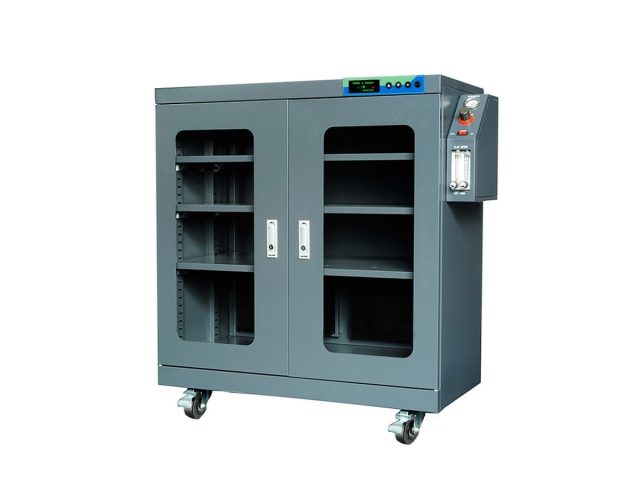
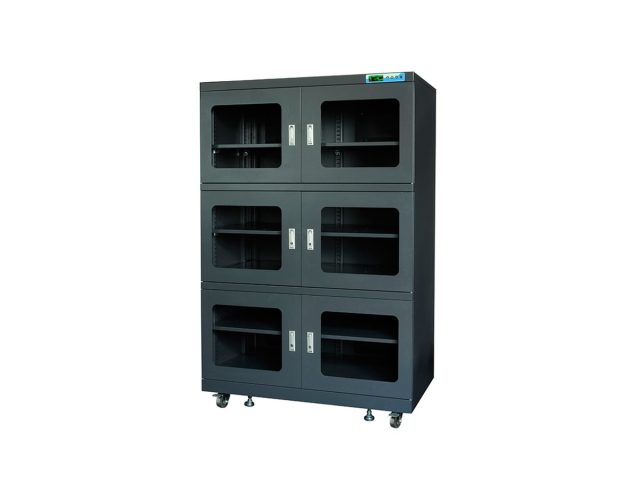
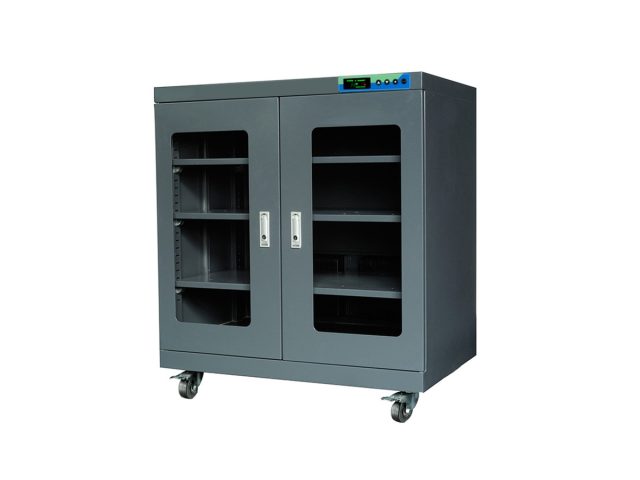
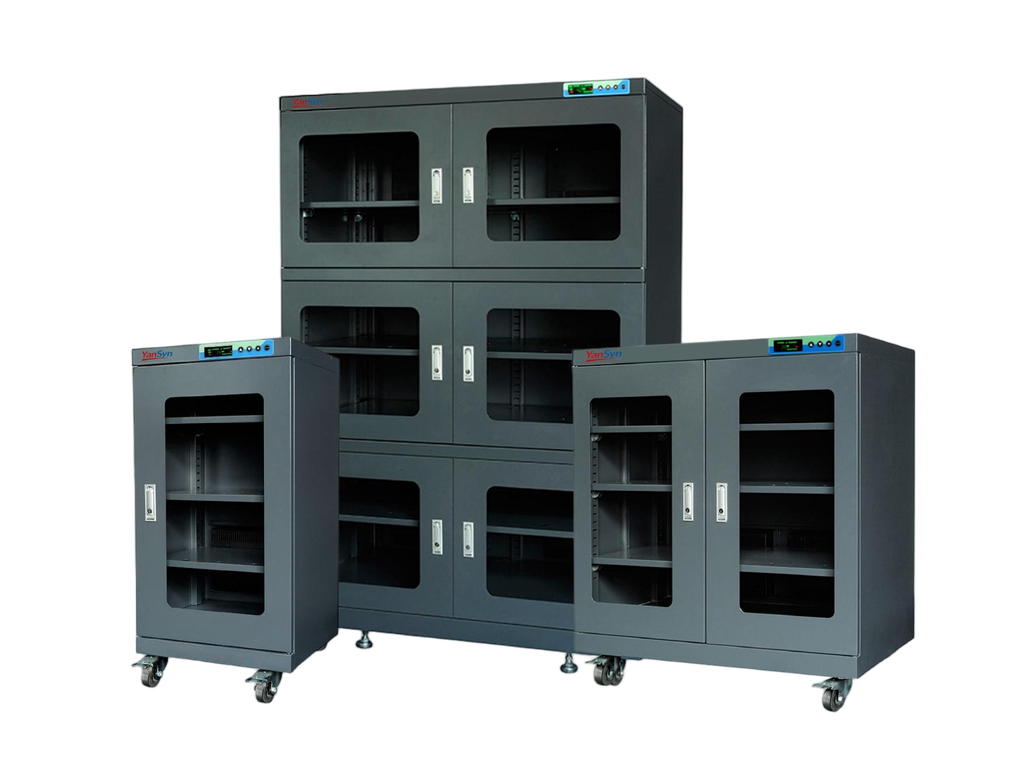
| Desiccant dry cabinet (e.g. YSM, 1–50% RH selectable) | Whole-cabinet air regulated below the critical RH band, continuously | No coating, no packaging, instant access; renewable-desiccant module needs no refill consumables; low power draw | Protects the cabinet interior only; needs door discipline | Dies, molds, tool shanks, gauges and spares in daily–weekly turnover |
| Nitrogen-purge cabinet (e.g. YSN, <5% RH achievable) | Very low RH plus oxygen exclusion | Highest protection level; ideal for mirror-polished and oxidation-sensitive items; also dries by dilution | Nitrogen consumption cost (indicative assumption, depends on setpoint, size and door traffic); supply logistics | Polished cavities, high-value spares, mixed storage with sensitive alloys |
| Dehumidified storage room | Plant-level air control for an entire bay | One system covers everything | High capex and running cost; slow to adjust; single point of failure | Very large inventories where cabinets cannot scale |
Note that the methods are complements, not substitutes. A common pattern is to keep thin oil film on cast-iron bodies while storing the whole die, its spare punches and its gauges together at ≤40% RH — the coating then becomes a second layer instead of the only one. For a longer-term cost view of desiccant versus nitrogen approaches, see our 5-year TCO comparison of nitrogen purge and desiccant dry cabinets.
What RH Target to Set
A single magic number does not exist — the right setpoint depends on what shares the cabinet. As a starting grid (targets are engineering practice values, not a manufacturer guarantee of corrosion outcomes):
| Stored item class | Suggested RH target | Notes |
|---|---|---|
| General steel tooling: stamping dies, fixtures, rough-machined spares | ≤ 40% RH | Safely below the critical band for most workshop contamination levels |
| Polished / mirror cavities, precision gauges and masters | ≤ 30% RH | Extra margin for very fine surfaces; drier still if nitrogen purge is available |
| Cutting tools: carbide bodies with steel shanks, HSS, brazed joints | ≤ 40% RH | Focus on shanks and joints; coated flutes tolerate more |
| Mixed storage that includes PCBs or electronics in the same cabinet | 30–40% RH | Avoid extreme dryness below ~20% RH when electronics share the space, due to ESD risk — see our article on ESD at ultra-low humidity |
| Cold or temperature-mismatched parts in transit into storage | Any RH, but low dew point matters | A cabinet at low RH has an air dew point well below room temperature, so cold parts do not condense (indicative) |
One caution: RH is relative to temperature, so the same cabinet air feels drier or wetter as the room warms and cools through the day. Specify the cabinet by RH and be aware of the dew point it implies — that pairing is what actually protects cold parts.
A Storage Workflow That Actually Holds
Hardware alone does not stop rust; the workflow around it does. Six steps that separate working installations from expensive cabinets full of rusty fixtures:
- Audit first. Map what you store, how often it moves, and where corrosion has actually occurred. Size the cabinet from the fast-turnover items — a mid-size cabinet such as the YSM450 moisture-proof cabinet (450 L) covers the daily-use tool drawer of most press shops, while larger die sets fit high-volume units like the YSM1430-6 (1,430 L).
- Clean and dry before storing. No part goes in wet. Wipe off coolant, blow down cooling channels, and let freshly washed parts dry — the cabinet removes ambient moisture, not free water brought in as a puddle.
- Set the RH target per section. Use the grid above; run the most sensitive zone at the lowest setpoint rather than homogenizing everything at one number.
- Load with discipline. Hot or cold parts equilibrate before or shortly after loading; doors are opened briefly and deliberately. Every long-open door is a humid-air injection the module has to undo.
- Monitor, do not trust. Log RH with a data logger or networked monitoring, and cross-check the cabinet display against a calibrated handheld hygrometer periodically.
- Maintain on a schedule. Door seals, gaskets and the dehumidification module all age. A quarterly seal-and-recovery check takes minutes and prevents the slow drift that quietly pushes stored tooling back into the corrosion band.
FAQ
We already coat every die in rust-preventive oil. Is humidity control redundant?
No — the oil protects only the surfaces it covers on the day it was applied. Guide pillars, threads, tapped holes, gauges and anything touched afterward are exposed. Low RH is the only method that protects the entire geometry continuously, which is why coated and uncoated shops both benefit.
Is nitrogen purge overkill for plain ferrous tooling?
For ordinary steel at moderate turnover, a desiccant dry cabinet at ≤40% RH is usually sufficient and cheaper to run. Nitrogen earns its keep for mirror-polished cavities, very high-value spares, or when oxidation-sensitive alloys share the cabinet. Actual gas consumption varies strongly with setpoint, cabinet size and door traffic — treat any consumption figure as an indicative assumption to be measured on your own installation.
What happens over a two-week holiday shutdown?
A renewable-desiccant cabinet keeps cycling unattended — there is no desiccant to recharge and no compressor duty cycle to worry about. Before shutdown, do a door-seal check and confirm the setpoint; on return, verify the logged RH curve never left the target band.
How fast does a dry cabinet recover after door openings?
Recovery time depends on cabinet volume, load mass and how long the door stayed open. Modern semiconductor-grade dehumidification modules pull small RH excursions back within minutes (indicative assumption — recovery differs by model and conditions). The practical rule: batch your retrieves instead of opening the door for one item ten times.
How do I know the cabinet's RH reading is correct?
Cross-check against a calibrated handheld hygrometer or logger placed inside for a few hours, at least annually. A sensor that reads 5% low can hide a whole corrosion season.
Bottom Line
Rust is not a fate attached to steel; it is a humidity condition attached to air. Hold the storage environment below the critical band, think in dew point when parts move between temperatures, and put the discipline — clean storage, brief door openings, logged RH — around the hardware. Do that, and the Monday-morning orange bloom disappears from your toolroom vocabulary.
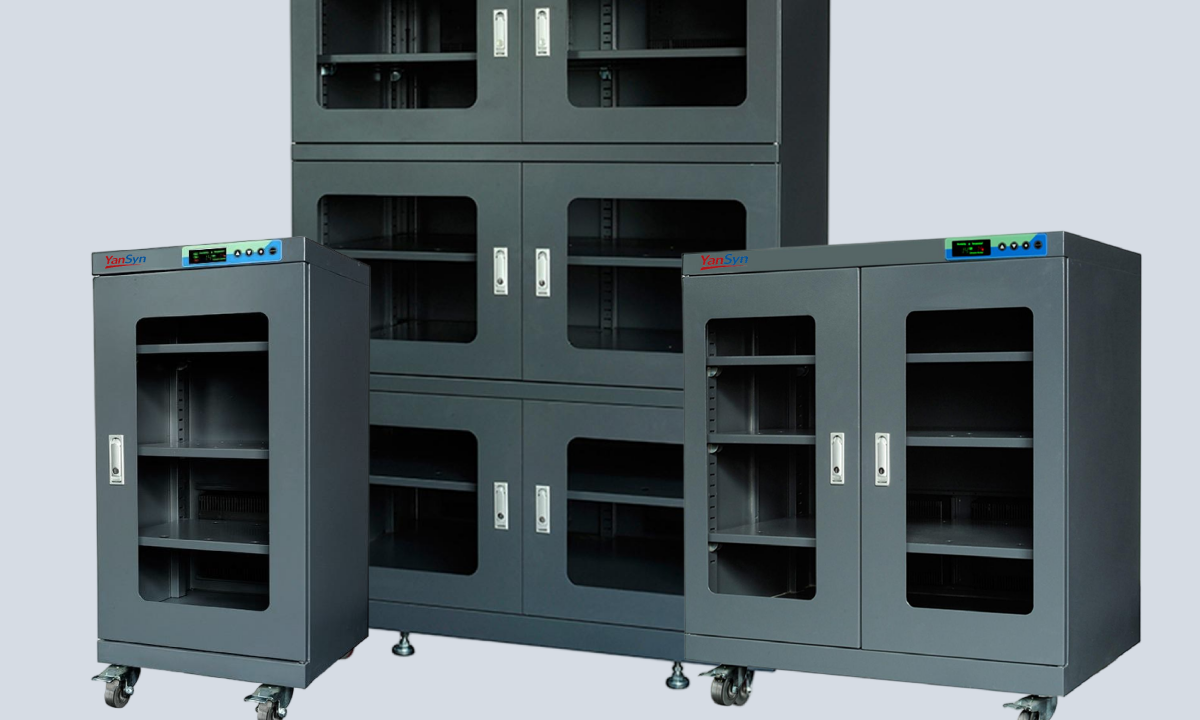
YanSyn builds the YSM desiccant dry cabinet line (1–50% RH selectable, 100–1,430 L) and the YSN nitrogen purge line for the applications above, with IoT monitoring and custom sizes on request. Tell us your inventory mix, turnover rate and plant conditions, and we will help you size the storage — contact the YanSyn team for a specification review.