
Specifying a heating oven means controlling one variable: temperature. Specifying a dry cabinet means controlling one variable: relative humidity. A constant temperature and humidity chamber looks like a simple combination of the two, but it is not: it runs two control loops that physically interact, and most disappointing purchases trace back to a specification sheet that treats the two numbers as independent.
This guide gives buyers a practical specification framework: which numbers belong in a request for quotation (RFQ), which terms are commonly confused, how to match the chamber to your application, and how to prove performance before you sign the acceptance report.
1. Why Temperature and Humidity Cannot Be Specified Separately
Relative humidity is, by definition, relative to temperature. The same amount of water vapor produces a different RH reading as temperature moves. As a rough indication near room temperature, a rise of one degree Celsius lowers the RH reading by roughly two to three percent; the exact figure depends on the starting conditions and should be checked on a psychrometric chart.
This has three consequences for procurement:
- A quoted temperature tolerance and a quoted humidity tolerance mean nothing on their own. Ask whether both tolerances are met simultaneously, at a stated load, over a stated duration, and measured at defined sensor positions.
- The operating envelope is a two-dimensional area, not two ranges. A chamber that achieves a wide humidity range at 25 °C may reach only a fraction of that range at 85 °C. Always request the combined temperature-humidity operating diagram for the exact model, not a line of minimum and maximum values.
- Condensation is the failure mode to design around. If any surface falls below the dew point of the chamber air, water condenses on samples, sensors and walls — corrupting both the measurement and the product. The specification must state how the design avoids this at your most demanding set point.
2. The Eight Specification Blocks That Belong in Your RFQ
2.1 Operating envelope and combination window
State the temperature range, the humidity range, and above all the combined operating window you actually need. Mark your required set points on the supplier's combined diagram and ask them to confirm each point is a controlled operating point, not merely a point the chamber can pass through.
Also state your room conditions. Chamber performance is specified against an assumed ambient (commonly around 20 to 25 °C); a hot production hall or a chamber installed with blocked airflow can invalidate the published figures.
2.2 Uniformity, fluctuation and gradient — three different numbers
These three terms describe different physics and are frequently mixed up on datasheets. Section 3 defines each one. As a rule: uniformity is spatial, fluctuation is temporal, and gradient is about speed. A chamber can be excellent on one and poor on the others.
2.3 Recovery time and ramp rate
Real production does not run in a sealed, undisturbed box. Specify:
- Door-opening recovery: time to return to within tolerance after a defined door opening, at a defined load — for multi-user labs this often matters more than steady-state uniformity.
- Ramp rate: heating and cooling speed in degrees per minute, with and without load.
- Response to load insertion: how far conditions dip when a room-temperature or damp load enters, and how quickly they recover.
2.4 Load definition — thermal mass, moisture load, outgassing
Empty-chamber performance never predicts loaded performance. Describe your worst-case load in the RFQ: total mass, material and specific heat, packaging (cardboard holds and releases significant moisture), and whether samples are wet. The moisture released by the load is often the dominant disturbance the humidity systems must fight — so ask the supplier to state uniformity and recovery with a representative load, or to propose a loaded acceptance test.
Also agree on loading rules: perforated shelves, maximum blockage of the airflow path, and minimum spacing from walls and sensors — blocked airflow is the most common cause of a chamber that fails re-verification a year after installation.
2.5 Airflow, filtration and chamber geometry
Compare usable workspace against total internal volume, and confirm the shelf configuration leaves the air path open. If your process is particle-sensitive, specify filtration explicitly — for example a HEPA-filtered recirculation loop, an option also found on YanSyn's YSHG oven series.
2.6 Water quality, drainage and materials
Humidification consumes water, and water quality decides how fast the chamber scales up and contaminates. Specify the required water grade (typically demineralized or deionized), indicative consumption at your set points, drain access, interior materials, and condensate management at your most humid operating point.
2.7 Control, data and compliance
List the control and data functions as acceptance criteria, not brochure features: PID control, programmable profiles if you run cycles, logging interval, export format, user access levels, and alarm behavior. Under GxP or similar quality systems, state audit-trail and electronic-record requirements in the RFQ. For the pharmaceutical use case, see our guide to GMP-compliant stability storage.
2.8 Service, energy and total cost of ownership
Over a typical service life, energy for heating, cooling and humidification, water, consumables (gaskets, filters, sensors) and annual calibration are recurring items; spare-parts lead time and service response deserve a line in the contract. For a worked example of comparing two procurement options over five years, see our five-year TCO comparison of nitrogen and desiccant cabinets — the method transfers directly to chambers. All cost figures there, as here, are illustrative assumptions to be replaced with your own data.
3. Specification Terms Compared
Use this table to align vocabulary with suppliers before comparing prices; ambiguous terms are the cheapest way to buy the wrong chamber.
| Term | What it really measures | What to write in the RFQ | Common trap |
|---|---|---|---|
| Uniformity | Spatial spread across the working volume at steady state | Max spread at your set points, per a mapping protocol, with your load | Quoted for an empty chamber only |
| Fluctuation | Temporal variation at a single point over time | Max deviation band over 24 h at each set point | Confused with uniformity — both use "±" notation |
| Gradient / ramp rate | Speed of change, in degrees per minute | Heating and cooling rate, loaded and unloaded | Quoted as linear average; the useful figure is the sustained rate |
| Set-point accuracy | How close the controlled average is to the set point | Accuracy stated with a sensor calibration certificate | Displayed value taken as truth without calibration traceability |
| Recovery time | Return to tolerance after a disturbance (door, load) | Minutes to return, after a defined disturbance and load | Never specified, then discovered in daily operation |
| Operating envelope | The combined temperature-humidity area the chamber can hold | Your set points confirmed on the combined diagram | Two independent ranges quoted instead of the combined window |
4. Matching the Chamber to the Application
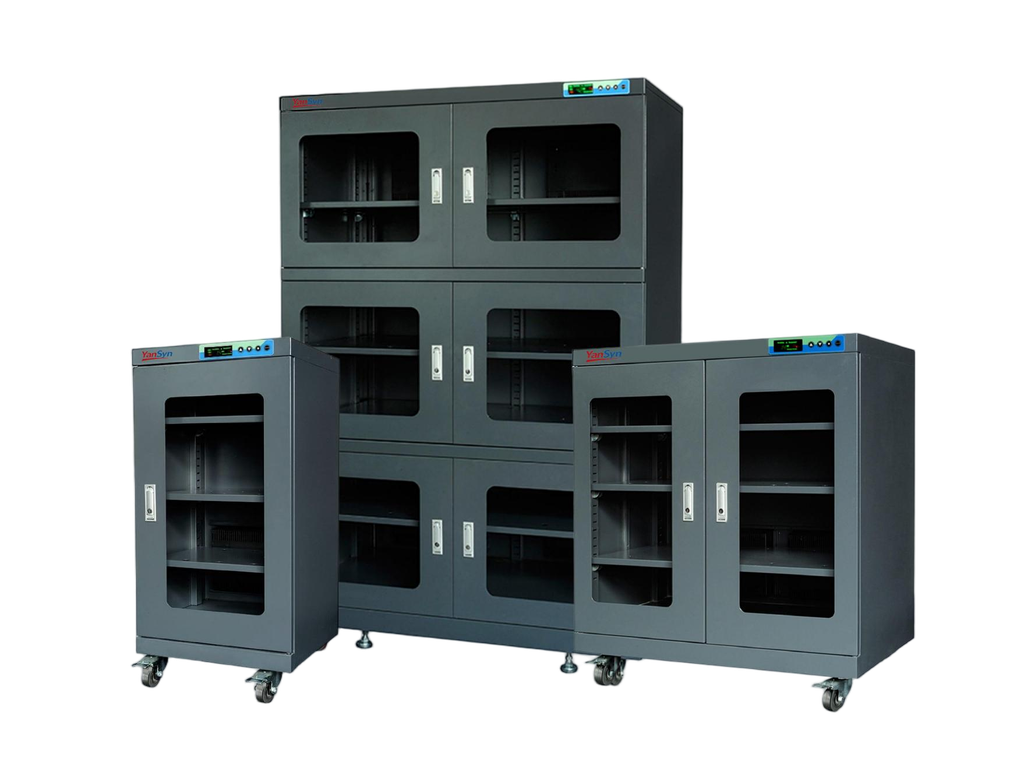
Different industries stress different parts of the specification. Use the matrix below to prioritize; the last column shows where a chamber is the right tool and where a dedicated single-variable product from YanSyn does the job better and cheaper.
| Application | Critical requirement | What to verify first | Related YanSyn equipment |
|---|---|---|---|
| Electronics / MSD control | Stable low RH for floor-life management | RH stability at low set points; ESD-safe build | YSM moisture-proof cabinet (see also MSD baking curves) |
| Pharmaceutical stability | Long-term drift, alarms, audit trail | Loaded mapping; calibration traceability; data integrity | See our GMP stability chamber guide |
| Semiconductor / oxidation-sensitive materials | Oxygen control, not only RH | Moisture or oxidation driver; residual O2 requirement | YSN nitrogen cabinets |
| Damp-heat testing, curing, annealing | Temperature uniformity and ramp rate at elevated temperature | Loaded uniformity; sustained ramp at high temperature | YSHG electric heating ovens |
| Battery / new energy materials | Very low dew point under high moisture load | Dew-point capability with your real load | Battery moisture control guide |
| University and multi-user labs | Wide envelope, easy re-verification | Door-opening recovery; mapping ports; calibration cost | YSM / YSN / YSHG combinations per project |
A frequent and expensive mistake is buying a chamber when the requirement is single-variable. Low humidity at room temperature? A moisture-proof cabinet is simpler, cheaper and more stable. Oxidation control? Nitrogen is the answer. Heat only? An oven wins on uniformity per unit of budget. Buy the two-loop chamber only when you genuinely need both loops at the same time.
5. Acceptance Testing: Prove It Before You Sign
A specification is only as good as its acceptance test. Put the test method into the purchase order, not the appendix:
- FAT and SAT: define both; site conditions differ, so the SAT is the binding one.
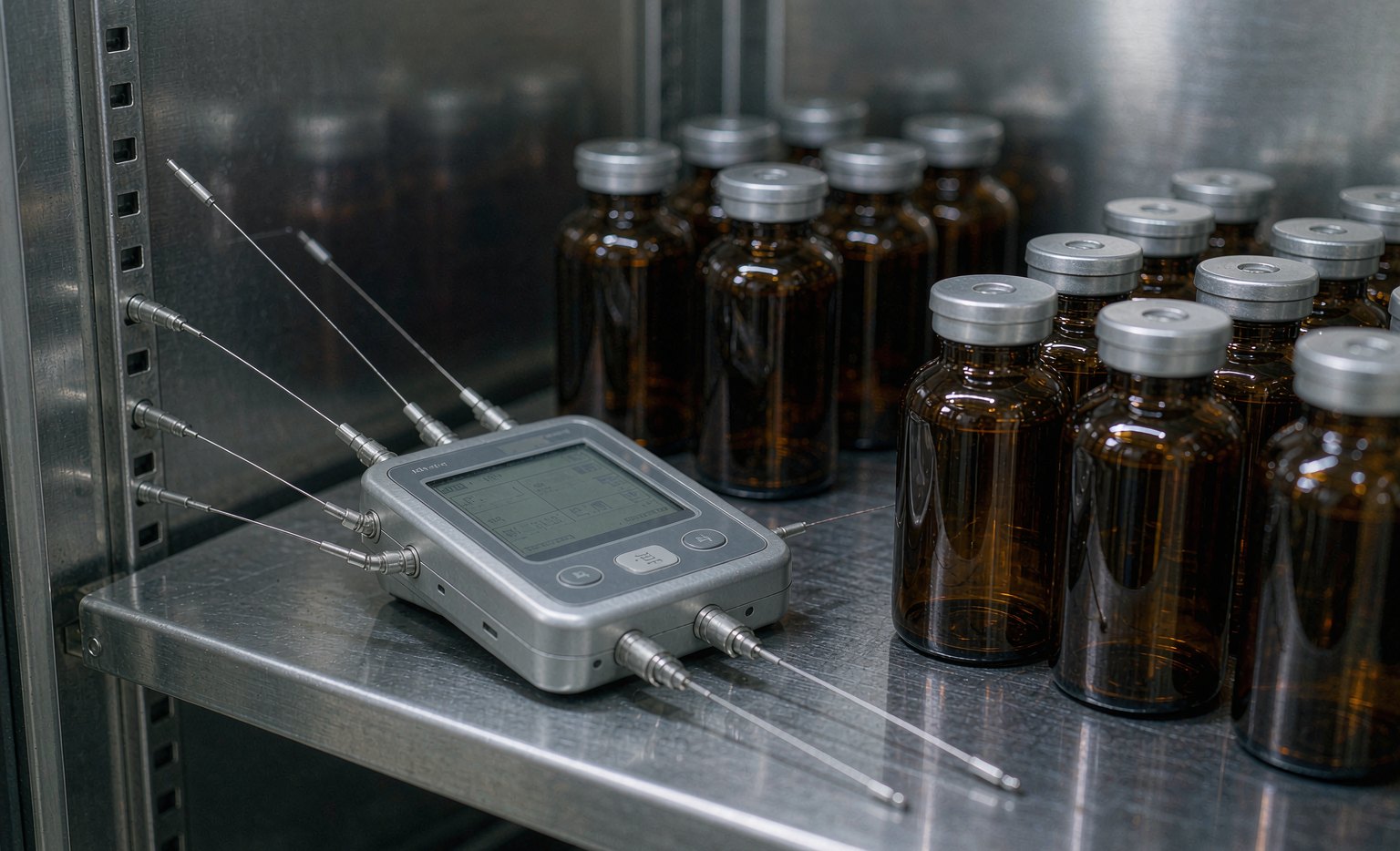
- Empty and loaded mapping: a grid of measurement points (commonly nine or fifteen, depending on chamber size) covering the working volume, logged over at least 24 hours at each contractual set point — empty and with your load.
- Calibrated instruments: recent, traceable calibration certificates (for example to ISO/IEC 17025) for all mapping sensors.
- Disturbance tests: a defined door opening and a defined load insertion, with recovery time recorded.
- Pass/fail in the PO: each test gets a numeric acceptance limit agreed before delivery. "Per manufacturer specification" is not an acceptance criterion.
- Documentation and remedies: mapping report, calibration certificates, alarm challenge records and operating instructions — plus an agreed remedy (rectification deadline, re-test) if a test fails.
6. FAQ
What is the difference between a stability chamber and an environmental test chamber?
They overlap heavily in hardware. A stability chamber is optimized for long, unattended holds under documented conditions, so data integrity, alarms and calibration dominate. An environmental test chamber is optimized for cycling, so ramp rates and envelope width dominate. Check the current version of your own protocol before finalizing the specification.
Can a dry cabinet replace a temperature and humidity chamber?
If your requirement is humidity control near room temperature — which covers most electronics storage and MSD floor-life management — a dry cabinet is the better tool: simpler, lower energy use, better low-RH stability. A chamber is needed only when temperature must deviate from ambient while humidity is simultaneously controlled.
When is a nitrogen purge the right answer instead?
When the failure mechanism is oxidation rather than moisture uptake. If your material discolors, solderability degrades, or the requirement is expressed as a residual oxygen level, control oxygen directly with a nitrogen purge cabinet instead of chasing RH numbers. Our guide to oxygen-free ovens below 1 ppm O2 covers the thermal-processing side.
Conclusion
A constant temperature and humidity chamber is a coupled two-loop machine, and it should be bought like one. Specify the combined envelope, not two independent ranges. Distinguish uniformity, fluctuation and gradient, and tie every tolerance to a load, a duration and a measurement position. Describe your worst-case load honestly, demand a loaded mapping test with calibrated instruments, and put pass/fail limits into the purchase order — and check honestly whether you need both loops at all.
If you are preparing an RFQ and want a second pair of eyes on the specification, or need humidity, oxygen and temperature control equipment configured to your process, contact the YanSyn team with your set points and load description.
Related Posts
Nitrogen Purge Cabinet vs Desiccant Dry Cabinet: The 5-Year TCO Breakdown
Every procurement cycle starts the same way. Two quotes land on the same desk: one for a desiccant dry cabinet, one for a nitrogen purge cabinet holding the same number of trays. The desiccant unit…
How to Choose the Humidity for an Electronic Dry Cabinet?
The core principle for selecting the humidity setting on an electronic dry cabinet is "match the humidity to the item" — meaning it depends entirely on the specific items you are storing. There is no "one-size-fits-all" humidity…

Moisture & Oxidation Control in Lithium-Ion Battery Manufacturing: From Electrode Storage to Cell Assembly
Lithium-ion cells are built from materials that react with water and oxygen at levels far below what a normal factory floor would call dry. A cell plant can invest in a large dry room and…