IPC/JEDEC Floor-Life Rules: A Practical Cheat Sheet for Line Operators
On an SMT line, most moisture-related field failures do not start with a dramatic event. They start with a reel that sat on the shop floor a little too long. The IPC/JEDEC J-STD-033 standard exists to prevent exactly that, and its floor-life rules are the daily operating language of MSD (moisture-sensitive device) handling. This article condenses those rules into a practical cheat sheet your line operators can actually follow.
This guide is about the exposure clock: when it starts, when it stops, and what to do before it runs out. If you are looking for what happens after the clock expires — baking profiles and the popcorn effect — see our deep-dive on MSD baking curves and the popcorn effect.
What "Floor Life" Actually Means
Floor life is the maximum time a moisture-sensitive component may stay exposed to the factory environment after its protective packaging has been opened, before it must be re-dried (baked) or otherwise protected. The clock counts real hours on the shop floor, not calendar days of storage in a sealed bag.
The reference environment in IPC/JEDEC J-STD-033 is a factory floor at not more than 30 °C and 60% relative humidity. If your production area is hotter or more humid than that, your real usable floor life will be shorter than the standard value, and your site procedures should account for it.
The clock is driven by the component's Moisture Sensitivity Level (MSL), which is assigned per package and rated by the component supplier (the classification itself comes from IPC/JEDEC J-STD-020). In short: the higher the MSL number, the faster the package absorbs moisture and the less time you have.
The Floor-Life Table Every Operator Should Know
| MSL | Floor life after opening (at ≤30 °C / 60% RH) | Practical meaning on the line |
|---|---|---|
| MSL 1 | Unlimited | Not moisture-sensitive in practice. Normal handling. |
| MSL 2 | 1 year | The clock rarely binds if material rotates normally, but it must still be tracked. |
| MSL 3 | 168 hours (7 days) | The most common level for IC packages. A week is enough time — if it is tracked. |
| MSL 4 | 72 hours (3 days) | Partial reels left out over a weekend can already exceed the limit. |
| MSL 5 | 48 hours (2 days) | Same-day discipline required. Overnight staging must be in dry storage. |
| MSL 5A | 24 hours | One shift plus a few hours. Plan placement before opening. |
| MSL 6 | 72 hours, and baking before use is mandatory per the standard | Treat as bake-on-demand material; do not open until the placement run is scheduled. |
Two cautions when using this table. First, always check the label on the actual bag — the supplier's rating overrides any assumption, and the same component in a different package can carry a different MSL. Second, the values above assume the reference environment; at higher temperature or humidity, treat them as upper bounds, not guarantees.

What Starts, Pauses, and Resets the Clock
This is where most floor-life mistakes happen, so make these rules explicit in your SOPs.
The clock starts when the moisture barrier bag is opened
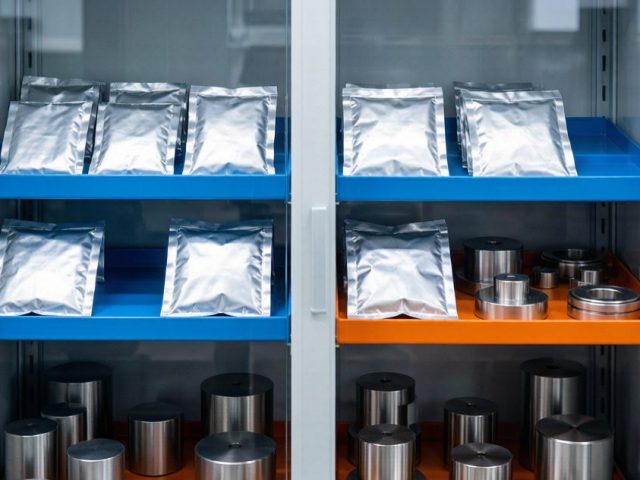
A sealed MBB (moisture barrier bag) with desiccant and a humidity indicator card keeps the clock at zero. The moment a bag is opened — even just to check the contents — exposure time begins for every device taken out or left unprotected. Unopened, properly sealed bags are counted separately, with a bag-seal date tracked by incoming inspection.
Controlled dry storage pauses the clock
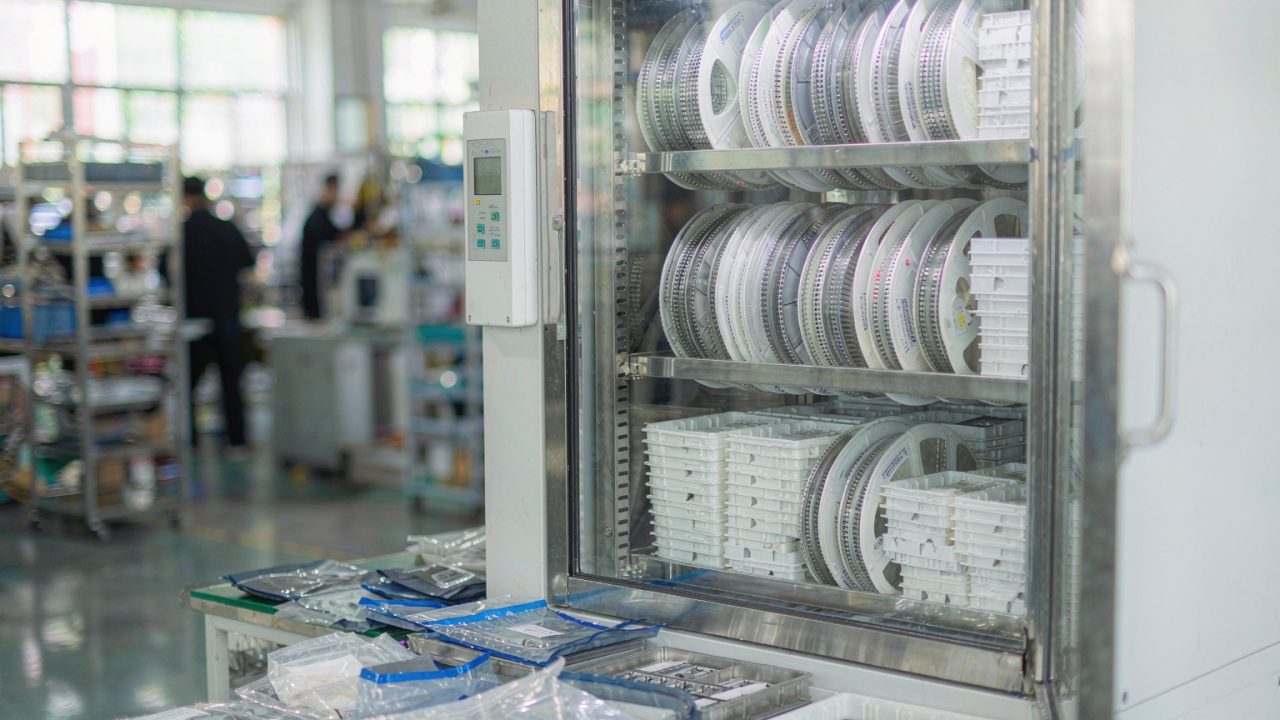
Per IPC/JEDEC J-STD-033, time that a device spends in controlled dry storage — a dry cabinet maintained at below 10% RH — is not charged to the accumulated exposure time, provided the environment is actually maintained. In practice this means an opened partial reel of MSL 3 parts can wait in a dry cabinet over a long weekend without consuming floor life, while the same reel on an open rack would burn through its entire 168-hour budget. Confirm the exact wording your quality team uses, but the principle is standard: the dry cabinet is the operator's pause button.
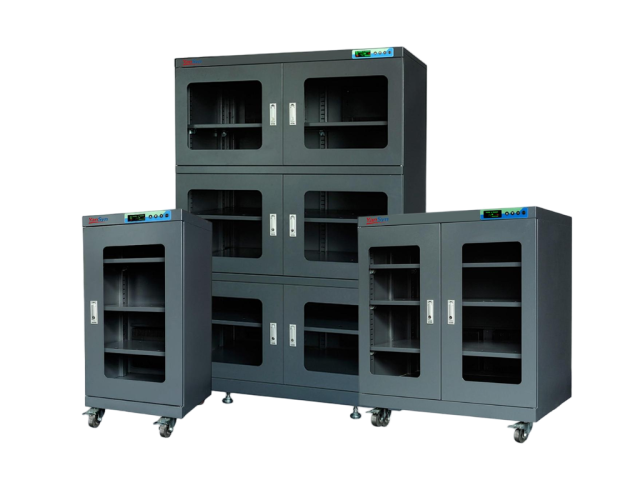
This is precisely the job of a moisture-proof dry cabinet such as the YanSyn YSM series, which holds the 1–50% RH range used for MSD storage with stable, logged control — including the below-10% RH regime that floor-life rules depend on.
Baking resets the clock
Once the exposure budget is exceeded, the parts must be dried before reflow, following the bake conditions in J-STD-033 (which vary by package thickness and maximum body temperature). A correctly executed bake restores the exposure clock to zero. The details — temperatures, durations, and the low-temperature bake option for moisture-sensitive assemblies — are covered step by step in our MSD baking profile guide, so we will not duplicate them here.
Nitrogen storage is the zero-humidity option
Where oxidation matters as much as moisture — for example, exposed solderable terminations or long WIP staging — a nitrogen-purged cabinet keeps both RH and oxygen near zero. It is the stricter sibling of dry storage; you can compare the two approaches in our nitrogen purge vs desiccant dry cabinet comparison.
The Line-Side Cheat Sheet
Print this table and keep it at the MSD station. It maps the situations operators actually meet to the action the standard expects.
| Situation | Action |
|---|---|
| Sealed MBB, within bag-seal date | Store normally. Check the humidity indicator card after opening; if it shows above 10%, treat contents as exposed and follow the drying procedure before use. |
| Bag just opened, parts to be placed today | Log the opening date and time. Start the exposure clock for the rated MSL. |
| Partial reel, next run within floor life | Return it to the dry cabinet, keep the label updated with accumulated hours. |
| Partial reel, next run beyond floor life | Return to the dry cabinet immediately; time in below-10% RH storage is not charged. Do not leave it staged on the line. |
| Exposed hours exceeded (clock ran out) | Quarantine and bake per J-STD-033 before reflow, then reset the clock. Never "sneak" expired parts onto the placement queue. |
| Humidity indicator card is discolored in an unopened bag | Flag to quality. The bag seal may have failed; contents are treated as exposed until evaluated. |
| Unknown or unmarked MSL | Do not guess. Hold in dry storage below 10% RH and confirm the level with the supplier before opening. |
| Shift handover | Transfer the exposure log: which reels are open, accumulated hours, MSL, and where each one is stored. |

Why the Rules Matter: One Package, One Failure Mode
Moisture absorbed into a package during floor exposure turns to steam during reflow. The resulting pressure can crack the molding compound or delaminate internal layers — the "popcorn effect" — damaging dies and solder joints in ways that visual inspection may miss. Because the damage is internal and latent, the cost does not show up at AOI; it shows up in field returns weeks later. That asymmetry is the whole reason the exposure clock is treated with the same seriousness as ESD control.
For a fuller treatment of the physics and the bake profiles that reverse the damage risk, read the popcorn effect deep-dive. And for a broader view of how humidity interacts with electronic assemblies, our article on choosing humidity setpoints for electronic dry cabinets covers the wider setpoint logic.
FAQ
Does time in a dry cabinet at below 10% RH really not count against floor life?
Under IPC/JEDEC J-STD-033, exposure time accumulated in controlled dry storage at below 10% RH is not charged to the device's floor-life exposure. The key word is controlled: the cabinet must genuinely maintain the humidity, and your quality system should define how that is verified. An unverified or drifting environment erases the benefit, which is why cabinet calibration and logging belong in the same SOP as the exposure log.
We opened a bag but did not use everything. Do we need to rebag with desiccant?
Rebagging with fresh desiccant is a temporary field measure, not a substitute for tracked storage. The preferred route is to return the partial material to a dry cabinet below 10% RH and keep the exposure record. If the material will wait longer than the remaining floor life, dry storage covers it; if the clock has already expired, bake first.
Our shop floor is regularly above 30 °C or 60% RH. What do we do?
Treat the standard floor-life values as optimistic. Options are to tighten the exposure tracking (use conservative, shorter budgets), condition the production area, or — most reliably — make below-10% RH dry storage the default between placement runs instead of open staging. If humidity is high and oxidation also matters for your parts, consider nitrogen storage for the most sensitive families.
MSL 2 parts have a one-year floor life. Can we ignore tracking for them?
No. One year counts from the moment the bag is opened, and partial reels forgotten in a kitting cart can quietly exceed it. MSL 2 simply gives you a long leash, not no leash. Any ERP or MES that already tracks date codes can track the open date at no extra cost.
What is the single most common floor-life mistake?
Untracked overnight staging. Reels left on feeders or on the line between shifts accumulate hours that nobody records, and MSL 4 and above can lose a large share of their budget over one long weekend. The fix is procedural, not technical: any MSD not on the placement queue goes into the dry cabinet, every time.
Conclusion
Floor-life compliance is less about memorizing the standard and more about three habits: start the clock when the bag opens, pause it in controlled dry storage below 10% RH, and reset it with a proper bake when it expires. A moisture-proof cabinet at the line makes the middle habit effortless — which is what keeps the other two honest.
If your line needs dependable MSD storage with stable, verifiable humidity control, explore the YanSyn YSM series moisture-proof cabinets, or contact our team to discuss setpoints and sizing for your production environment.