If you are searching for "YSN-300" or "YSN-401", you already know the YanSyn name. You may have a unit running on your floor, a quotation on your desk, or a spare-part list to match. This guide explains what each YanSyn model code means, what the numbers behind the code do and do not tell you, and how to select the correct family for a humidity, oxygen or temperature target.
YanSyn builds three equipment families. Each family controls a different physical variable. Choosing the wrong family is the most expensive mistake in this category, because no control setting can compensate for the wrong physical mechanism.
Why model codes matter more than marketing names
Industrial buyers rarely search by product category. They search by the code printed on the nameplate of the machine in front of them. That search has very high intent: the person is comparing, replacing, expanding or specifying. It is the last step before an enquiry.
The problem is that model codes are compact. They carry a lot of meaning in three letters and a few digits, and that meaning is not always obvious. This article decodes the system so you can move from a code on a nameplate to the correct equipment decision in one step.
Step 1: the three-letter prefix identifies the family
Every YanSyn model code starts with a letter block. That block tells you which physical variable the machine controls. This is the single most important part of the code.
| Code prefix | Full family name | Variable it controls | Start here when |
|---|---|---|---|
| YSM | Moisture-proof cabinet (electronic dry cabinet) | Relative humidity, typically in the 1 to 50 percent RH band | The failure mode is moisture: MSD floor life, corrosion, hygroscopic powder |
| YSN | Anti-oxidation nitrogen cabinet | Oxygen concentration, with low humidity as a secondary result | The failure mode is oxidation: discoloured pads, tarnished alloys, degradable active material |
| YSHG | Electric heating blower oven | Temperature over a defined time, from ambient to 500 degrees Celsius | The process needs heat: baking, curing, drying, ageing, annealing |
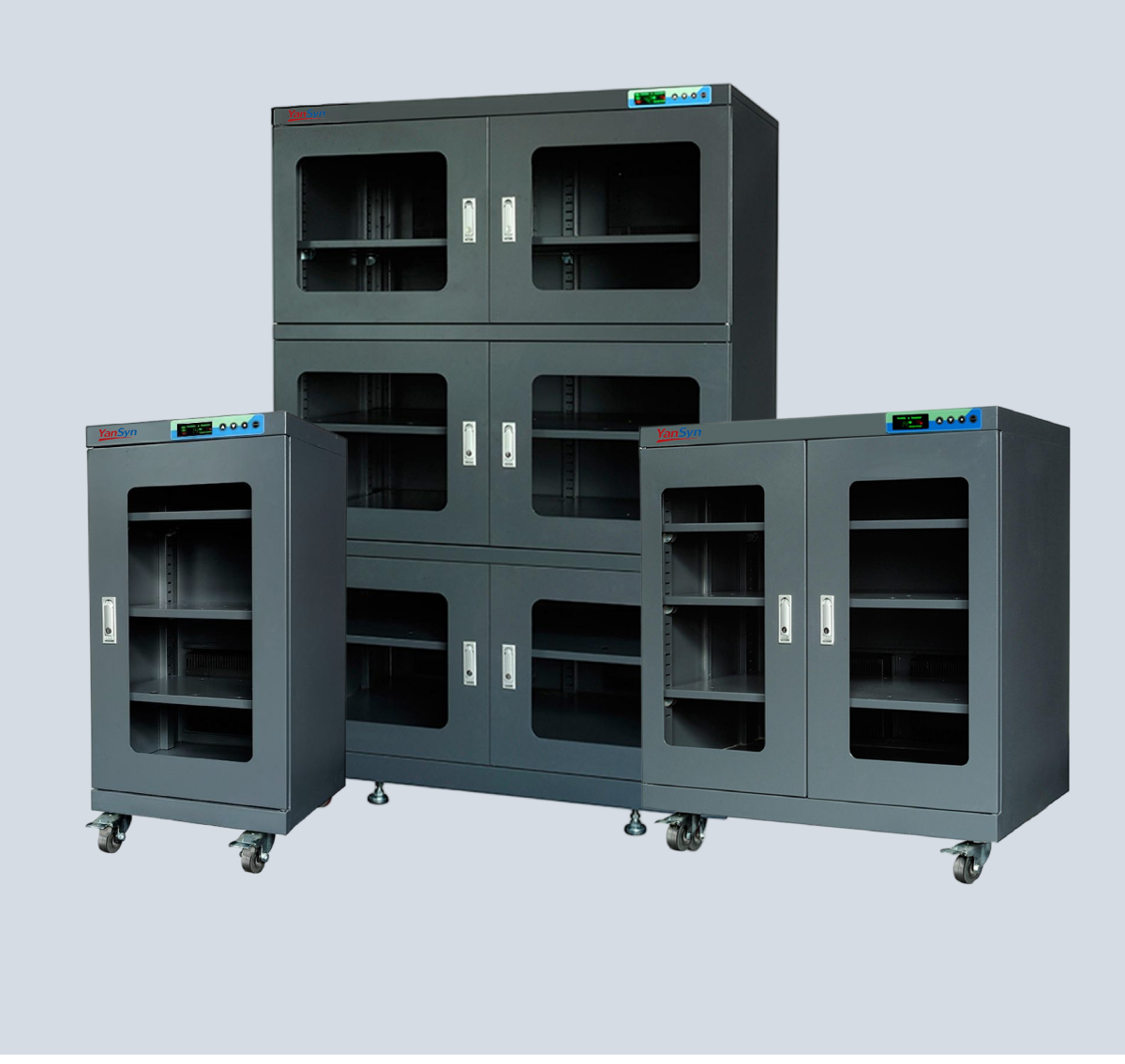
Read that table once and the rest of the code becomes easier. The YSM series removes water vapour from a sealed enclosure. The YSN series displaces air with dry nitrogen. The YSHG series adds controlled heat. Three different mechanisms, three different families.
Step 2: the number identifies the build variant, not the capacity
This is where most buyers go wrong. Codes such as YSN-300, YSN-401, YSN-237 and YSN-288 are searched frequently, and the natural assumption is that the number is the volume in litres. In the YanSyn system the numeric suffix is an internal identifier for a specific build configuration. Two codes with numbers close together can differ in enclosure volume, gas-control package, shelving layout, monitoring hardware or power supply.
So the correct reading is: the prefix tells you the mechanism, the suffix tells you which configuration of that mechanism. To convert a suffix into a volume or an option list, you must check it against the datasheet, the product page or the equipment nameplate.
| Code you may be searching | What it identifies | How to confirm the configuration |
|---|---|---|
| YSN-300 | A build variant inside the nitrogen cabinet family | Match the nameplate code on your unit, or request the configuration sheet for that exact code |
| YSN-401 | A different build variant in the same family | Do not assume it is larger than 300. Compare volume, gas package and power side by side |
| YSN-237 | A further build variant in the same family | Send the nameplate photo with your enquiry. It is the fastest way to get an exact match |
| YSN-288 | A further build variant in the same family | Confirm whether the unit is a standard build or an engineered-to-order configuration |
| X2 and similar short codes | Designations that appear on control and option packages rather than on the cabinet family itself | Read them from the equipment nameplate or from your original quotation |
A practical tip for replacement and expansion projects: photograph the nameplate before you request a quotation. The nameplate carries the exact code, the serial number, the supply voltage and the build date. That single photograph removes most of the back-and-forth in a spare-part or second-unit enquiry.
Step 3: select by the failure mode, not by the datasheet
Once you know the mechanism, selection becomes a question about your product. Ask what actually damages the material you are storing or processing. The answer points to one family.
| Observed problem | Physical cause | Correct YanSyn family | Notes |
|---|---|---|---|
| Popcorn cracking, delamination during reflow | Absorbed moisture expands as steam | YSM dry cabinet, with a baking step in a YSHG oven when floor life is exhausted | Setpoint follows the moisture sensitivity level of your components under IPC/JEDEC J-STD-033 |
| Oxidised pads, tarnished copper, darkened alloy surface | Reaction with oxygen in ambient air | YSN nitrogen cabinet | Humidity control alone cannot remove oxygen |
| Electrode coating picking up moisture before cell assembly | Very low dew point required over long storage | YSM for humidity-driven control, YSN where oxygen must also be excluded | Define the target dew point, not the RH alone |
| Incomplete cure, solvent residue, failed ageing test | Insufficient temperature or insufficient time at temperature | YSHG heating oven | Uniformity across the working chamber matters more than peak temperature |
| Long-term stability study at fixed temperature and humidity | Both variables must be held together for months | Constant temperature and humidity chamber, engineered to the study protocol | Not one of the three codes above. See the stability storage guide |
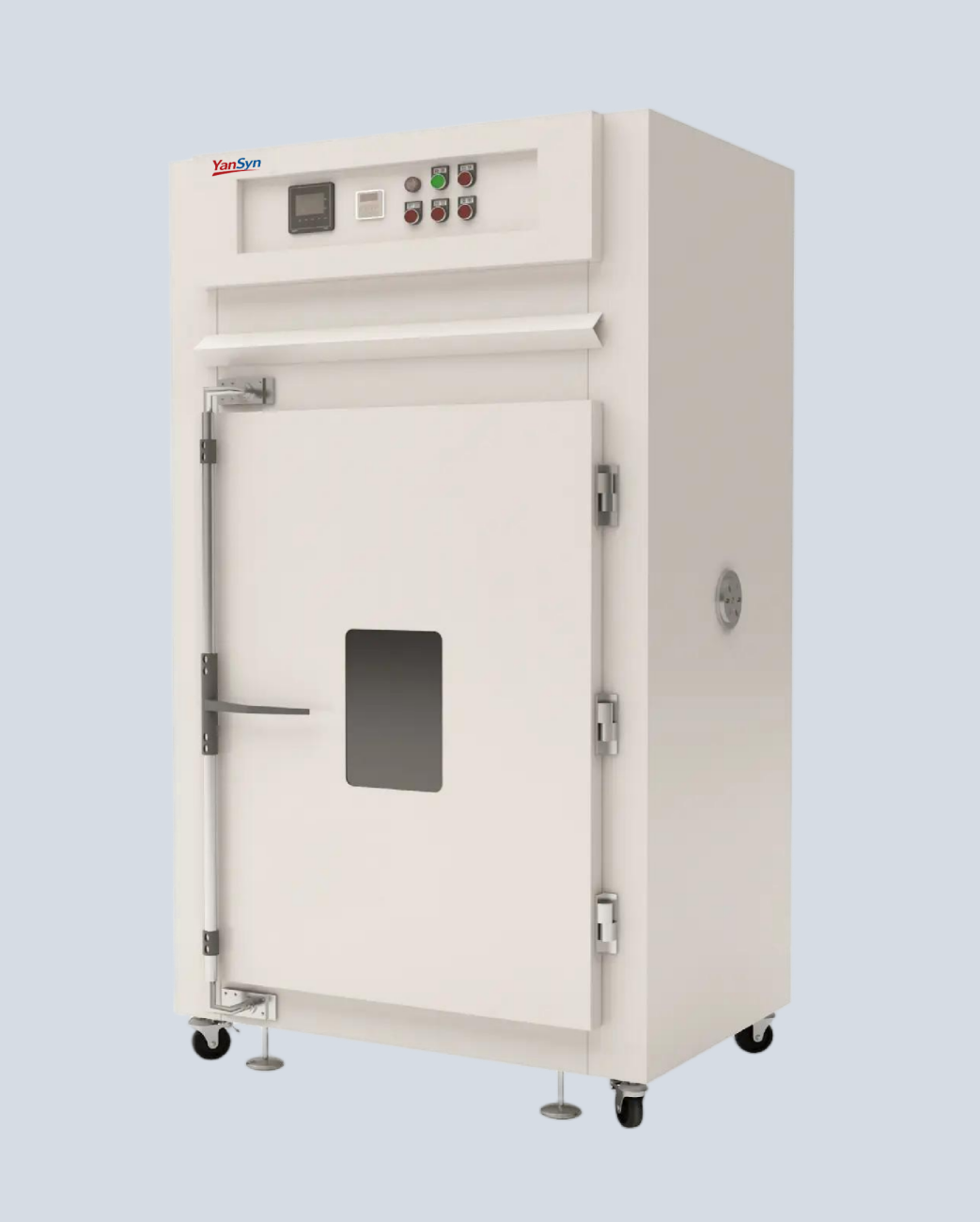
The YSHG oven deserves one extra note. It is a PID-controlled electric heating blower oven with a working range from ambient to 500 degrees Celsius. Chamber uniformity is within plus or minus 2 degrees Celsius as standard and can be engineered to within plus or minus 1 degree Celsius where the process needs it. Optional configurations include Class 100 clean construction, a nitrogen inert atmosphere, and IoT monitoring. Those options change what the oven can do far more than the model suffix does.
Industry examples: from code to configuration
Semiconductor and PCB assembly
Most enquiries start with moisture sensitivity. Components absorb humidity during storage, and the absorbed water turns to steam in the reflow oven. A YSM dry cabinet holds the humidity below the level defined by the moisture sensitivity classification, and a YSHG oven performs the baking recovery step when floor life has expired. Where bare copper or silver surfaces must stay bright, a YSN cabinet is the correct answer instead. See our detail on IPC/JEDEC J-STD-033D and on MSD baking profiles.
Lithium-ion battery and new energy
Electrode stock, separator material and cell hardware are sensitive to both moisture and oxygen. Specify the dew point you need, then decide whether humidity control alone is sufficient. Our article on moisture and oxidation control in lithium-ion battery manufacturing covers the full line from electrode storage to cell assembly.
Pharmaceutical and medical
Stability studies are governed by the protocol, not by a catalogue. Where a study demands a fixed temperature and a fixed humidity held together for months, the correct answer is a dedicated constant temperature and humidity chamber built to the required condition. Our GMP stability storage guide explains the specification route.
Checklist: what to send with your enquiry
| Information to provide | Why it changes the quotation |
|---|---|
| Controlled variable and target value | Selects the family and the control hardware |
| Uniformity and tolerance requirement | Standard uniformity is not sufficient for every process |
| Load volume and load geometry | Determines the enclosure size and the shelf configuration |
| Door-opening frequency and recovery time | Drives the recovery speed of the control system |
| Options: clean class, inert gas, monitoring | Changes the construction, not only the software |
| Site power supply and ambient conditions | Affects achievable performance and electrical configuration |
| Calibration and documentation needs | Required for regulated and audited environments |
Frequently asked questions
Is YSN-401 a larger cabinet than YSN-300?
Not necessarily. The numeric suffix identifies a build variant, not a volume scale. Two variants with numbers close together can differ in gas-control package, shelving, monitoring hardware or power supply rather than in size. Compare the configuration sheets for both codes before you decide.
Can a YSM dry cabinet replace a YSN nitrogen cabinet?
No. A dry cabinet controls humidity. It does not remove oxygen from the enclosure. If your material oxidises, tarnishes or degrades in the presence of oxygen, you need a nitrogen purge cabinet. The reverse is also true: a nitrogen cabinet is an expensive way to solve a pure moisture problem. Our five-year total cost comparison sets out the trade-off.
Where do I find the model code on my machine?
On the nameplate. On cabinet models it is usually on the side panel or the inner door frame; on ovens it is usually on the side of the control housing. The same code appears on your original quotation and on the conformity documentation. Photograph the plate before you contact us.
What is the temperature range of the YSHG oven?
Ambient to 500 degrees Celsius, with PID control. Standard chamber uniformity is within plus or minus 2 degrees Celsius and can be engineered to within plus or minus 1 degree Celsius. Class 100 clean construction, a nitrogen inert atmosphere and IoT monitoring are available as options.
Can I order a non-standard size or an option package?
Yes. YanSyn builds to order for volume, shelving layout, clean class, inert-gas configuration and monitoring. State the requirement in the enquiry and the configuration will be quoted against your process, not against a catalogue page.
Conclusion
Reading a YanSyn model code takes three steps. First, read the letter prefix: YSM controls humidity, YSN controls oxygen, YSHG controls temperature over time. Second, treat the number as a build-variant identifier and confirm the configuration against the datasheet or the nameplate. Third, choose the family from your actual failure mode rather than from a specification list.
Get those three steps right and the code you searched for turns into the correct piece of equipment on your floor.
Send us your model code or a photograph of your nameplate, together with your target humidity, oxygen or temperature value. Our engineers will confirm the configuration and return a quotation. Request a configuration and quotation.
YanSyn Intelligence (Shanghai) Co., Ltd. · Building 10, No. 568, Xueronghua Road, Pudong New Area, Shanghai, China
Related Posts
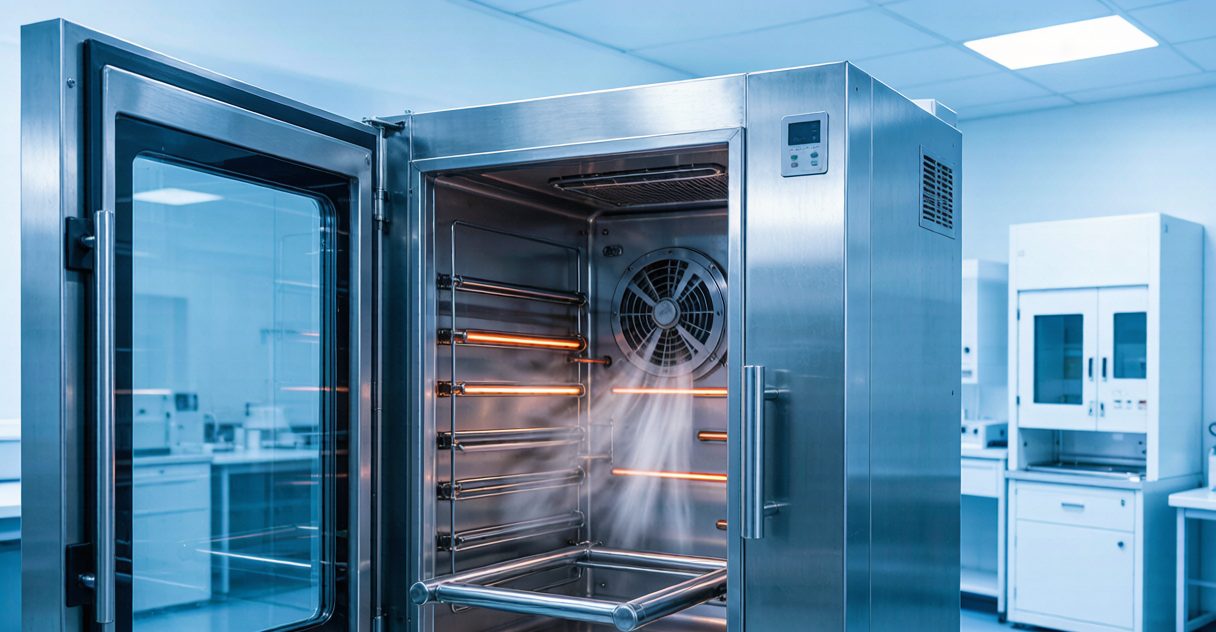
Ovens and Thermal Processing at the 3 nm Node: What Advanced Chip Manufacturing Demands, and How YanSyn YSHG Delivers
At the 3 nm node and beyond, the margin for error in thermal processing has all but disappeared. Roughly 18 to 22 percent of front-end-of-line and middle-of-line process modules in modern 3 nm and sub-2…
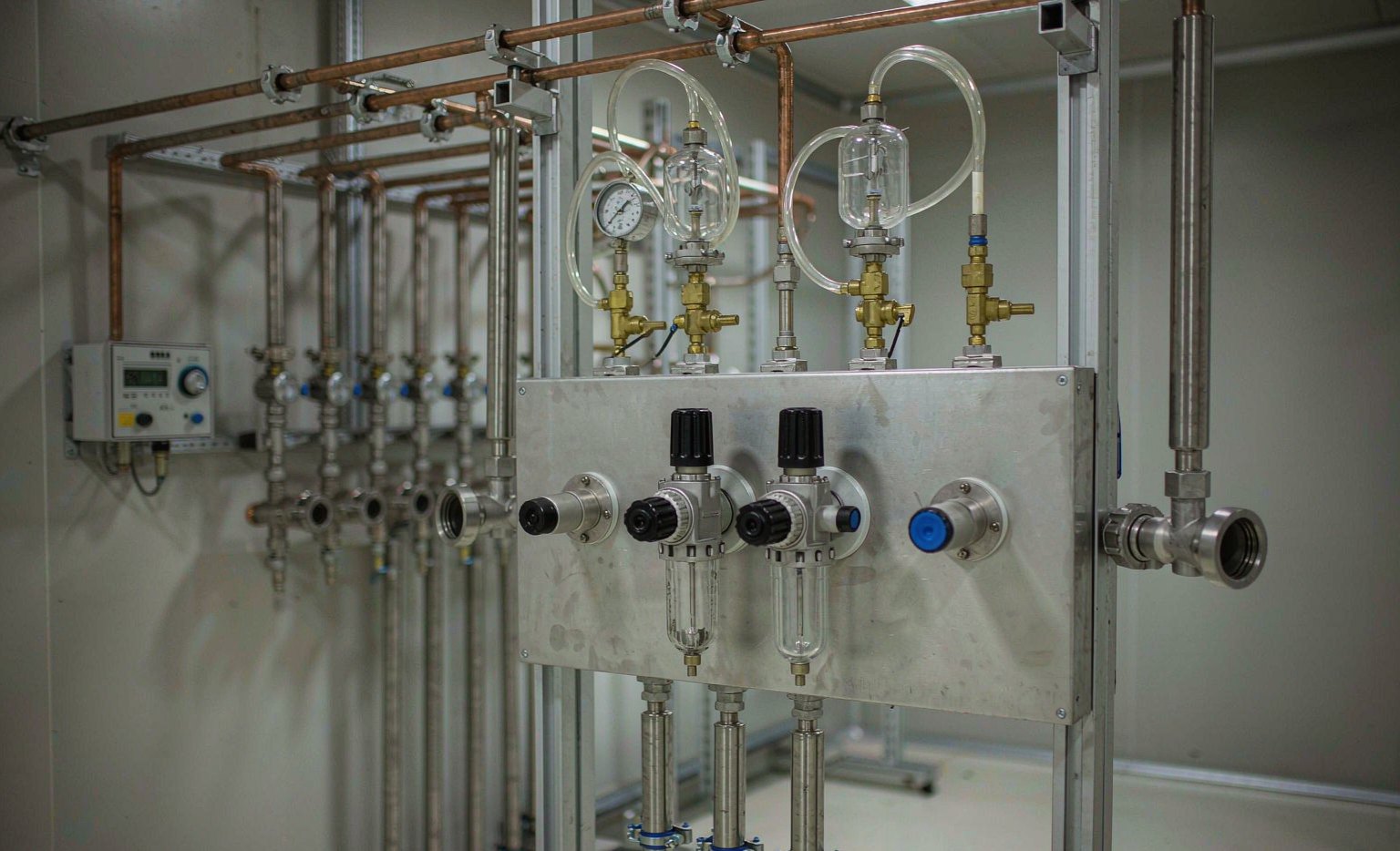
Cutting Nitrogen Use by 50%: Smart Flow-Control Payback in 8 Months
Nitrogen is one of the cheapest ways to protect oxidation-sensitive parts. It is also one of the easiest operating costs to lose control of. A purge cabinet running at a fixed flow rate around the…
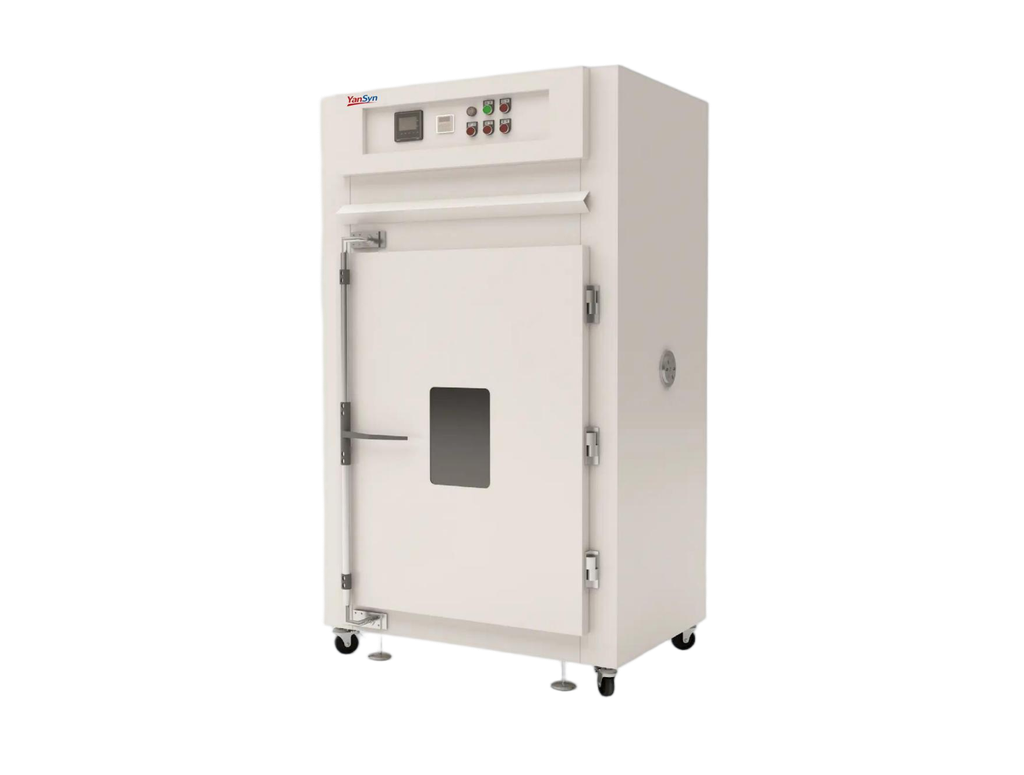
How to Choose a Vacuum Oven: 7 Specs That Actually Matter
A small specification change in vacuum drying can produce a large change in yield. Two ovens can look identical and still differ by a factor of three in drying time, or leave a thin oxide…